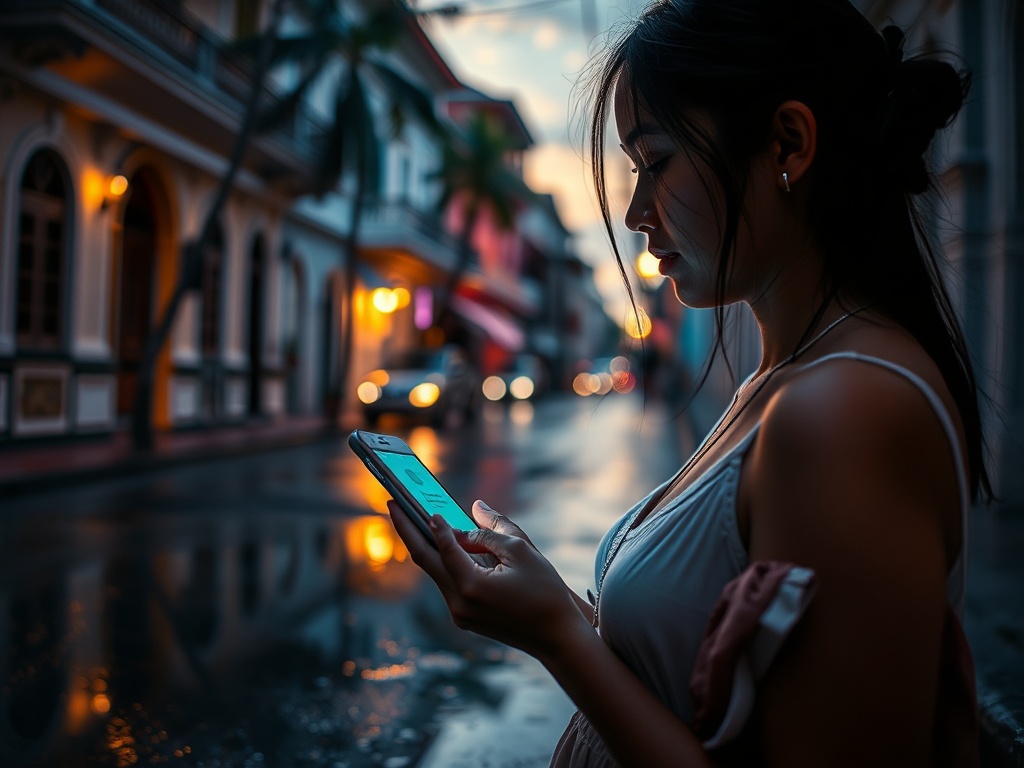
The Coffee Shop Where Everyone Blocks Each Other
The comments section has become our modern-day coffee shop, the digital haruge where Maldivians gather not to connect, but to confront. Here, in this virtual space that never sleeps, the rhythms of island courtesy give way to something sharper, more fragmented.
"You are asking for trouble bro!" begins one exchange, the cheerful emoji doing little to mask the underlying threat. The conversation quickly devolves into geographical corrections and crude insults, the kind of verbal sparring that would rarely happen face-to-face in our close-knit island communities. There's a peculiar intimacy to the hostility, as if the screen provides both shield and sword.
Across these digital atolls, voices perform their outrage. "You can hear from her voice it's a bitch karen," someone declares, rendering judgment based on tone alone. The accusation hangs in the digital ether, unverified but permanently recorded. This is the new court of public opinion, where evidence is optional and conviction is instantaneous.
The personal becomes political, the political becomes personal. "I like his ideas, but he had many melt downs on my tweets," one user observes, capturing the strange duality of our online engagements. We separate the message from the messenger until the messenger becomes too human, too flawed, and the block button offers the digital equivalent of turning one's back on a neighbor.
In the space between tweets, a more troubling pattern emerges—the weaponization of victimhood and the performance of authenticity. "People aren't buying her fakeness," someone notes about a mother using her children as props in her personal brand. The comment speaks to a deeper hunger for genuine connection in a world increasingly mediated by curated images.
The language itself fractures under the pressure. "Junk yard in beynun vegen roe heyrey iru heevanee ehn kame hen," reads one particularly chaotic message, the words tumbling over each other in a stream of consciousness that mirrors the confusion of modern Maldivian identity. One minute we want progress, the next we cling to tradition, caught between the coral walls of our heritage and the open ocean of globalization.
What emerges from this digital cacophony is not just random noise, but the sound of a society struggling to find its voice. The same closeness that once bound our island communities now fuels our online conflicts. We cannot escape each other, yet we struggle to truly see one another through the glare of our screens.
In the end, the most telling comment might be the simplest: "Wait, why did she block me?" The question hangs there, unanswered, representing the broken connections that define our digital age. We have more ways to communicate than ever before, yet genuine understanding seems further away than ever, lost somewhere between the tweet and the block, between the accusation and the emoji.
— Source fragments: Aggressive opening ("you are asking for trouble bro"), geographical correction with crude follow-up, voice-based judgment ("bitch karen"), blocked relationships ("Blocked me multiple times"), performative authenticity ("People aren't buying her fakeness"), confusion about blocking ("why did she block me?"), chaotic mixed-language expression, observation about political perception ("think so well of Muizzu")