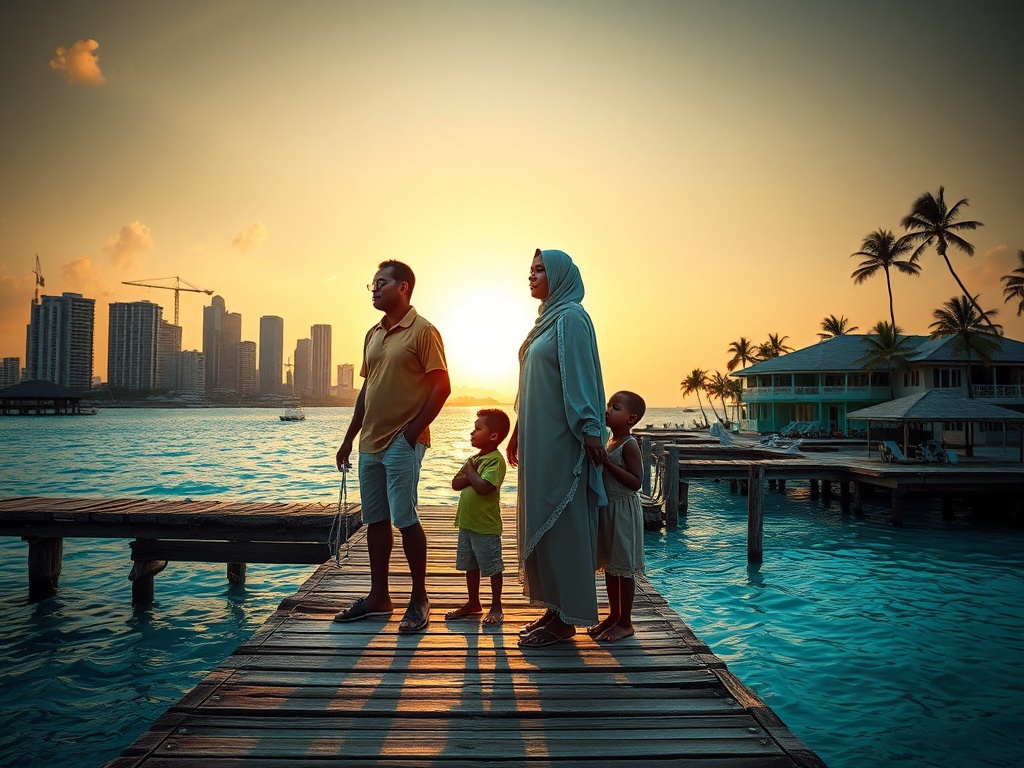
The Constitutional Promise of Shelter That Still Has No Address
The conversation about housing in the Maldives has moved beyond simple availability to fundamental questions of fairness and access. Across social media platforms and community discussions, Maldivians are articulating a vision of housing justice that spans from the congested capital to the developing urban centers of the atolls.
At the heart of this discussion lies a simple but powerful principle: all Maldivians should have equal rights to land and social housing regardless of their island of residence. This constitutional spirit, frequently invoked in public discourse, demands that application processes remain free of bureaucratic barriers that might prevent citizens from accessing housing where they live permanently. The principle extends both ways—while Malé residents should have opportunities in other regions, those in the islands should likewise have rights in the capital.
The human dimensions of this crisis emerge in personal stories that reveal both the fragility and resilience of the housing system. One renter described living in a Hiya flat owned by a man who had relocated his family to India for medical treatment of his special needs children. Despite having invested in interior improvements, the landlord refused to accept more than the base rent—a small act of decency in a system often characterized by exploitation and profiteering.
Meanwhile, alternative pathways are being proposed. The development of urban centers like Addu City, Kulhudhuffushi, Fuvahmulah, and Thinadhoo offers potential relief valves for those priced out of Malé. These emerging cities combine growing infrastructure with relatively affordable rents, presenting viable alternatives for families willing to migrate.
The concept of rent control has entered the Maldivian housing conversation with urgency. As examples from abroad demonstrate—such as Portland, Oregon's recent ban on corporate landlords using price-fixing algorithms—market interventions can protect tenants from exploitation. In the Maldivian context, where government housing projects sometimes see subsidized flats subleased for profit by absentee leaseholders, such measures could ensure that public resources actually benefit those in need.
The call to rebuild HML Phase 2 represents more than just a construction project—it symbolizes the need to revisit and improve existing housing initiatives. When well-intentioned programs fail to deliver their promised benefits, the solution isn't abandonment but refinement and renewal.
What emerges from these disparate voices is a collective understanding that housing is more than shelter—it's about dignity, opportunity, and the fulfillment of constitutional promises. The solutions will require both policy innovation and a recommitment to the principle that every Maldivian deserves a place to call home.
— Source fragments: Equal rights to land and social housing across the country; Easy access to housing where people live permanently; Constitutional spirit of fairness; Personal story about Hiya flat and special needs children; Development potential of Addu, Kulhudhuffushi, Fuvahmulah, Thinadhoo; Concept of rent control; Call to rebuild HML Phase 2