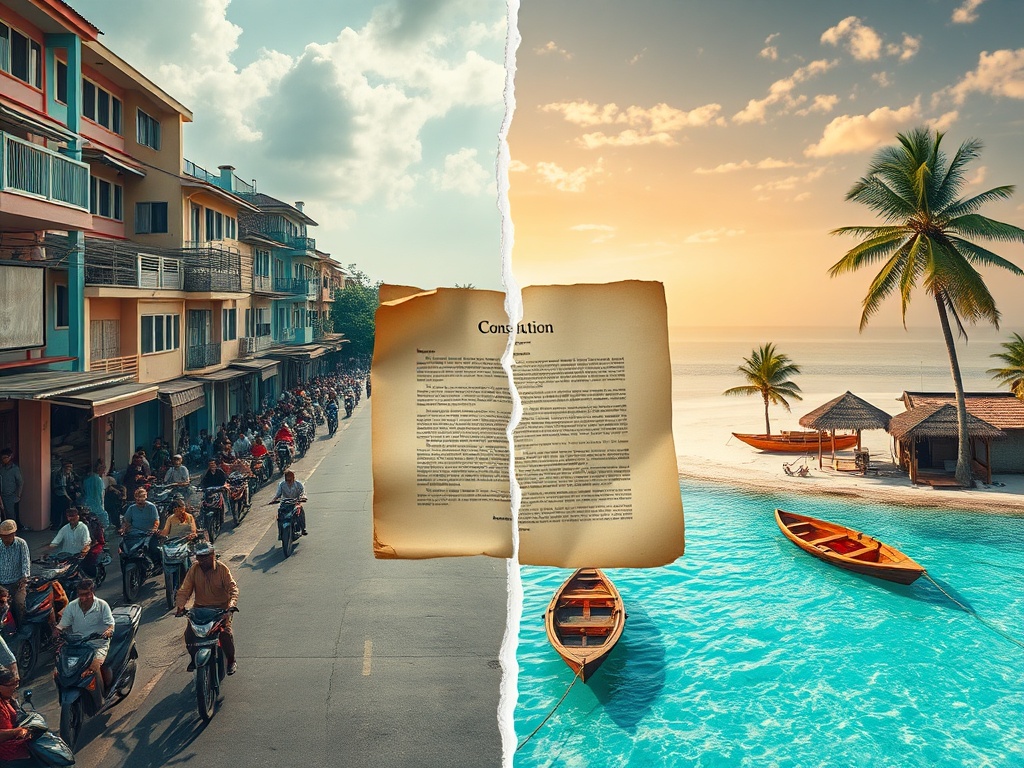
The Constitutional Right That Divides Our Islands
The constitution is clear: every Maldivian citizen holds the right to migrate to any inhabited island without restriction. Yet this constitutional guarantee has become the epicenter of a national identity crisis playing out across social media platforms and dinner tables alike.
At the heart of the matter lies what critics describe as an unspoken 'jus sanguinis' mentality—a normative concept borrowed from citizenship law but applied internally to discriminate between citizens within our own borders. This invisible hierarchy privileges those with what one commentator bluntly termed 'Malé DNA' alongside wealthy elites, creating a two-tiered citizenship structure that contradicts both constitutional text and basic human rights principles.
The debate crystallizes around new urban developments, particularly reclaimed land and cities built through billions in public investment. 'It was created for birds, corals and fish,' one perspective notes. 'We reclaimed the land, made a city, spent billions for reclamation and infrastructure. We all paid for the city. Is it too much to ask for same rights? Why are we second class citizens in our capital?'
This sentiment echoes through discussions of what some call the 'fundamental issue'—maintaining the fiction of a unitary state while residency rights remain effectively restricted to a select few. The tension between constitutional promise and practical reality has created what observers describe as nationwide chaos fueled by theories of elitism, where citizens from other islands are portrayed as 'opportunists' rather than compatriots exercising their lawful rights.
The policing and judicial dimensions add another layer of complexity. Recent incidents have sparked outrage about the treatment of citizens, with critics questioning whether authority figures have forgotten basic human dignity in their enforcement approaches. 'Yes she's a judge but whatever happened to human dignity in the mind of the police officer? No compassion whatsoever,' one commentator noted, drawing parallels to international policing controversies while emphasizing local context.
Women's rights advocates point to contradictions in the human rights discourse, noting selective silence when women faced arrests for street protests, phone seizures, and privacy violations where personal photos were viewed by male authorities and leaked. This pattern of inconsistent application of rights principles fuels broader skepticism about the system's fairness.
Underlying these specific grievances is a profound anxiety about the very nature of belonging. As one voice starkly warned: 'First they make you homeless, next thing you know they'll turn this idea around right behind you bend you over and make you city/island-less therefore not even a citizen.' This fear—that rights erosion could culminate in effective statelessness—drives much of the emotional intensity in these discussions.
The solution proposed by many participants is strikingly simple: 'Leave all of us to our own devices. Stop controlling us.' Yet implementing this vision would require confronting deeply embedded social hierarchies and re-examining what it means to be Maldivian in an era of rapid urbanization and social change. Until then, the gap between constitutional promise and lived reality continues to fuel a debate that strikes at the very heart of Maldivian identity.
— Source fragments: Constitutional right to migrate; 'jus sanguinis' discrimination concept; 'Malé DNA' privilege; reclaimed land citizenship rights; policing and human dignity concerns; women's rights inconsistencies; fear of escalating rights erosion; call for reduced control over citizens