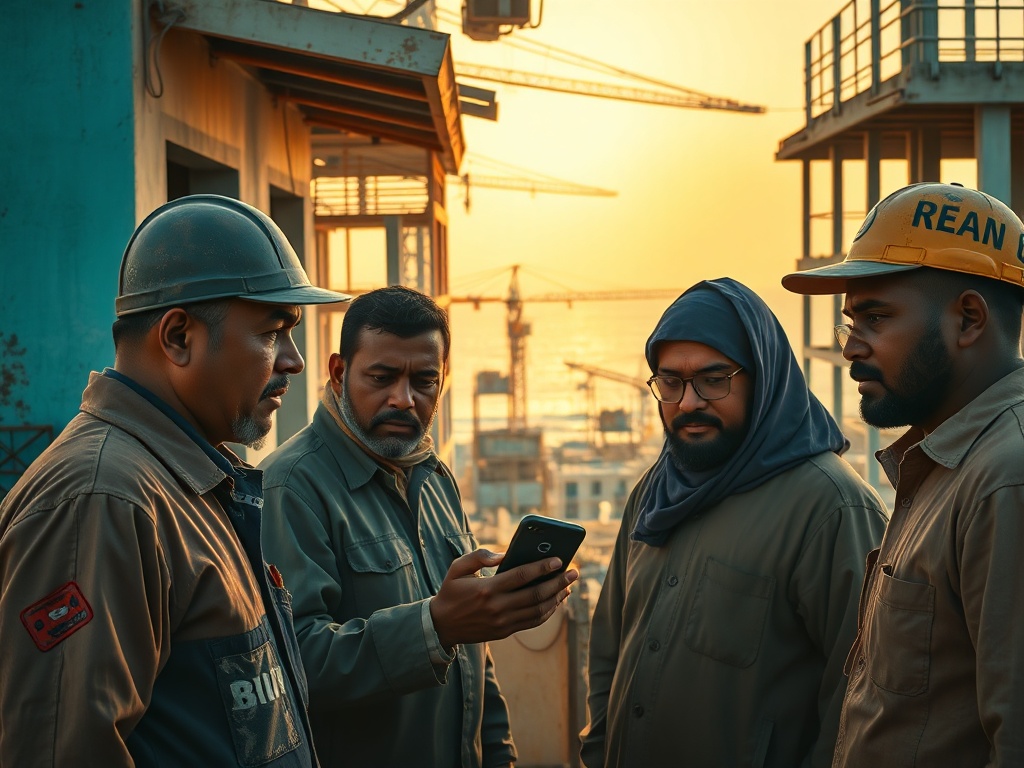
The Cost of Closed Doors
The announcement came through on a humid afternoon, the kind where the sea breeze does little to cool the sweat on your brow. SBI had set the new limit: $150 monthly for foreign workers sending money home. Down from $400. In the accounting offices and construction sites across Malé, the numbers began to rearrange themselves in people's minds.
For Rahim, who sends money to his aging parents in Bangladesh, the calculation was immediate. His mother's medication costs $80 monthly. His sister's college fees another $120. The math didn't require a calculator—it required compromise. Or alternatives.
By evening, the whispers had started in the tea shops near the harbor. Men clustered around small tables, the scent of sweet tea and salted fish hanging in the air. They spoke of friends who knew friends, of transfer methods that didn't appear on official ledgers. The black market for dollars, once a shadow economy for the desperate, was becoming a practical solution for the ordinary.
On the other side of the equation, local business owners stared at their spreadsheets with growing unease. Ahmed, who runs a small construction firm, already struggles to find reliable workers. Now he'd need to pay more to compensate for the lost remittance capacity—or watch his best workers leave for countries with fewer restrictions.
There's a particular irony to watching regulations intended to protect local economies instead distort them. The pipes visible beneath the pavements of Malé tell their own story of infrastructure projects with unintended consequences. Now financial pipes were being constricted, and everyone could predict where the pressure would build.
The sea has always taught islanders that when you block one current, the water finds another path. In the coming months, the real cost of this policy won't be measured in dollars alone, but in the quiet adjustments people make—the extra jobs taken, the families making do with less, the businesses straining under new pressures. The ocean doesn't care about our regulations; it simply flows around them.
— Source fragments: SBI announces 150USD is the max amount foreign workers can send abroad monthly. Used to be 400USD. The obvious consequence of this will be further inflow into USD black market and rising salary expenses for local companies.