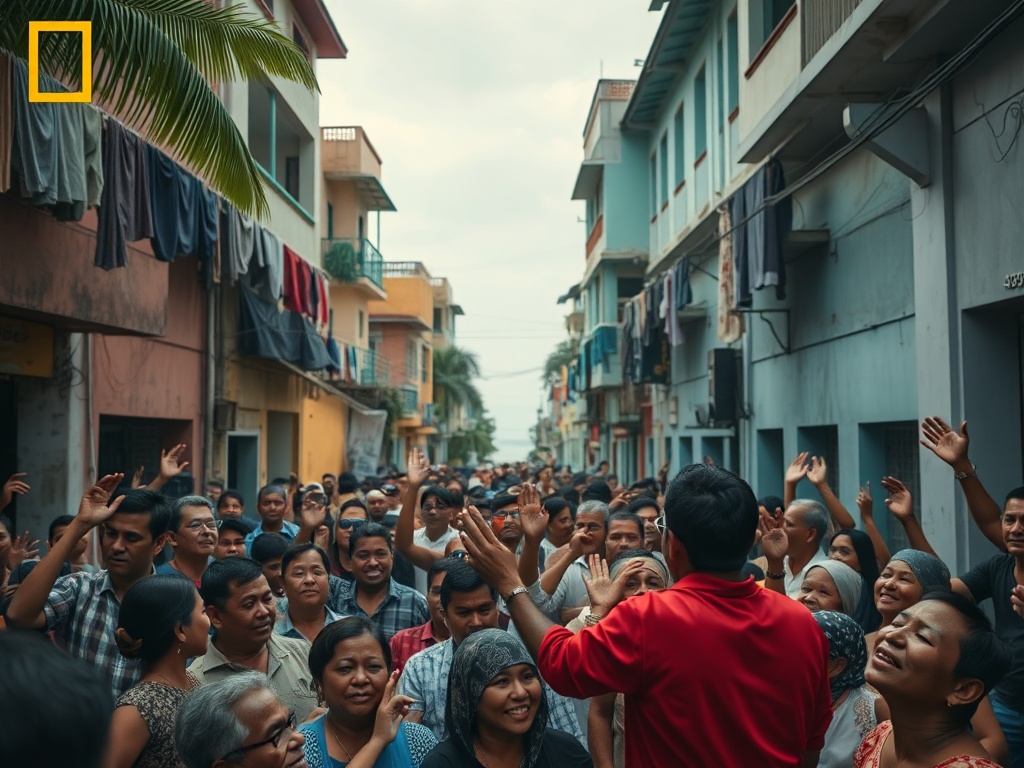
The Crowd Cheers While Some Faces Watch in Silence
The roar of the crowd still echoes in memory—thousands of cheerful faces gathered under the night sky, their collective energy focused on a single figure. Political rallies in the Maldives have become spectacles of devotion, moments where allegiance is worn openly and proudly. Yet beneath this surface unity lies a more complex political reality where loyalty is both currency and question.
In this environment, a particular type of politician has learned to thrive: the cross-party operator. While many politicians switch affiliations, few manage to maintain top positions consistently across different political landscapes. This requires a specific kind of political intelligence—the ability to navigate shifting alliances while maintaining credibility. Supporters see this as pragmatic leadership; critics view it as opportunism.
The debate over what constitutes effective leadership intensifies as citizens compare current and former administrations. Some recall presidents who maintained direct communication with ordinary people, responding to messages with surprising frequency. This accessibility created a sense of connection that transcended formal political structures. For many, such personal engagement defined true public service.
Meanwhile, party loyalists maintain that their chosen movement remains the only one that genuinely cares for the people. This conviction fuels political participation even as the system shows signs of strain. The call for leaders with 'guts' to rebuild from the ground up reflects widespread frustration with perceived systemic corruption and inefficiency.
Political defections have become strategic maneuvers, with some viewing cross-party movement as potential achievements rather than betrayals. This perspective acknowledges the fluid nature of Maldivian politics, where ideological boundaries often blur in favor of personal relationships and practical considerations.
The fundamental question remains: In a nation where political winds change direction with concerning frequency, what qualities should citizens value most in their leaders? Is consistency across party lines a sign of political wisdom or lack of principle? Does accessibility trump policy expertise? As the Maldives continues its democratic evolution, these questions will likely determine not just who leads, but how they lead.
— Source fragments: Political rally attendance with cheerful faces; Observation about politicians working across parties; Note about presidents replying to messages; Statement about MDP caring for people; Comment about leaders rebuilding corrupt systems