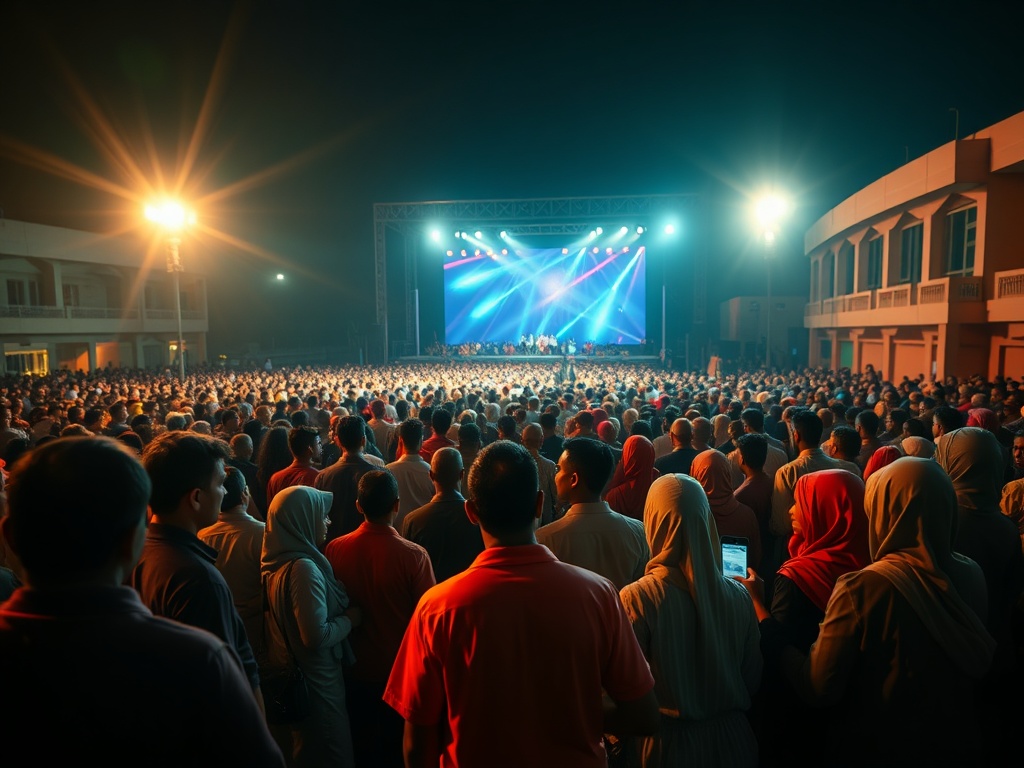
The Crowd That Cheers While Checking Their Phones
The stage is set, the lights are bright, and the applause echoes through the night air. Another political gathering unfolds in the Maldivian political landscape, this one branded as a 'mega rally' by its organizers. Yet beneath the surface spectacle lies a more complex reality—one where attendance is sometimes secured through obligation rather than conviction, where loyalty can be as artificial as the stage lighting that illuminates it.
The phenomenon of political theater has become increasingly sophisticated in the Maldives, with critics noting how crowds can be mobilized through various means—from the subtle pressure of workplace expectations to more direct incentives. This creates a peculiar dynamic where the energy in the arena doesn't necessarily reflect genuine public sentiment. The applause that follows declarations of solved national problems often comes from people who themselves cannot identify what problems have actually been resolved.
This gap between political performance and public experience reveals a deeper challenge in Maldivian democracy. When political support becomes something that can be manufactured rather than earned through genuine achievement, it creates a fragile foundation for governance. The temporary nature of such support becomes apparent when the rally ends and people return to their daily lives, still facing the same economic pressures, housing shortages, and healthcare challenges that existed before the speeches began.
The political landscape has evolved into what some observers describe as a form of personality worship, reminiscent of past political eras. The focus shifts from policy debates and substantive discussions to symbolic gestures and emotional appeals. An empty pink chair displayed from a balcony becomes a powerful counter-narrative to the crowded arena, a silent protest against what critics see as the hollow nature of political spectacle.
What emerges from this dynamic is not just a political problem but a societal one. The reliance on manufactured support creates a cycle where politicians may feel less pressure to deliver tangible results, knowing that crowds can be assembled through other means. Meanwhile, the public grows increasingly cynical, recognizing the gap between political theater and their lived reality.
The true test of political strength in the Maldives may no longer be measured by the size of rally crowds but by the ability to address the substantive challenges that persist beyond the stage lights—the economic pressures, the housing crisis, the healthcare shortcomings that affect ordinary Maldivians every day. Until political engagement moves beyond the theater of rallies and addresses these core issues, the applause will remain as temporary as the political loyalties it represents.
— Source fragments: PNC rally tonight is lit by artificial loyalty The kind that doesn't survive daylight; Those who are being forced to go because of attendance marking; You cannot force or buy support, it will only be temporary; On podium, ruling party con artists say that all our problems have been resolved. Around 10000 people clap! Nobody has any clue what problems were resolved; this is muizzu worshipping. this is maumoonism