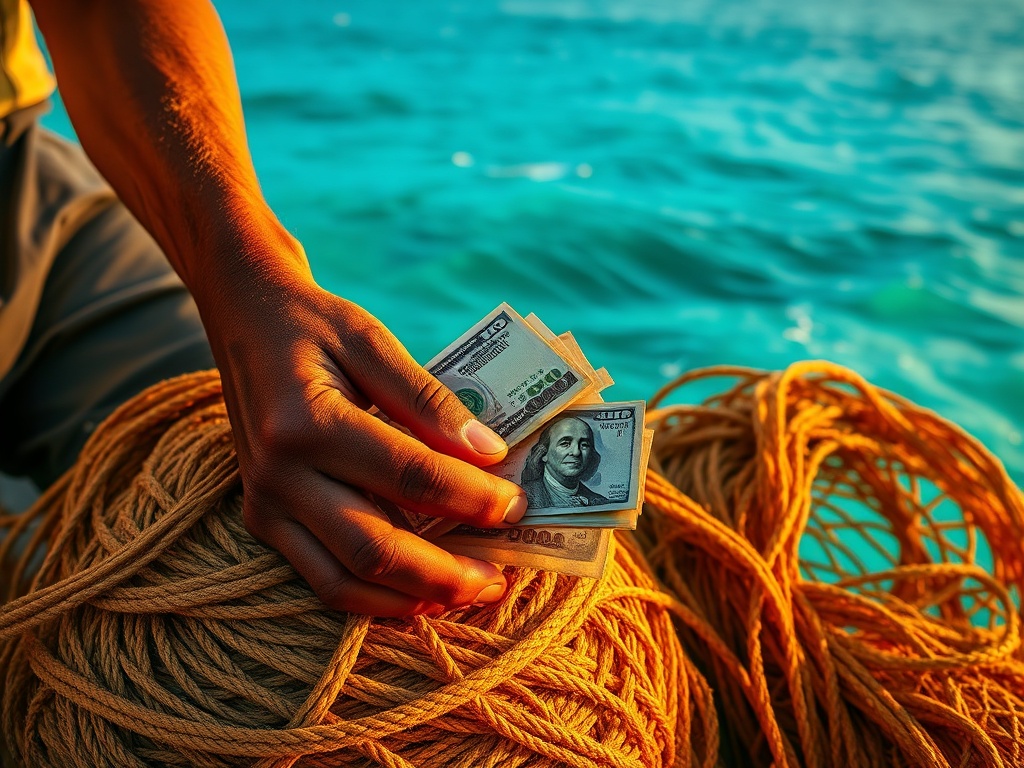
The Currency of Our Days: Between What We're Paid and What We're Worth
The morning sun catches the dust motes dancing above the harbor, each particle suspended in that golden hour before the heat becomes oppressive. Fishermen count their catch not in kilos but in currency conversions—how many dollars for this tuna, how many ruffiya for that day's labor. There's a quiet mathematics to survival here, one that government policies never seem to account for.
They speak of forced USD policies as if they're abstract equations, but we feel them in the weight of our pockets. When your paycheck arrives in local currency but your rent is calculated in dollars, you learn a new kind of arithmetic—the kind that keeps you awake at three in the morning, counting not sheep but exchange rates.
Some say the resorts have all the leverage, but I've watched my cousin work at one for twelve years. He knows the exact shade of blue the ocean turns when the monsoon approaches, knows which guests will tip generously and which will complain about the Wi-Fi. He's become an expert in human nature while his salary becomes an exercise in currency conversion.
There's a particular irony to being paid in the money of your own land while the real economy happens in foreign notes. It's like being given the key to your own house but told you can only open certain doors. The construction cranes swing against the horizon, building towers that will house people who earn in currencies that matter, while we calculate our worth in notes that feel increasingly like colored paper.
Yet there's a resilience in the way we adapt. We've always been people of the sea, accustomed to reading subtle shifts in currents and winds. Now we read the subtler shifts in policy and power. We understand that leverage isn't always about who holds the money, but who understands the value of the hands that earn it.
Perhaps what we're really talking about isn't currency at all, but dignity. The dignity of being paid in money that means something, that buys something, that doesn't require three mental calculations before you can purchase rice for your family. The dignity of knowing your labor isn't being discounted by exchange rates and policy decisions made in air-conditioned rooms far from the salt-spray reality of our lives.
Tomorrow the sun will rise again over the atolls, and we'll continue our calculations—not just of money, but of meaning. We'll measure our days not in currency fluctuations but in the small victories: a good catch, a fair price, a moment when the system works as it should. And in those moments, we find a different kind of wealth altogether.
— Source fragments: even in the forced usd policy it's the maldivian workers suffering because they're being paid in ruffiya now instead of dollars; it would be a ridiculous move for a govt to force a company to pay in NOT their national currency; if they really cared about the workers creating most of their tax revenue, they would, but they won't admit reality