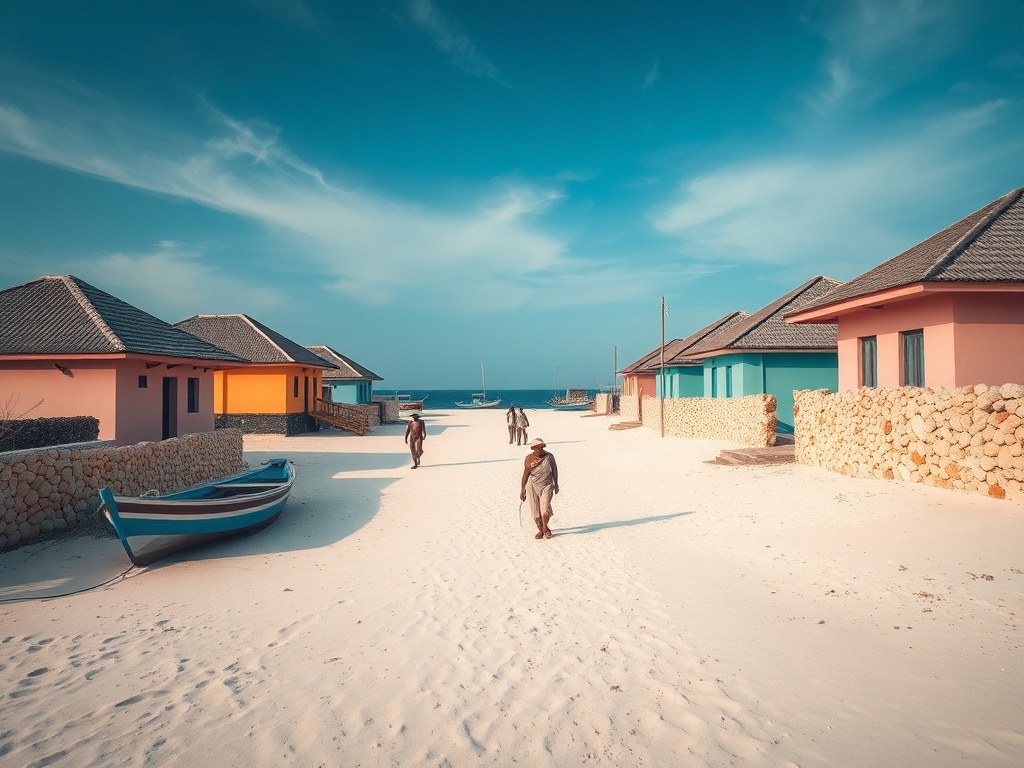
The current thinking of consolidating population into three or four large islands is flawed.
When the government first proposed consolidating our scattered population into just three or four large islands, it was presented as a practical solution. The logic seemed sound on paper: concentrate resources, streamline services, and boost economic efficiency. But as the policy gains momentum, a quiet unease is spreading through the atolls. What happens to the soul of a nation when its people are uprooted from ancestral lands?
For generations, Maldivians have lived with the sea as their backyard and their island as their world. Each island, no matter how small, carries its own history, its own dialect, its own way of life. To erase these micro-communities in the name of progress is to risk losing the very fabric of our culture. The coral-stone mosques, the local fishing techniques, the community-led festivals—these aren't just traditions; they are the pillars of our identity. Can we truly afford to trade them for centralized urban convenience?
Economically, the consolidation model promises efficiency, but it also creates vulnerability. Concentrating our population means concentrating risk. A single disaster, whether environmental or economic, could impact a far larger portion of our citizens. Our current dispersed model, while challenging to administer, has historically acted as a natural buffer. If one island faces a shortage, another can provide support. Are we replacing a resilient, distributed system with a fragile, centralized one?
Moreover, this policy overlooks the deep emotional and psychological ties Maldivians have to their home islands. Uprooting families from Vilingili, Thoddoo, or Hinnavaru isn't just a logistical exercise—it's a profound disruption. The sense of belonging, the community support networks, the knowledge of local ecosystems—all are built over lifetimes. How do we measure the cost of this lost social capital? Is the promise of better infrastructure worth the price of broken communities?
There are also practical questions about implementation. Will the promised high-quality services in consolidated hubs truly materialize, or will they become overcrowded and strained? We've seen in Malé how rapid urbanization can lead to traffic congestion, housing shortages, and environmental stress. Repeating this model on a larger scale could amplify these problems. Are we solving old challenges only to create new, larger ones?
Perhaps we need to reconsider the approach entirely. Instead of forcing migration, why not invest in making every inhabited island sustainable? Renewable energy, digital connectivity, and improved transport could bring modern amenities to remote communities without requiring people to abandon their homes. This would preserve our cultural diversity while still moving forward. The question isn't whether we develop—it's how we develop, and who benefits from our development choices.