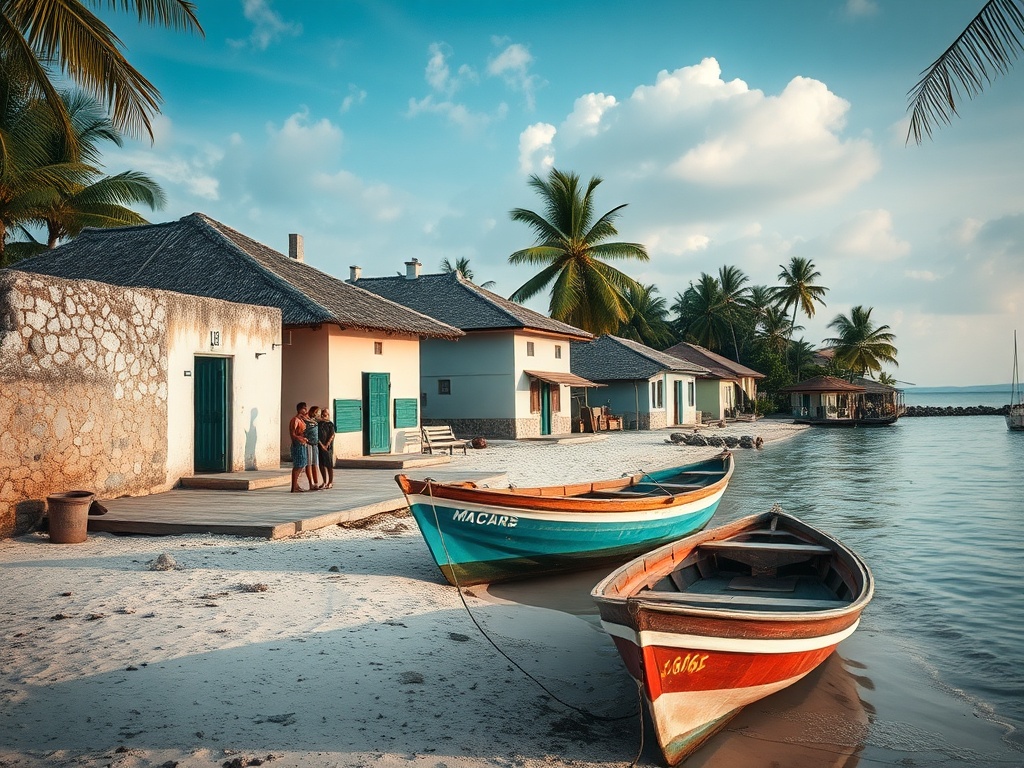
The current thinking of consolidating population into three or four large islands is flawed.
For generations, the Maldivian identity has been woven from the threads of nearly 200 inhabited islands—each with its own history, its own coral-stone mosques, its own fishing rhythms. Now, a top-down vision seeks to gather us into three or four hubs, promising efficiency and development. But what happens to the soul of a nation when its people are uprooted from their ancestral homes? The atolls are not just dots on a map; they are living communities where kinship and local knowledge have sustained life for centuries.
Proponents argue that consolidation will streamline services—better schools, hospitals, and infrastructure concentrated in fewer locations. Yet, this logic ignores the social cost. When you empty an island, you don’t just relocate families; you dissolve a community. The elderly lose their support networks, fishermen lose proximity to their fishing grounds, and children grow up disconnected from the environments that shaped their parents. Is development worth the price of cultural amnesia?
Consider the practical realities: Malé is already bursting at the seams, with overcrowding and soaring living costs. Redirecting more migration toward a handful of islands risks replicating these pressures elsewhere. Will newly designated "growth centers" become future pockets of inequality, where original residents are sidelined by newcomers? And what of the outer atolls—will they become mere waystations, their economies and social structures left to wither?
The alternative isn’t stagnation, but smarter, decentralized development. Why not invest in renewable energy, digital connectivity, and healthcare clinics that serve existing island communities? With modern technology, must we still cling to 20th-century ideas of centralization? The atolls have survived by adapting—not by abandoning one another.
This isn’t just about infrastructure; it’s about choice. Do Maldivians want to become a nation of a few crowded urban centers, or a vibrant archipelago where every island has a future? The debate is urgent, and the voices from the islands must be heard before their homes are consolidated into memory.