The Currents of Doubt
The call to prayer echoed across the tin roofs, but Ali didn't move from his spot on the veranda. He could hear the neighbors arguing again—the same old debate about who was corrupt and who wasn't, the same names thrown around like stones skipping across water. 'Zohran is not my mayor,' one voice insisted, while another defended Ihusaan's record. The words drifted through the humid evening air, mixing with the scent of salt and fried fish.
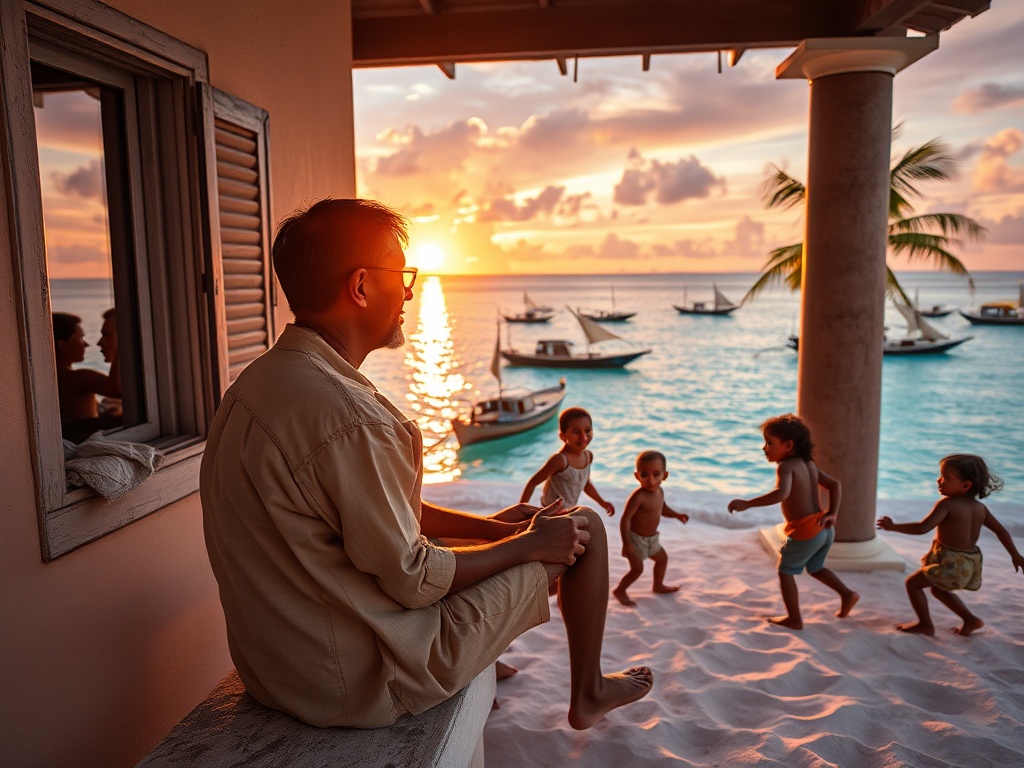
Ali watched the dhoni boats rocking in the lagoon, their movements synchronized yet independent. Like us, he thought. All floating in the same sea, but each going in different directions. He remembered his grandfather's stories about Koimala, the first king, arriving from the sea. 'We were dhivehin long before modern states were created,' the old man would say, his voice as steady as the monsoon winds.
But now everything felt unmoored. The police taking criminals for walks in the park, the airport robbery suspects detained without proper counsel, the endless political vendettas. It was all 'vai jahey kolhakah hurun'—sailing wherever the wind was favorable. Ali wondered if their identity had always been this fragile, shifting with each new influence like sandbars in a changing tide.
He thought about the western NGOs his friends complained about—how they'd fund statue restorations while people went hungry. The irony wasn't lost on him: in a nation surrounded by ancient sea routes, they were still searching for their true north.
A child's laughter cut through the political noise from next door. Ali looked up to see young Aishath chasing her brother across the coral-stone courtyard, completely unaware of the debates raging around them. For them, being dhivehin was as natural as breathing the sea air.
Later, walking along the beach, Ali watched the bioluminescent plankton glowing in the dark water. Each tiny organism, insignificant alone, created something beautiful together. Maybe that was the answer—not in choosing sides, but in remembering what connected them all. The same stars that guided Koimala still shone above, the same ocean that birthed their civilization still lapped at their shores.
The real corruption wasn't in any single politician, he realized. It was in forgetting that beneath all the posturing and politics, they were still children of these islands, bound by something deeper than any political appointment or scandal.
As he turned back toward home, the political chatter had quieted, replaced by the steady rhythm of waves against the reef. Some things, at least, remained constant.
— Source fragments: Political division fragments ('zohran is not my mayor', 'Ihusaan corruption debates'), identity discussions ('we were dhivehin long before modern states'), and emotional expressions about societal values and authenticity