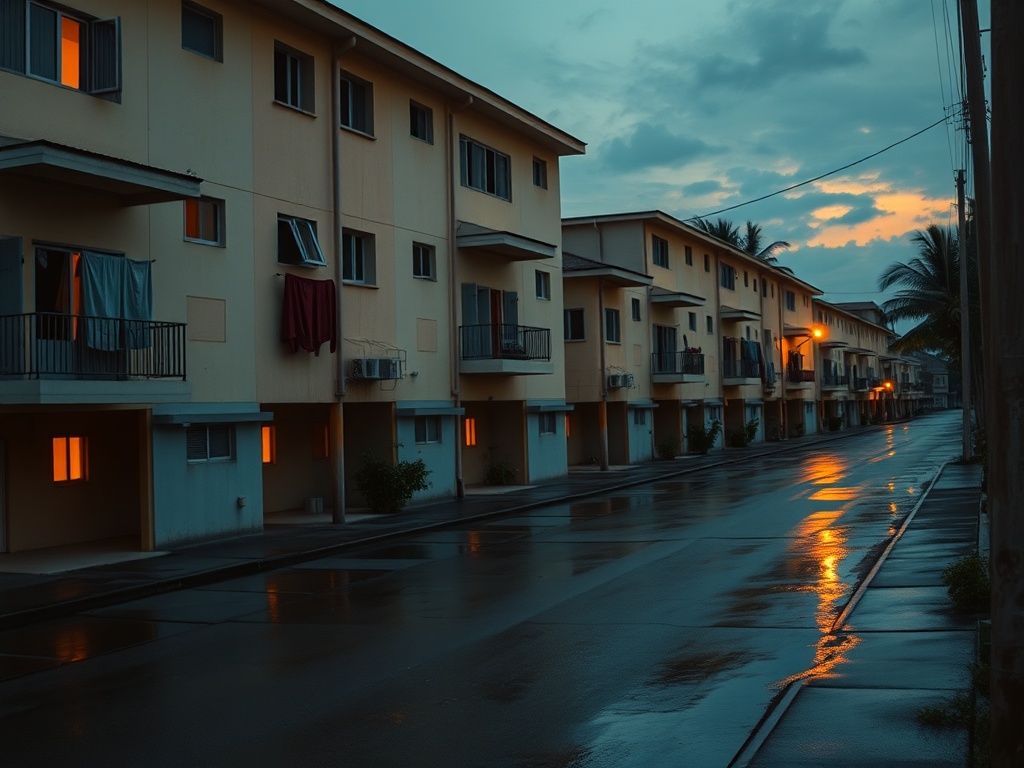
The Empty Flats of October
It happens every year around this time—the October light changes, the northeast monsoon begins to settle, and you notice things you might have missed in the rainy season haze. Like the empty flats.
Walking through the newer government housing areas after sunset, you can't help but see the dark windows—not just one or two, but entire floors where no light filters through the curtains, where no laundry hangs from the drying lines, where no voices carry down to the street below. These concrete boxes stand silent while just streets away, families squeeze into single rooms, paying rents that swallow their monthly earnings.
The irony hangs in the salty air. These buildings were meant to be solutions, promises made tangible in reinforced concrete. Yet here they stand, monuments to a system where housing becomes political currency rather than human shelter. You think of the aunties who've been on waiting lists for decades, the young couples postponing marriage because they can't secure a place of their own, the elderly who speak nostalgically of islands where everyone knew whose light should be on at dinner time.
There's a particular loneliness to these unlit windows in October. The festive moods of Ramadan and Eid are distant memories, the year-end celebrations still months away. In this seasonal lull, the emptiness becomes more pronounced, more accusatory. You find yourself counting the dark squares against the night sky, each one representing a family that could be sleeping securely tonight, a child who could have a room of their own, a life that could be unfolding differently.
We notice these things not because we're looking for problems, but because the contrast is too stark to ignore—between the life happening in overcrowded spaces and the potential life absent from these empty rooms. Between the promises made and the reality lived. Between the October we were promised and the October we walk through.
— Source fragments: Yeah have noticed this many times and cross a ves nuhutta