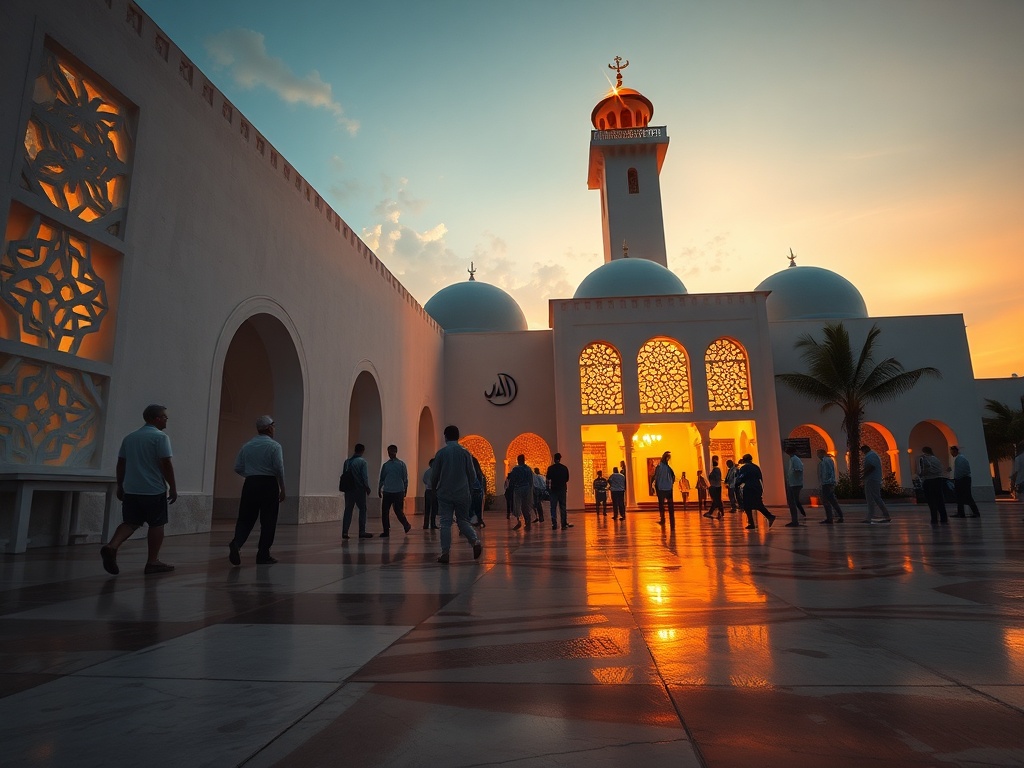
The Evening Prayer Debate at Malé's New Mosque
In the Maldives, where Islam forms the bedrock of national identity, conversations about religious interpretation reveal the complex interplay between tradition and modernity. Recent discussions among community members highlight the nuanced ways Maldivians engage with theological concepts and religious organizations.
The term 'kafir'—often translated as 'non-believer'—has surfaced in local discourse, with some emphasizing its universal application across religious contexts. This linguistic precision matters in a society where religious identity is paramount. Meanwhile, the concept of jihad continues to evolve in public understanding, with some viewing it through geopolitical lenses while others focus on its spiritual dimensions.
Salaf, a prominent Islamic NGO comprising scholars, has become a focal point in these discussions. Supporters describe it as a mainstream organization that operates within legal boundaries, unable to issue fatwas but vocal in its condemnation of international conflicts. Critics, however, express concerns about its influence and interpretation of Islamic principles.
The organization's role appears carefully calibrated—hosting religious lectures in mosques and addressing contemporary issues while navigating the delicate balance between religious advocacy and legal constraints. This reflects a broader pattern in Maldivian society, where religious organizations must operate within a framework that respects both Islamic principles and national regulations.
These theological conversations unfold against a backdrop of pressing social challenges: economic pressures, housing shortages, and youth unemployment. For many Maldivians, religious discourse provides both moral guidance and a framework for understanding complex modern problems. The debate over religious interpretation isn't merely academic—it reflects deeper questions about how a Muslim nation maintains its identity while addressing contemporary realities.
What emerges is a picture of a society thoughtfully engaging with its religious heritage, where scholarly organizations play significant but constrained roles, and where theological concepts are constantly reinterpreted in light of both local needs and global events. The ongoing dialogue demonstrates Maldivians' commitment to preserving religious authenticity while navigating the complexities of the modern world.
— Source fragments: Discussions about kafir meaning non-believer across religions, debates about jihad and its contemporary interpretation, differing views on Salaf as an Islamic NGO and its limitations