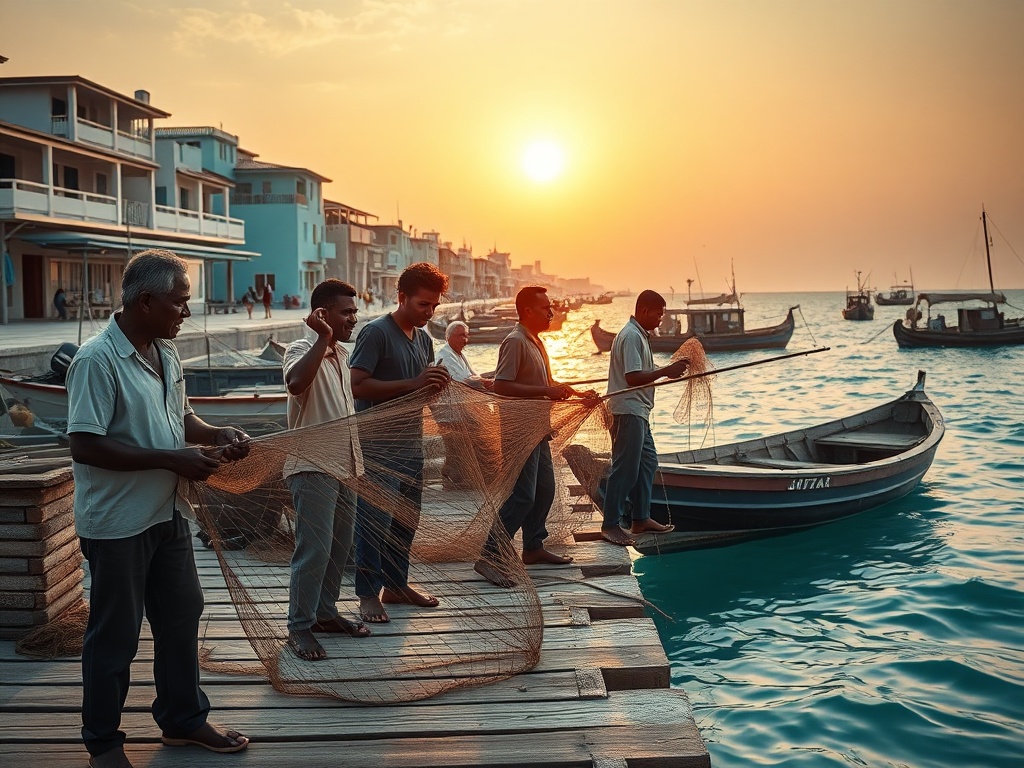
The Faces We Share Across Oceans
I was sitting at the harbor wall in Malé, watching the fishing boats return with their catch, when I noticed something that made me pause. The faces of the fishermen—some local Maldivian men, others migrant workers from Bangladesh and Sri Lanka—blended together in the late afternoon light. The same sun-browned skin, the same dark eyes squinting against the glare, the same laughter lines around their mouths as they joked in a mix of Dhivehi and broken English.
This realization wasn't new, but it struck me with fresh clarity. We Maldivians have always been people of the sea, our history written in the currents that brought traders, travelers, and settlers from across the Indian Ocean. The same waters that separate us also connect us to the wider South Asian family. When I look at someone from Sri Lanka, India, or Bangladesh, I don't see 'other'—I see cousins separated by political borders but united by geography and shared human experience.
The afternoon breeze carried the scent of salt and drying fish, mingling with the distant aroma of mas huni being prepared in nearby homes. I thought about how absurd racism feels in this context. How can we claim superiority over people who share our climate, our struggles, our daily rhythms? The fisherman from Kerala who mends nets the same way my grandfather did, the shopkeeper from Tamil Nadu who knows exactly how spicy we like our curries, the construction worker from Bangladesh who builds the same concrete homes we all live in.
Our differences are like the varying shades of coral in our reefs—beautiful variations within the same ecosystem. The notion that one shade is inherently better than another is as ridiculous as claiming one wave in the ocean is superior to the next. We're all navigating the same waters, facing the same storms, dreaming the same dreams of providing for our families and finding moments of joy in the struggle.
As the call to prayer echoed from the mosque, I watched these men of different origins pause their work in unison, turning toward the same direction. In that moment, the artificial divisions of nationality and race dissolved into the shared human experience of faith, community, and the eternal rhythm of island life.
— Source fragments: "i mean there are south asians who look like some folk from SEA, even many maldivians who look some malays, etc. i know i can assign certain folk to a specific country based on looks i've never thought of country/region as superior or inferior. can't even comprehend it." "south asians look far too much like me to be racist to them"