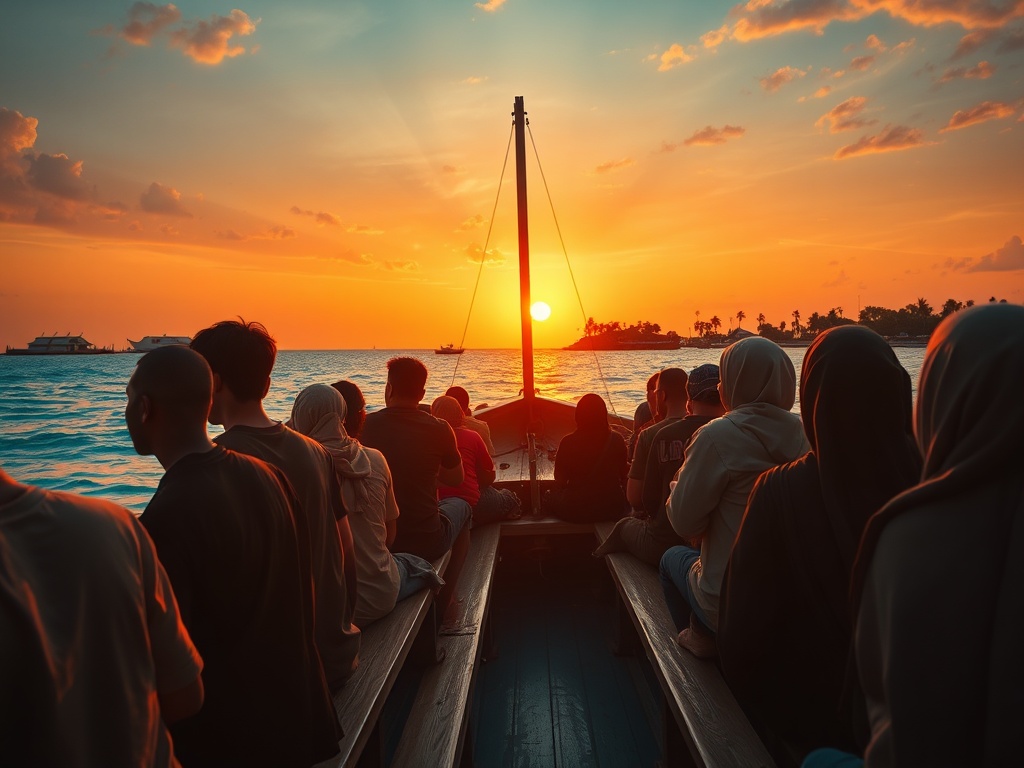
The Ferry Ride Where Love and 'Get Out' Share a Seat
The morning ferry from Malé to a nearby island carries more than just passengers. It carries the weight of unspoken conversations, the tension between what we say publicly and what we whisper privately. "Get the f*ck out of this country," the thought comes unbidden, followed immediately by its contradiction: "Hell NO!!" This emotional whiplash defines the modern Maldivian experience—a love-hate relationship with the qawm, the people, the place we call home.
Across the crowded seating, you can see the manifestations of this national ambivalence. The young professional scrolling through job opportunities abroad while planning his sister's traditional wedding ceremony. The mother complaining about the education system while fiercely defending Maldivian values to her children. The businessman decrying corruption while benefiting from the very systems he criticizes. We are all complicit in the patterns we lament.
The rot sets in quietly, not with dramatic collapses but with gradual accommodations. We see it in the way public discourse has become a performance—patriotic declarations that avoid confronting uncomfortable truths about our own community's grievances. "Hold up, you are just focusing on others here, avoiding your own people's grievances," the internal critic whispers. We become experts at deflection, pointing fingers outward while the interior decays.
This psychological landscape manifests physically in our crowded capital, where housing projects meant to alleviate suffering become political currency, where subsidized apartments house ghosts while families cram into single rooms. The system breeds a peculiar cruelty—the ability to witness suffering while maintaining plausible deniability. "One unfortunate incident," we say, until it touches our own family, until the abstraction becomes personal.
Yet within this tension lies something profoundly human—the capacity to hold contradictory truths simultaneously. We can decry the system while loving the people within it. We can criticize the government while celebrating Maldivian identity. We can dream of escape while planting deeper roots. The fat, sensitive bitches of our national psyche—the parts we'd rather not acknowledge—demand recognition even as we try to hide them.
What emerges from this emotional complexity isn't despair but a raw, uncomfortable authenticity. The Maldivian soul isn't selling itself—it's negotiating its price, determining what parts of tradition to preserve, what compromises to make, what values to defend. In the space between "get out" and "never leave" lies our national character—flawed, conflicted, but fiercely ours.
— Source fragments: My love-hate relationship with this qawm; Hold up, you are just focusing on others here, avoiding your own people's grievances; The rot is setting in; Get the f*ck out of this country vs Hell NO