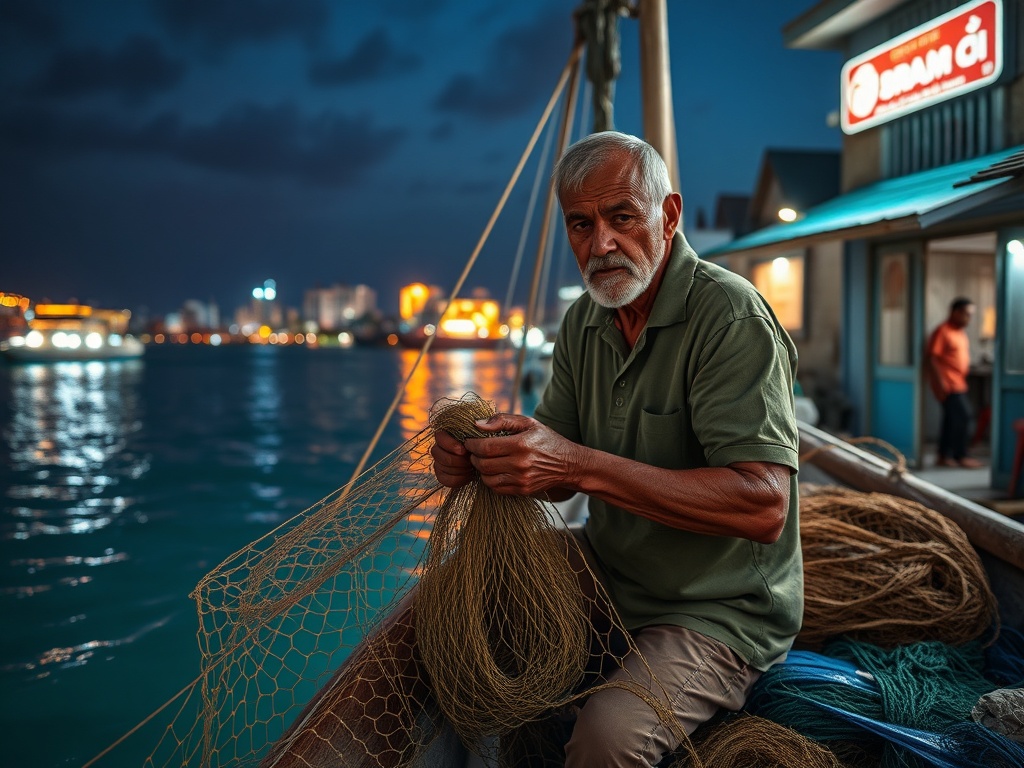
The Fisherman Mending Nets While Diversification Plans Gather Dust
In the quiet hours between sunset and moonrise, when the sea breeze carries the scent of salt and diesel through Malé's narrow streets, you can almost hear the collective sigh of a nation trying to understand why economic solutions remain just beyond our grasp. We've been talking about diversification for fifty years—a lifetime of conversations that echo across tea shops and government offices, yet the landscape remains stubbornly unchanged.
The private sector that truly matters to our economy isn't the newspapers or the public declarations. It's the invisible ecosystem of resort owners converting dollars to rufiyaa at imaginary rates, the shopkeepers weighing whether to sell cigarettes to paying customers when more dangerous transactions happen openly just streets away. It's the Maldivian workers receiving wages in local currency while their purchasing power evaporates like morning mist on the lagoon.
There's a peculiar tension in watching policies unfold—the generation bans, the remittance caps, the currency controls—like watching someone rearrange deck chairs on a sinking dhoni. The intentions may be genuine, but the execution feels disconnected from the reality of our daily struggles. When workers are paid in rufiyaa instead of dollars, when resorts navigate artificial exchange rates, when black markets thrive because official channels fail—these aren't abstract economic concepts. They're the currents that shape our lives.
The frustration isn't just about policies that seem ineffective; it's about the growing chasm between those who design solutions and those who live with their consequences. We've become experts at identifying problems—the high cost of living, the foreign currency shortages, the jobs that don't materialize—but remain novices at implementing lasting remedies.
Perhaps what we're witnessing isn't just policy failure but a deeper disconnect—a failure to recognize that economic systems are living organisms, not mechanical puzzles. They breathe through the small transactions, the unspoken agreements, the daily compromises that people make to survive. No amount of political rhetoric can substitute for understanding these delicate balances.
As another day ends in our island nation, the economic challenges remain, waiting not for grand pronouncements but for genuine connection between intention and reality, between policy and people, between the economy we discuss and the lives we actually live.
— Source fragments: What is the private sector that matters to our economy; Its not fair and they have no clue to fix this mess; generation ban is useless policy; Maldivian workers suffering being paid in rufiyaa instead of dollars; why does resorts have MVR to pay workers; we've been saying diversification for 50 years but it hasn't happened