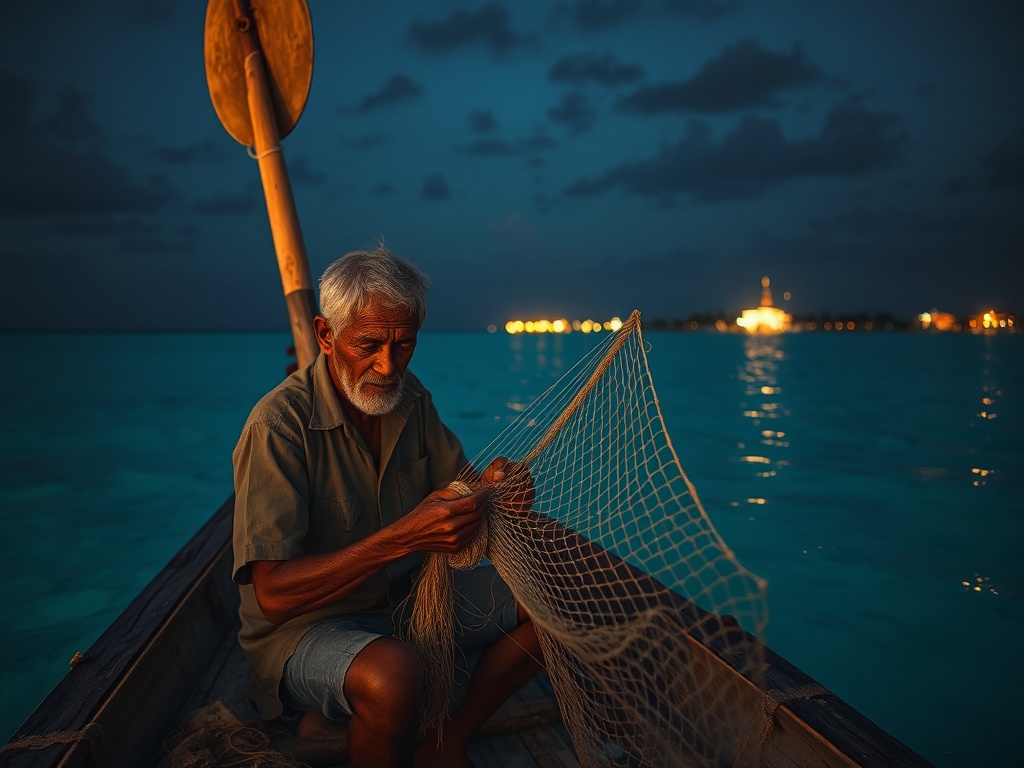
The Fisherman Mending Nets While Resort Lights Glow
The question hangs in the humid air like the salt spray off the reef: what truly constitutes the 'private sector' that drives our economy? It's a query that echoes through the narrow streets of Malé, where shopkeepers count rufiyaa while wondering about the dollars flowing elsewhere. The frustration is palpable—a sense that those making decisions are navigating by charts that don't match the waters we actually sail.
There's a particular irony in currency policies that force resorts to buy rufiyaa at artificial rates, creating a cascade of consequences. The Maldivian worker receives their wages in local currency while watching the value shift like the tide. Meanwhile, those same resorts must somehow manage the surplus of rufiyaa they never asked for, creating shadow economies and unintended consequences. It's like building a seawall that redirects the current rather than containing it.
The generational debates about economic diversification have become part of our national rhythm—the constant background hum to daily life. For fifty years we've spoken of broadening beyond tourism, yet the conversation repeats like the monsoon cycles. The real economy continues to function in the spaces between policies: in the shops where transactions happen regardless of official rates, in the remittances that cross oceans despite caps, in the daily calculations of families balancing rising costs against fixed incomes.
What emerges is not just policy frustration but a deeper tension between systems and survival. When regulations feel disconnected from the reality of what happens in broad daylight on our streets, trust erodes like our shorelines. The economy becomes something that happens to people rather than something they participate in shaping. Yet within this tension lies the resilience that has always characterized these islands—the ability to navigate complex currents and find ways forward, even when the official charts don't match the waters we actually sail.
— Source fragments: What is the 'private sector' that matters to our economy; Its not fair and they have no clue to fix this mess; Maldivian workers suffering because they're being paid in ruffiya now instead of dollars; Govt forcing resorts to buy mvr at imaginary rate; Our economy needs diversification, we've been saying that for 50 years