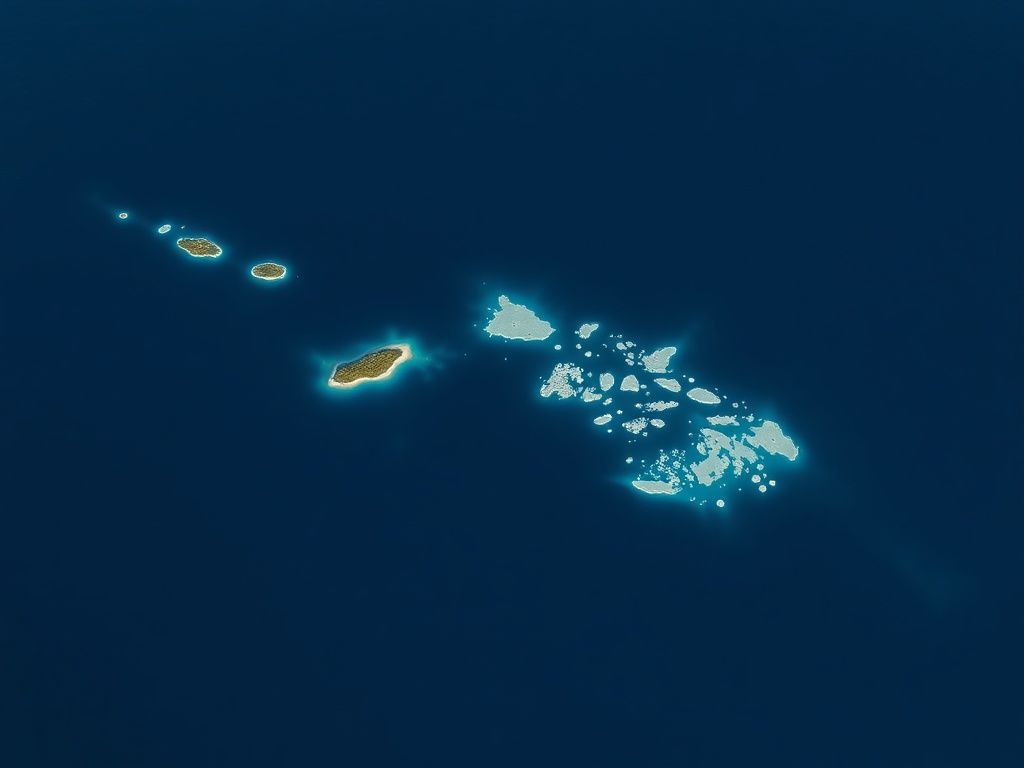
The Four Atolls Every Maldivian Knows But Hasn't Seen
In a nation of nearly 1,200 islands scattered across the Indian Ocean, the geography of personal experience is as fragmented as the archipelago itself. A casual online admission—"I have been to all atolls except Huvadhoo, Meemu, Faafu and Dhaalu"—unlocks a quiet, universal truth. It is a statement less of conquest than of absence. It maps not where one has been, but where one has not. In the Maldives, where identity is so deeply tied to place and sea, these uncharted atolls become more than just names on a map; they become silent questions, blank spaces in the narrative of a life.
This is not merely about tourism or checklist travel. It speaks to a deeper, more intimate relationship with the nation's physical form. For many Maldivians, movement between atolls is defined by necessity—for education, healthcare, or work—rather than leisure. The capital, Malé, exerts a powerful gravitational pull, congested and costly, making the outer atolls feel increasingly distant, both geographically and experientially. To have not visited Huvadhoo or Faafu might be a simple fact of logistics, but it also hints at the centripetal forces shaping modern Maldivian life, where opportunity clusters densely in few places, leaving vast swathes of the country known only by name or occasional news report.
The observation that "Sun Siyam has resorts in Lanka" introduces a contrasting vector of movement: outward. While internal travel between atolls may be limited for many, Maldivian capital and enterprise flow freely across international waters. The Maldivian resort brand is a global export, a testament to entrepreneurial acumen. Yet this duality is telling. The same forces that build luxury experiences abroad do not always translate to seamless connectivity or developed infrastructure at home. The atoll one has never visited and the international resort one owns exist in parallel realities—both are part of the Maldivian story, one defined by proximity, the other by distance.
What does it mean to carry a map of absences? In a country battling a housing crisis in the capital, where many feel trapped by economic pressure, the idea of freely exploring one's own nation can feel like a privilege. The unvisited atolls stand as symbols of a broader experience: the local shop never entered, the neighbor never spoken to, the historical site just a ferry ride away that one never makes time to see. They remind us that familiarity is often an illusion, even at home.
Ultimately, the statement is a quiet manifesto of incompleteness. It acknowledges that to know a country is not to conquer its geography, but to recognize the enduring mystery of its parts. The four unnamed atolls—Huvadhoo, Meemu, Faafu, Dhaalu—remain in reserve, not as failures, but as possibilities. They are the islands still on the horizon, ensuring the map is never fully filled, the story never entirely told. In a rapidly modernizing nation, perhaps it is these personal frontiers, these quiet absences, that keep the sense of wonder and belonging alive.
— Source fragments: "I have been to all atolls except huvadhoo, meemu, faafu and dhaalu." "I think Sun Siyam has resorts in Lanka."