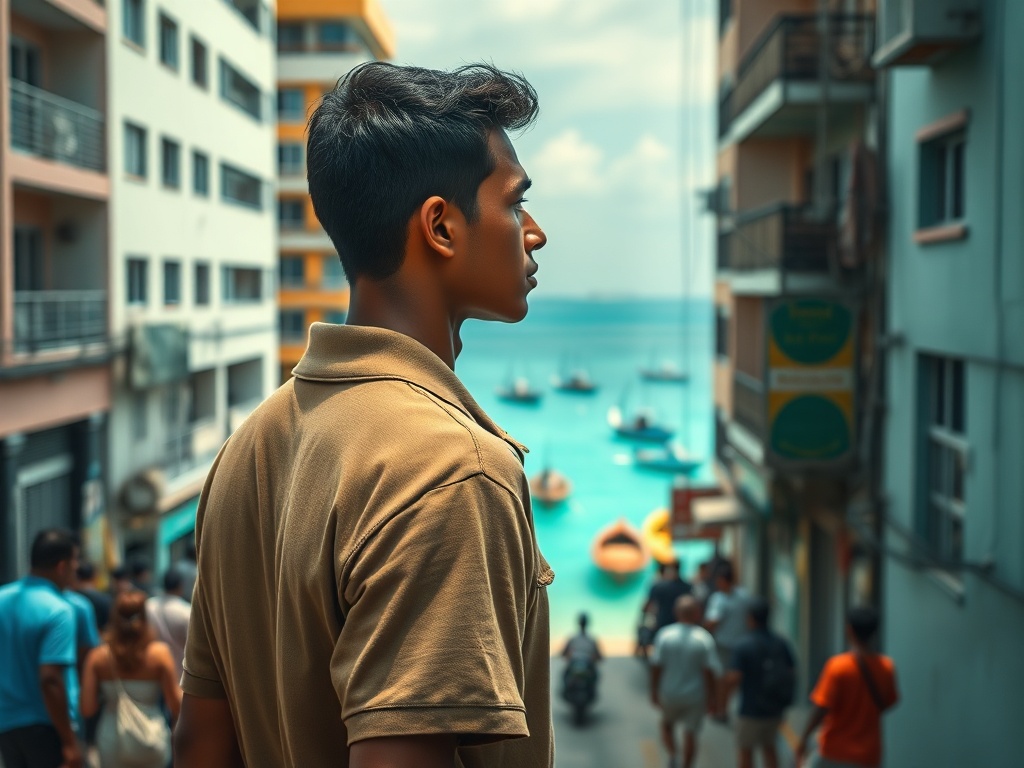
The Fragmented Land: A Nation's Search for Belonging Amid Inequality
The debate over permanent addresses echoes through the humid Malé air, carrying more than just bureaucratic weight. It carries the weight of generations who have known exactly where they belong—which island, which atoll, which stretch of white sand and palm trees defines their lineage. To some, abolishing this system feels like erasing the very coordinates of their identity, washing away the cultural maps that have guided Maldivians for centuries.
Yet in the crowded capital, where the sea breeze must fight through concrete corridors to reach us, another reality persists. The voice of someone who claims Malé as home but lives perpetually on rent, paying another's mortgage while dreaming of a place to call their own. This is the paradox of modern Maldivian life—the tension between ancestral ties and present needs.
There's talk of 'bahus'—that feeling of inequitable distribution, of some being favored while others wait. The expansion of Greater Malé City brings promises of land, but also accusations that only certain voices are heard when these gifts are distributed. The same political ideologies get recycled through different administrations, leaving many wondering if the system itself is designed to maintain these divisions.
Meanwhile, the practical consequences unfold in daily life—the mathematics of rent consuming incomes, the subtle dependencies created when one person's livelihood funds another's groceries. These aren't abstract policy debates; they're the arithmetic of survival in a city where space is the ultimate luxury.
Yet through the frustration, there's a thread of something deeper—a recognition that this isn't about people versus people, but about finding a way forward that honors our connections to the islands that formed us while making room for the lives we're trying to build. The wisdom that 'nobody can take from you what is written in destiny' resonates here, suggesting that our true belonging might be more complex than any address can capture.
In the end, the question isn't just about keeping or discarding a system, but about what we value in the changing tides of Maldivian society—and how we ensure that as the islands evolve, no one gets left adrift.
— Source fragments: "The Addu land riddle"; "the inequitable distribution of wealth & the discrimination attached to Male' meeha only thinking when giving free land"; "Abolishing the permanent address system would effectively wipe out the cultural identity of countless people who take immense pride in their island origins"; "We need to keep our cultural ties with the land and family name"; "Lived and living on rent - paying everything to the landlord!! I don't have a house or an apartment in Male' neither does my sibling, but we are from Male'!"; "I am against a policy. Not any people"; "Malè ppl, just like other Maldivians, have a right to build a home within the political boundaries of Maldives"