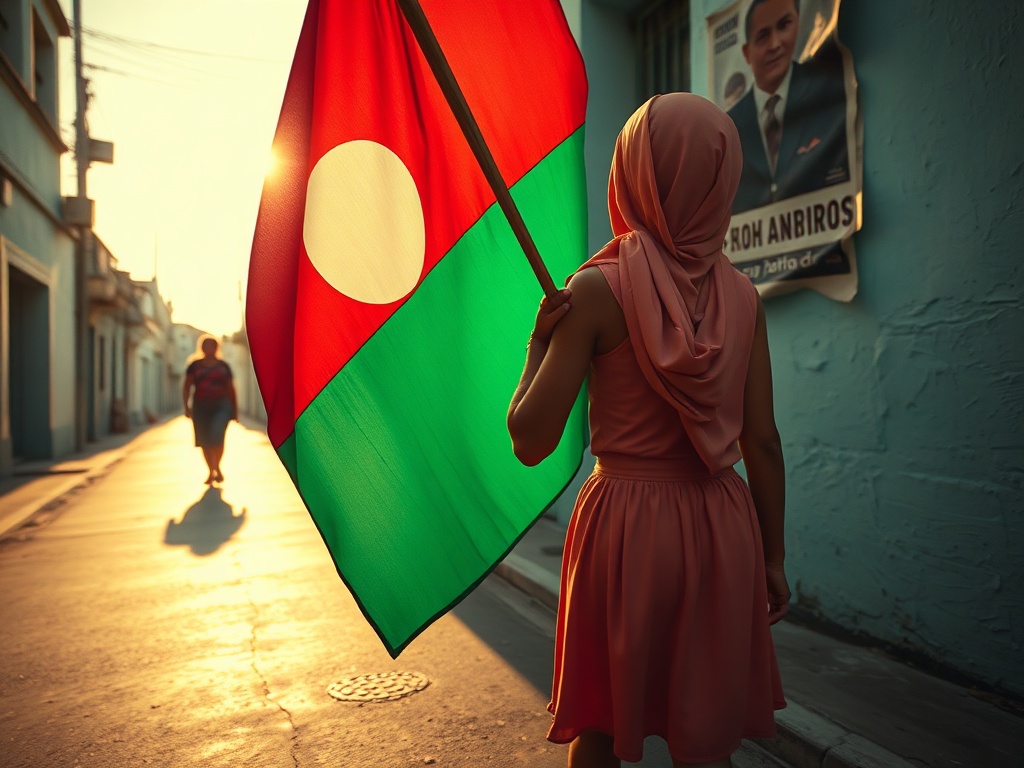
The Girl with the Drooping Flag on Sosun Magu
The screen goes dark, a deliberate act of self-preservation. There are faces we can no longer bear to see, words we can no longer stomach. The political theater, played out on national stages and social media feeds, has become a source of visceral discomfort, a performance many choose to exit rather than endure.
On a Saturday morning, when the city's rhythm should be slow and restorative, a different scene unfolds. A young girl, her small hand clutching a flag too large for her frame, trails an elderly woman down Sosun Magu. She should be resting from school, her mind filled with childhood concerns, not political allegiances. This image, witnessed around 9:30, becomes a poignant, accidental protest—a symbol of a generation being ushered into conflicts not of their making.
The raw anger that surfaces online speaks to a deeper, more systemic fatigue. It is the exhaustion of watching governance become a performance, of seeing public office entangled with allegations that stretch from gang affiliations to narcotics. The question hangs heavy in the humid air: how does a society maintain respect for institutions when the figures within them appear so compromised?
The discourse has become coarsened, reduced to crude metaphors and violent fantasies. This is the language of the utterly disempowered, of those who feel the democratic channels for dissent have been systematically eroded. The political landscape is now viewed through a lens of historical grievance, where past regimes are remembered for their own particular cruelties—the suppression of religious expression, the humiliation of scholars.
This is not merely opposition to a party or a president; it is a profound crisis of legitimacy. The debate has shifted from policy differences to fundamental questions of character and criminality. When citizens speak of their leaders as 'gangsters' and 'tyrants,' the social contract doesn't just fray—it severs.
And in the middle of it all, the child with the flag. She walks, unaware that her presence is being read as tragedy, as a loss of innocence. She represents the future being mortgaged for present political gain, the next generation that will inherit not just the national debt or a congested capital, but a deeply cynical view of power itself. The real sadness is not in the turning off of a screen, but in the quiet realization that turning it back on may never again be an option.
— Source fragments: Had to turn off can’t stomach seeing his face and the lies; Saddest thing I saw was around 9:30 a young girl with a flag following an elderly lady down Sosun Magu; I wish guns were allowed so we can snipe this guy; How can anyone still give their utmost respect to a gangster, someone openly tied to gangs and drug deals?