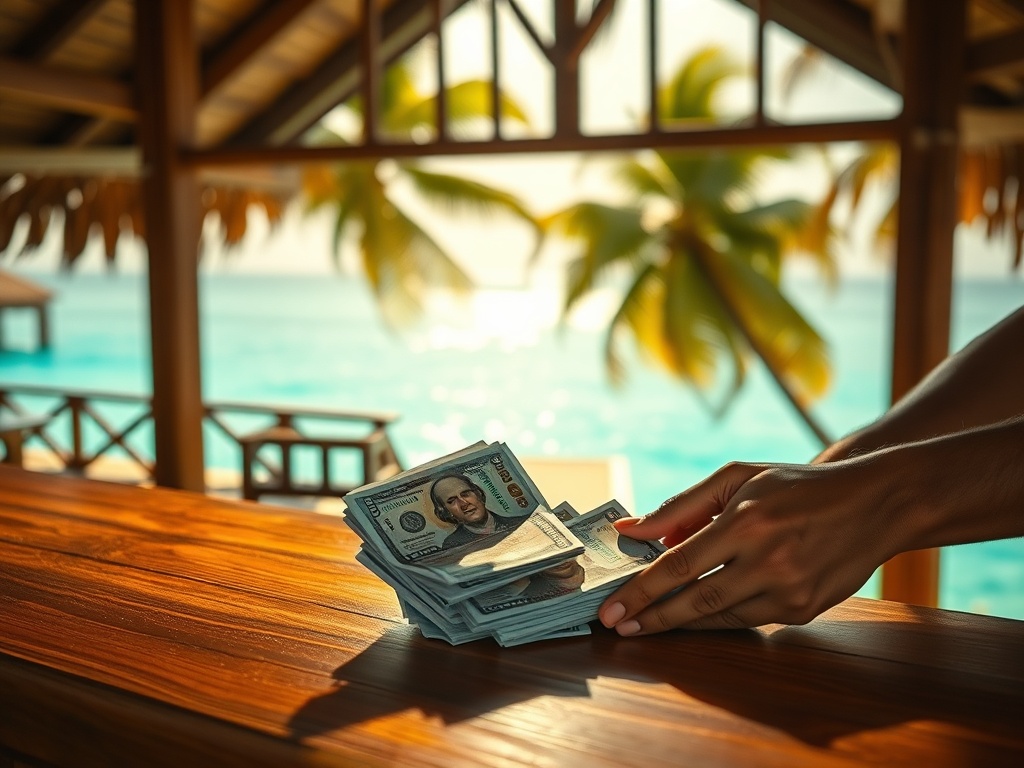
The Hands That Hold Two Currencies, Neither Theirs to Keep
The question of who truly comprises our 'private sector' hangs in the salty air like the monsoon clouds gathering over Malé. It's not the newspapers, someone observes—and they're right. The real private sector breathes in the rhythm of the resorts, pulses in the transactions of shopkeepers, lives in the hands of Maldivian workers who navigate policies that seem designed for someone else's reality.
Consider the currency dilemma: workers paid in rufiyaa while the economy operates on multiple tracks. The government forces resorts to buy local currency at imaginary rates, creating a cascade of consequences. What are businesses supposed to do with surplus rufiyaa they can't use? Sell at a loss on the black market? Meanwhile, the Maldivian worker bears the burden—paid in currency that buys less each month as prices climb.
Generation bans and remittance caps appear as distant policy decisions made in air-conditioned rooms, but their impact lands heavily in crowded households. When a shopkeeper sells cigarettes to a paying customer, it's not defiance—it's survival economics. When drugs flow in broad daylight, it's not policy failure alone—it's the symptom of systems that no longer serve the people living within them.
For fifty years we've spoken of diversification, yet our economy remains tethered to tourism dollars that often bypass local hands. Resort owners park money abroad while workers navigate currency conversions that chip away at their earnings. The forced USD policy becomes another layer in the complex dance between government mandates and market realities.
What emerges is not just an economic crisis but a human one—workers watching their purchasing power evaporate, families making calculations about necessities, young people wondering if the system has space for their aspirations. The policies feel theoretical until you're the one trying to convert your salary to pay for groceries, school fees, or medicine.
Perhaps the real private sector isn't the abstract concept debated in political circles, but the collective heartbeat of everyone trying to make a living within these constraints. The shopkeeper, the resort worker, the fisherman converting his catch into currency—these are the people who feel the weight of decisions made far from the reality they navigate daily.
— Source fragments: What is the 'private sector' that matters to our economy? It certainly aren't the news papers; even in the forced usd policy it's the maldivian workers suffering because they're being paid in ruffiya now instead of dollars; wrong angle. why does the resorts have mvr to pay workers in mvr in the first place? cause govt is forcing them buy mvr at an imaginary rate; My fellow countrymen, if you can't even read a super simplified version of Gov revenue then we really can't rely on your views to fix the economy