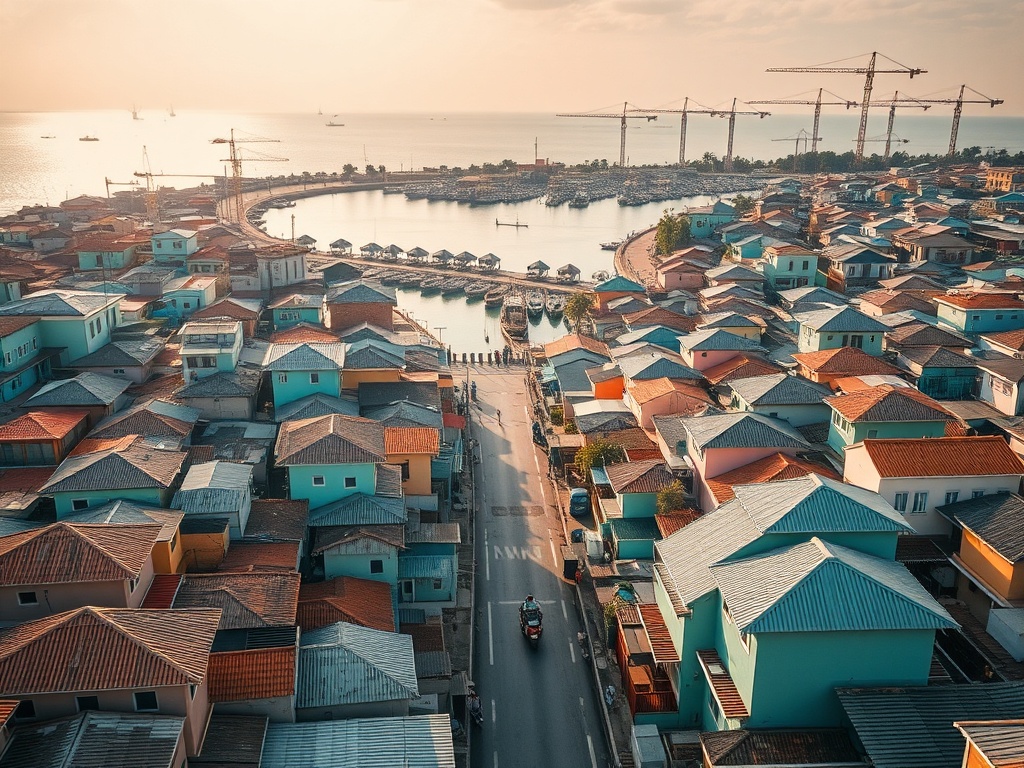
The Housing List That Fuels Malé’s Anger
In the crowded archipelago nation where land is both precious commodity and political currency, recent housing initiatives have ignited a firestorm of public criticism. The debate centers not on the concept of providing shelter, but on the execution—who benefits, who controls the process, and whether these programs serve public need or political interest.
Across social media and coffee shops, a consistent narrative emerges: that housing schemes often function as electoral tools rather than solutions to genuine need. The perception that well-connected individuals receive multiple properties while others remain in overcrowded conditions fuels deep resentment. This isn't merely about housing scarcity—it's about the visible inequality in how limited resources are distributed.
At the heart of the controversy lies the intersection of political power and business interests. Critics point to what they see as obvious conflicts of interest, where individuals involved in policymaking also maintain significant stakes in construction and real estate companies that stand to benefit from government contracts. The allegation isn't just about potential profit, but about the fundamental fairness of a system where decision-makers have personal financial interests in the outcomes.
The political dimension adds another layer of complexity. Opposition parties face accusations of recycling old strategies under new branding, while the current administration contends with skepticism about its implementation of housing programs. The public conversation suggests many citizens see little difference between political factions when it comes to patronage politics—they simply observe the same patterns repeating under different banners.
What makes this issue particularly volatile is its tangible nature. Unlike abstract policy debates, land distribution produces visible winners and losers. When people see neighbors with multiple properties receiving additional allocations while others remain in desperate need, it creates a powerful sense of injustice that transcends political affiliation.
The housing debate ultimately reflects broader concerns about governance and accountability. Citizens question whether institutions tasked with fair distribution are fulfilling their mandates or serving political masters. The call for transparency isn't just about seeing documents—it's about understanding decision-making processes and ensuring they serve public rather than private interests.
As the nation moves toward future elections, the handling of land and housing will likely remain a central issue. The public appetite appears to be shifting from accepting promises to demanding demonstrable fairness—a development that could reshape political calculations for years to come. What remains unclear is whether the political class recognizes this shift or continues operating under old assumptions about what voters will tolerate.
— Source fragments: Multiple tweets about Binveriyaa scheme, land allocation benefiting connected individuals, political parties using housing for votes, conflicts of interest in real estate and policymaking