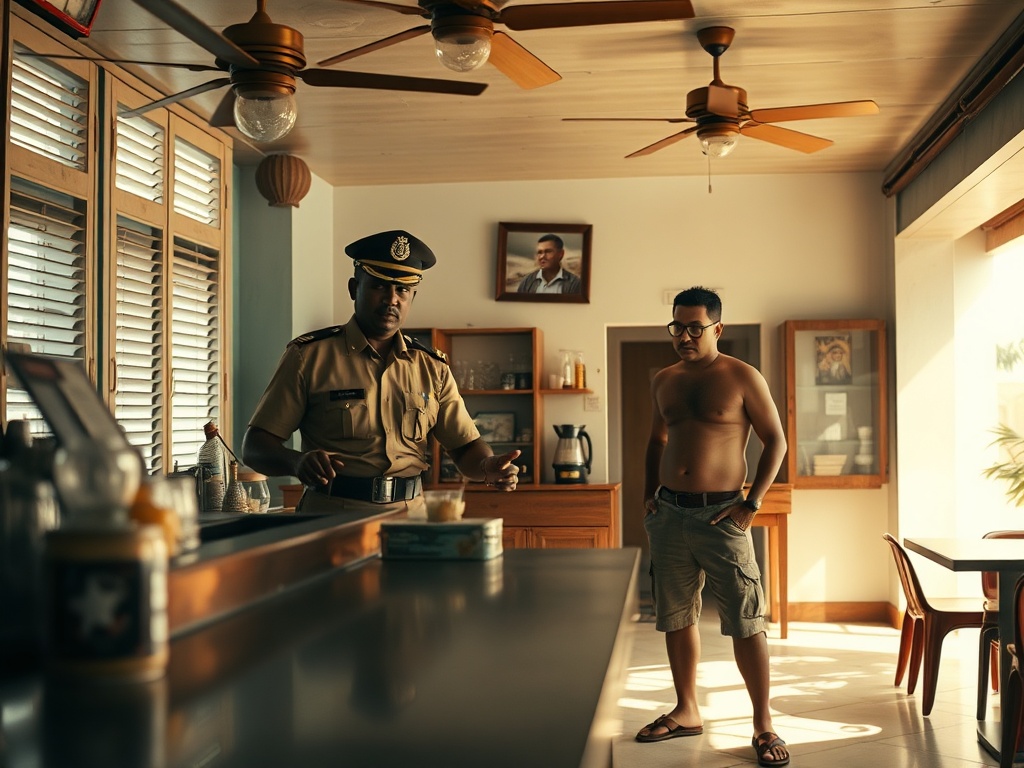
The Hunger That Binds Us
The call came through the radio as afternoon heat shimmered off the tin roofs of Malé. "Code 47 at Sea Breeze Café. Male unable to pay bill." Officer Ahmed sighed, adjusting his uniform collar. Another day, another small drama in this crowded island capital.
At the café, he found a man in his late thirties, head bowed, shoulders slumped. The restaurant manager gestured angrily. "He ate a full meal, officer. Now he says he has no money."
The man looked up, eyes hollow. "I haven't eaten since yesterday," he whispered. "The construction site let me go last week. No work, no pay."
Ahmed remembered his own father, who'd come home empty-handed many evenings during the lean seasons. The shame in his eyes, the way he'd push his plate toward his children first. On this small island where everyone knew everyone, hunger wore the same face regardless of which atoll you came from.
He thought of the laws he'd sworn to uphold, the regulations about theft of services. But he also remembered the Islamic teachings about feeding the hungry, the Maldivian tradition of sharing what little you had.
"How much is the bill?" Ahmed asked the manager.
"Two hundred rufiyaa."
Ahmed reached into his pocket, pulled out the crumpled notes. "I'll pay it."
The manager stared, then nodded slowly. The hungry man's eyes filled with tears he quickly wiped away.
Outside, the man grasped Ahmed's hand. "I will repay you. When I find work..."
"Feed your family first," Ahmed said. "Then think of me."
As he walked back to his patrol scooter, Ahmed thought about the systems that failed this man—the jobs that disappeared, the rising costs that made a simple meal a luxury for some. He remembered his training sergeant saying, "We're not just enforcers. We're the community's keepers."
The afternoon call to prayer began to echo across the city. Men streamed toward the mosque, rich and poor alike bowing together. In that moment, Ahmed understood that some laws were written not in books, but in the shared understanding of what it meant to be human in these islands. That sometimes, the truest form of justice wasn't punishment, but recognizing another's need and meeting it with whatever you had to give.
— Source fragments: No Maldivian should be arrested for failing to pay a food bill at a restaurant. If I were the police officer sent to arrest him, I would settle the bill myself and let the person go. He said he had nothing to eat, and hunger drove him to eat without having any money. (multiple instances); High cost of living, driven by government money printing and rising taxes; Youth issues: Drug use, unemployment, lack of educational/job opportunities