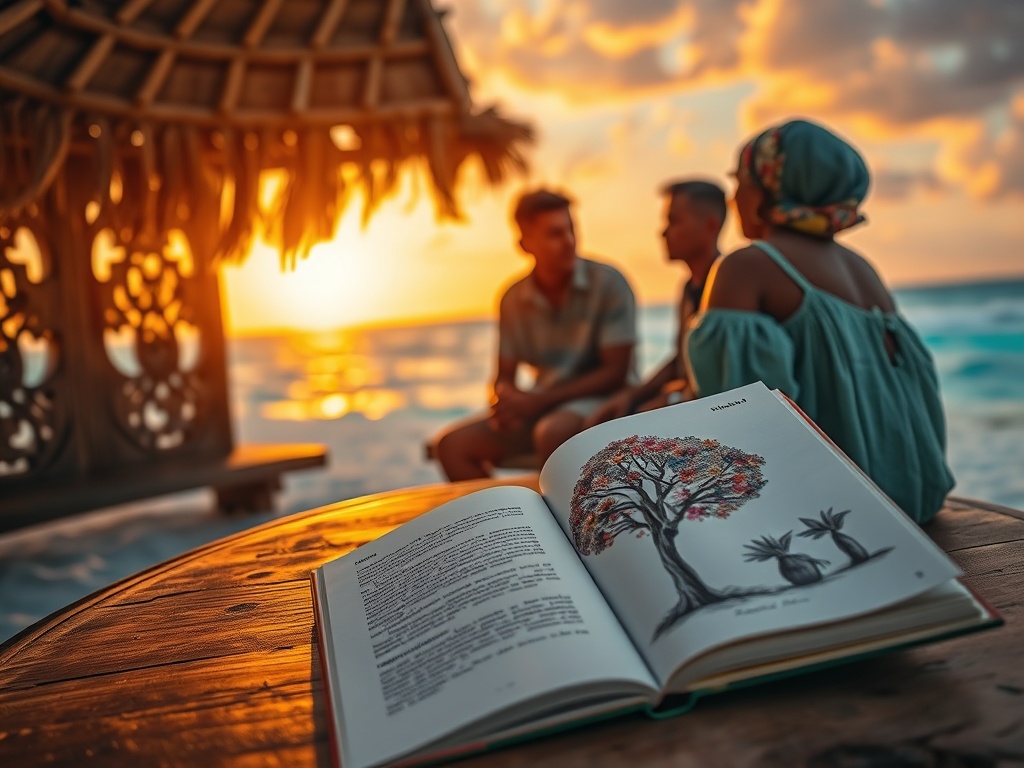
The Island Named After the Baobab Tree
Beneath the tumult of politics and diplomacy flows a quieter, more persistent current. It is a conversation of a people defining themselves by timeless markers of identity, community, and shared memory.
This identity is rooted in a profound sense of place and tradition, a concept known as *Dhivehin ge raahje*—the Maldivian way. It is a constitutional duty for the state and a living practice for its people. It manifests in linguistic pride, such as the discovery of an island named "Fodhdhoo," derived from the Dhivehi word for the non-native Baobab tree. It is present in uniquely Maldivian hand signs, subtle cultural fingerprints that signal belonging.
This search for authenticity is a discerning navigation of global currents. Maldivians engage with the world to learn and adapt, yet ground that knowledge in the bedrock of shared experience. Finding a Puerto Rican version of *banbukeyo* pudding sparks not jealousy but a playful challenge to local culinary creativity, a desire to adapt global flavors for the domestic hearth.
At the heart of this consciousness is a powerful ethic of tolerance and coexistence. In a nation 100% Muslim, the collective aspiration for *Jannah* (Paradise) is seen as a personal journey, focusing on one's own actions rather than imposing rigid definitions upon others. This is considered a source of national strength. It is a tolerance that extends to internal diversity, pushing back against the centripetal pull of the capital. Declarations like "Call me Addu goobadda or foni" are proud reclamations of atoll identity. The simple retort to any division—"we are all maldivians"—cuts through complexity with the force of shared destiny.
This spirit honors both the legendary and the everyday. It remembers the strength of Maldivian warriors and the diplomatic savvy of those who offered authentic *rihaakuru* (fish paste) for a UN cookbook. It views the nation's iconic *holhuashi* (council ring) not as a relic, but as a living symbol of community space.
Thus, while the state grapples with inefficiency and crises, the Maldivian people are engaged in a parallel project of profound importance. They are stitching together a resilient national fabric from threads of linguistic pride, culinary curiosity, regional loyalty, religious introspection, and an unwavering belief in their collective character. It is a story not of politics, but of permanence—a quiet, determined assertion of who they are, have always been, and will continue to be.
— Source fragments: I am here for my countrymen. I follow foreigners for knowledge. I follow my countrymen for brotherly love. | The government of Maldives is sworn in by the constitution to protect our interests first. This is #dhiveenge #raahje. #protecttradition | I am flabbergasted after finding out they make banbukeyo pudding in Puerto Rico. Why haven't we tried this? | #DhivehiArchives Did you know there's a Maldivian island literally named after the mighty Baobab tree? Fodhdhoo (ފޮއްދޫ)... | Two legends from Maldives. When asked for a recepie (authentic) for the 'Cook Book of the UN' these legends offered authentic riha as the dish. | Remembering and honoring the strength of the Maldives | We are the Best Nation because of tolerance and our ability to co-exist peacefully... | While some people that have Addu roots they are ashamed to accept it... we take pride in our origin addu... | who cares fr we are all maldivians | This is our holhuashi so why not?