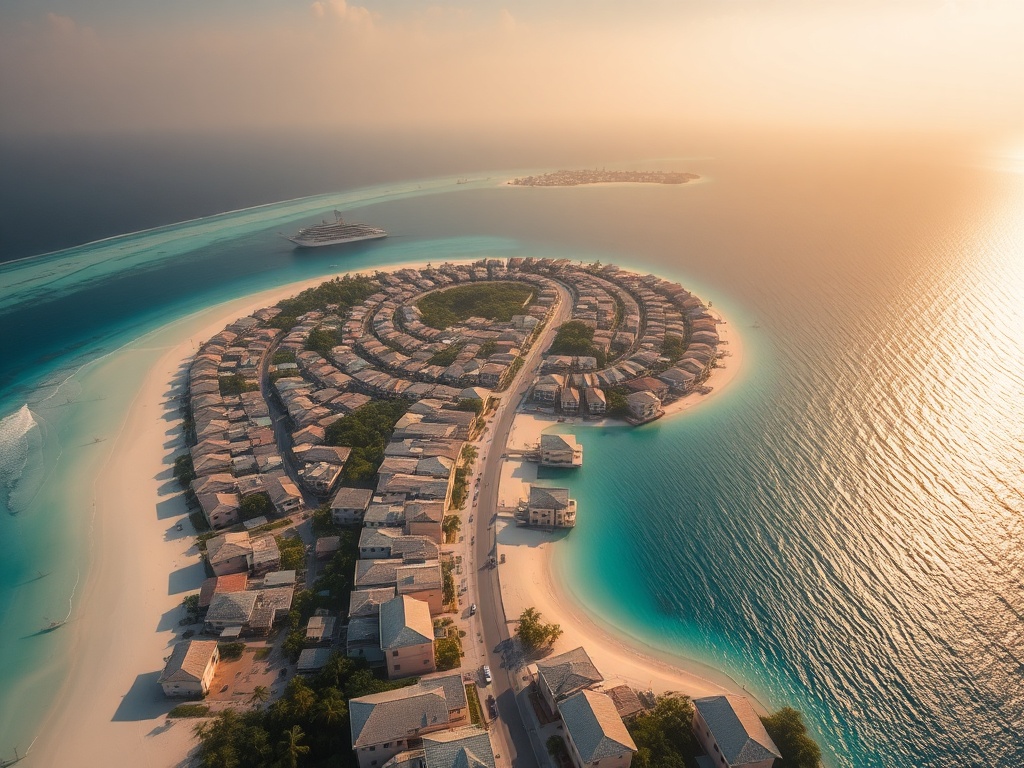
The Island That Questions Its Own Urban Blueprint
There's a peculiar irony unfolding in Vilingilli, where what should be a model for sustainable island development instead inspires skepticism about the future. The island represents one of the better urban templates the Maldives might emulate—emphasizing walkability, public transport dependency, and reduced private vehicle use. Yet residents watching the transformation unfold can't help but wonder if the execution matches the vision.
The fundamental question isn't whether these concepts are desirable, but whether they're being implemented with proper consideration for Maldivian realities. When an island measures mere kilometers across, the notion of running heavy vehicles at ten-minute intervals seems less like efficient transport and more like logistical overkill. The air quality benefits become questionable when diesel engines constantly traverse distances that many residents could comfortably walk.
This isn't merely about transportation schedules or vehicle types. It speaks to a deeper tension between imported urban models and local context. The Maldives faces unique spatial constraints that demand solutions tailored to island geography, not simply scaled-down versions of continental planning. The challenge isn't just moving people from point A to B, but doing so in a way that respects the fragile environmental balance and community fabric that defines island life.
Vilingilli's potential as a template lies in its attempt to break from car-centric development patterns that have choked other Maldivian communities. Yet the implementation raises valid concerns about whether we're solving problems or creating new ones. Are electric buses part of the equation, or are we simply replacing one type of pollution with another? Does frequency matter more than appropriateness?
The conversation around Vilingilli reflects a broader dilemma in Maldivian development: how to modernize without losing what makes our communities work. The space between ambition and execution is where genuine progress gets made—or where well-intentioned plans become another lesson in what not to do. As one observer noted, the area felt more pleasant even with obvious imperfections nearby, suggesting that successful urban spaces depend on more than just technical specifications.
What emerges from this dialogue is not opposition to progress, but a call for smarter adaptation. The future of Maldivian urbanism depends on blending global best practices with local wisdom, creating spaces that function not just on paper, but in the lived experience of those who call these islands home.
— Source fragments: i don't know how this area was more pleasant when the literal gondu was right there; yeah, i have no hope for the future of vilingilli either; ironically it's one of the better island models we should be trying to mimic (more public transport dependency, walkability); I just can’t imagine how you all imagine such a functional city; where are they going to drive all these heavy vehicles with a 10-minute frequency in a city the size of a peanut; Would that make the air any cleaner; Are they using electric buses in the Maldives