The Less You Know, The Better
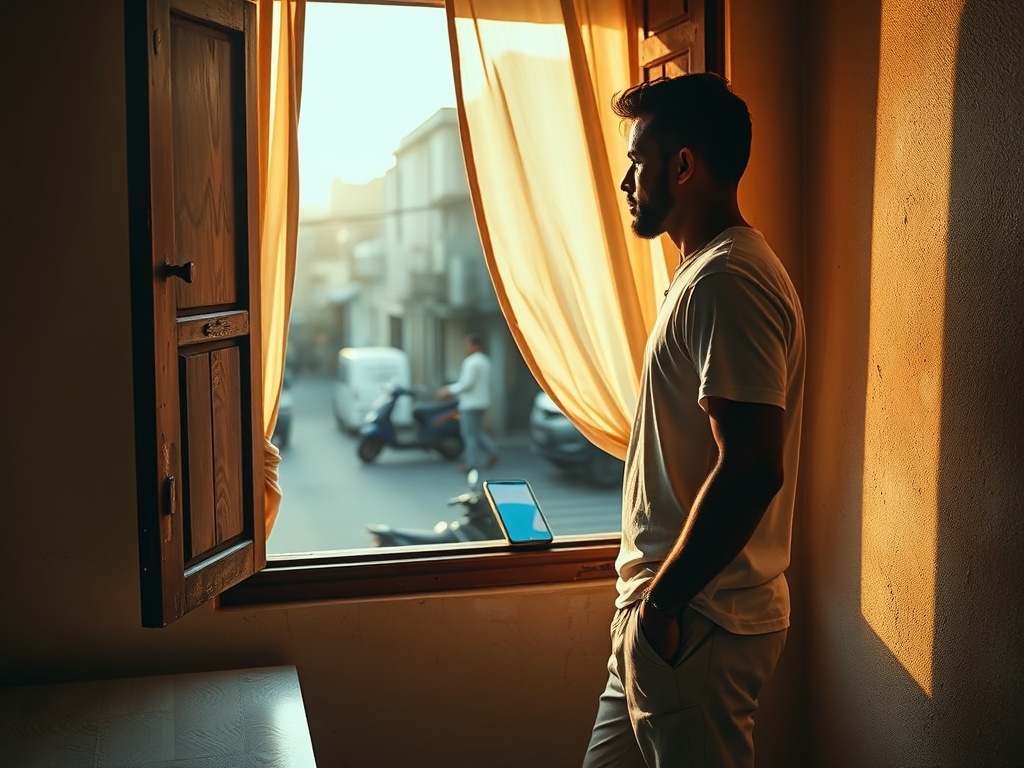
The fan whirred, pushing the same thick air around the room. Ibrahim stared at his phone screen, the blue light casting shadows across his face. Another message from the group chat—something about cigarettes and halal certifications, about who imported what and why it mattered. His thumb hovered over the keyboard. He could feel the argument forming in his mind, the righteous heat rising in his chest. But then he stopped. He remembered his aunt’s words from yesterday, whispered over a cup of black tea in her cramped sitting room: 'Fr, i the less i know the better about maafannu.' She hadn't been talking about the neighborhood. She'd been talking about everything.
He put the phone down, screen-side up. Outside, the afternoon call to prayer began to echo from the mosque down the street, a familiar, rhythmic comfort that cut through the honking of scooters and the distant hum of a construction site. He didn't join the prayer. Instead, he walked to the window, pushing the curtain aside. Below, the street was a mosaic of small dramas. A council truck was parked haphazardly, its orange lights flashing for no reason he could discern. Two men argued over a parking spot, their voices sharp and brittle in the heat. A group of boys on bicycles weaved through traffic, their laughter a brief, bright spark against the city's gray concrete.
He thought about the pyramids. The message had been a joke, but it stuck. Were we all just too busy building our own monuments, our own little empires of worry and opinion, to see the foundation cracking beneath us? He thought of the road accident reports that scrolled endlessly through his feed—forty last week, twenty percent on the bridge. He drove that bridge every day. He knew the potholes, the blind corners, the sudden swerves. He knew it all, and yet the knowledge changed nothing. It only made him more anxious, more angry, more tired.
A breeze, faint and carrying the salty tang of the sea, found its way through the window bars. It was a small mercy. He closed his eyes and listened to the city—the real city, not the one in his phone. The rhythmic chop of a knife from a nearby kitchen, the slap of flip-flops on the pavement, the steady, metallic clang from the boatyard. This was the truth he could touch. The other truths—the lawsuits, the millions, the halal and the haram, the jobs given and taken—they were like smoke. If you tried to grab them, your hand came back empty. If you breathed them in, they choked you.
He decided, then, to get on with his day. He would not read the novel-length article. He would not untangle the thread of who was corrupt and who was not. He would make his tea, he would call his mother, he would watch the light change over the water. The less he knew, the better. It wasn't ignorance; it was survival. It was choosing the weight of the sun on his skin over the weight of the world on his shoulders. And in that choice, he found a strange, quiet freedom.
— Source fragments: fr i the less i know the better about maafannu,it might be time for me to get on with my day byyye,We got the attention span of a glodfish. I am not gonna read a novel length article.,maybe ancient Egyptians were also like us. too busy building pyramids?