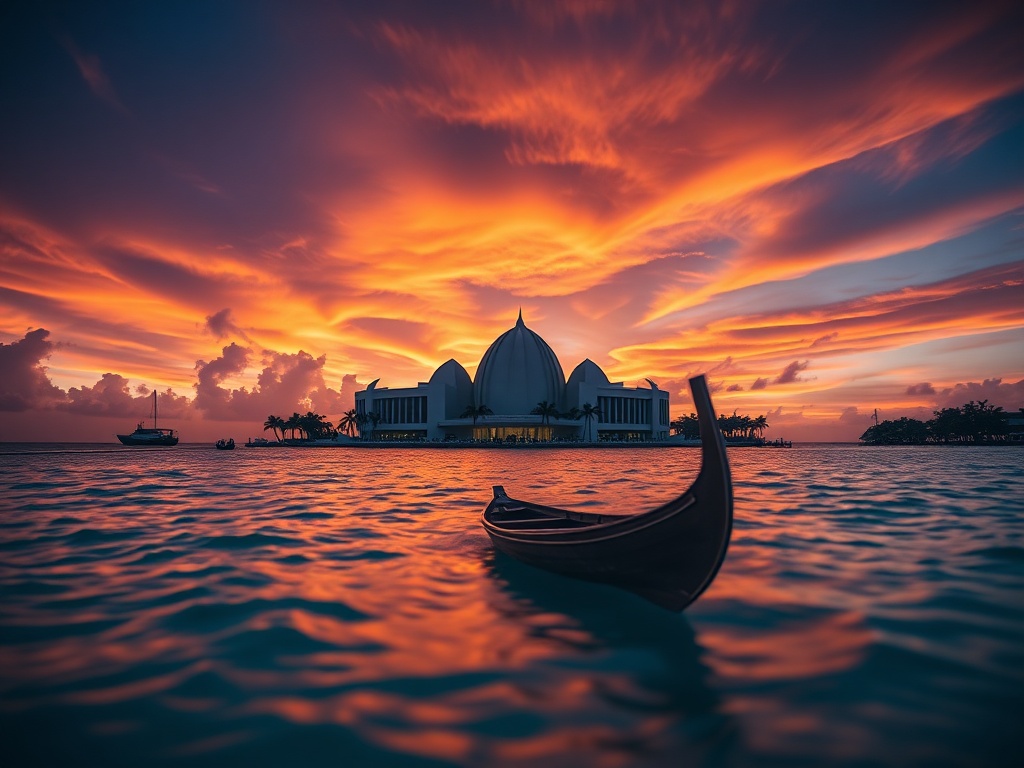
The Majlis at Dusk, a Fishing Boat Watching
The sea breeze carries more than salt these days. It carries whispers from distant shores where the concept of home is being violently redrawn, and echoes of our own debates about who holds power and for what purpose. When we speak of governments claiming to represent their people completely, we cannot help but measure that claim against the stark reality of actions—the chasm between stated values and the dust of ruined homes, whether they stand in Gaza or in the fragile atolls we call our own.
Here, the concentration of power in a single office is not an abstract political theory. It is felt in the stifling air of Male', where the promise of a fair hearing can vanish with a single presidential pardon. The ability to nominate, to appoint, to absolve—these are not just powers listed in a constitution. They are the tools that shape the daily lives of fishermen waiting for justice, students dreaming of opportunities beyond our shores, and families navigating a labyrinth of politicized housing lists. The cry for a two-tier system, for checks and balances, is not mere imitation of foreign models. It is the logical, desperate response to a system where the scales of justice seem permanently tilted.
We talk of corruption as if it were a spreadsheet of numbers, a list of scandals with acronyms like MPRC. But its true weight is felt in the quiet desperation of a mother unable to afford medicine during a shortage, in the cynicism of a young graduate who sees positions filled not by merit but by connection. The term 'Male’ supremacist' is thrown around, but it points to a deeper sickness: the belief that power and privilege should flow to a chosen few in the capital, leaving the outer atolls as distant satellites, their voices muffled by the roar of the city.
The ideals a party is founded on—justice, equality, a voice for the people—can, over time, become hollowed out, replaced by the machinery of maintaining control. 'Laadheeny,' the national spirit, risks becoming just another slogan used to shield the powerful from accountability. We watch distant conflicts where land is taken and lives are erased, and we see a terrifying reflection of our own potential future if the principles of fairness and shared destiny are allowed to erode completely. The fight, then, is not just about reforming a commission or limiting a power. It is a fight for the soul of the nation, to ensure that the map of our home is not redrawn by the powerful for the powerful, but remains a place where every voice, from every atoll, can find its echo in the policies that shape our shared sea.
— Source fragments: Major reason for excessive corruption is the unlimited power vested in the President. Powers like pardoning tax evaders & criminals, & nominating members to independent commissions, must be removed. | This is the reason why we need a two-tire system like in the US... Otherwise this can’t be fixed Discrimination against land laws between states is unheard of in developed nations. | Any Male’ supremacist will block you when you go against the establishment. | So true, MDP is all abt corruption and laadheeny now. At the start it was more against injustice.