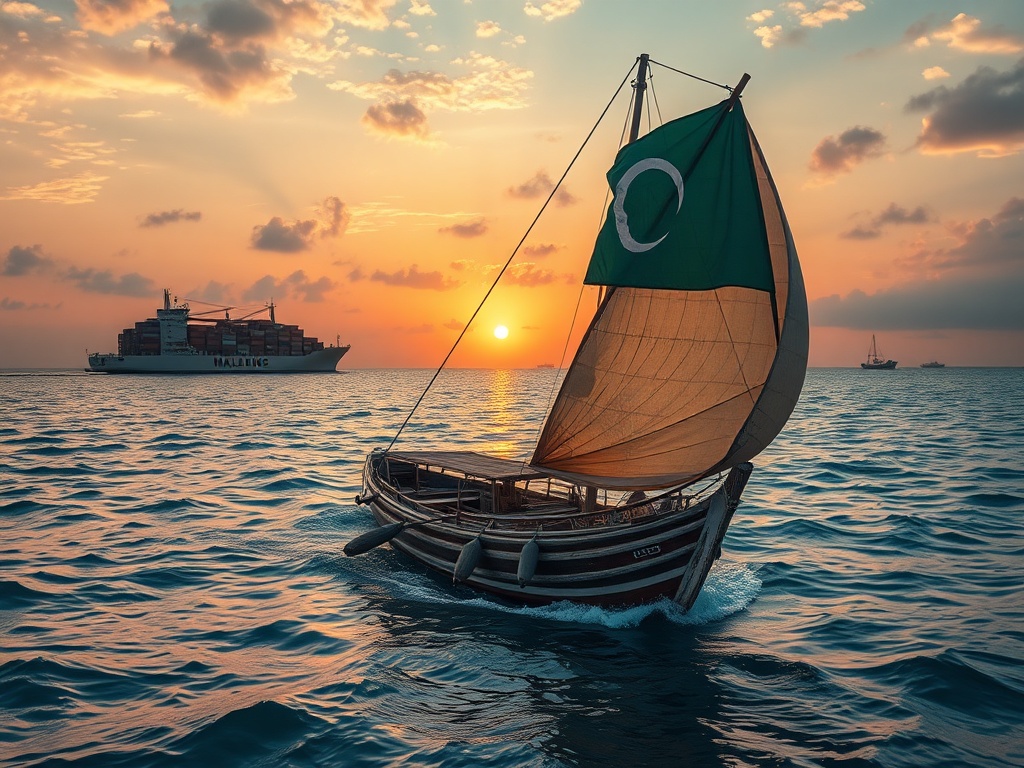
The Maldives: A Dhow in a Sea of Container Ships
The chessboard of global politics is being reshuffled, and small island nations watch with cautious eyes as superpowers maneuver for advantage. Recent discussions highlight the delicate balance required when your homeland occupies strategic real estate in a world of giants.
Singapore's substantial military expenditure reflects the reality of being a Western-aligned state positioned along critical maritime corridors. This isn't mere posturing—it's the price of securing one's place amid the world's most vital trade routes, where geography dictates necessity. The presence of foreign bases becomes both protection and potential vulnerability in equal measure.
For the Maldives, these dynamics resonate deeply. Our archipelago stretches across essential shipping lanes in the Indian Ocean, making strategic positioning a matter of national survival. The recent 'India Out' campaign underscores how foreign policy decisions ignite passionate domestic debate about sovereignty versus practical necessity.
The tools of statecraft are evolving. Where pure diplomacy once sufficed, nations now speak of 'applied diplomacy'—the practical implementation of foreign policy that acknowledges power realities while preserving national interests. This nuanced approach recognizes that small states must sometimes navigate between competing giants rather than choosing sides outright.
Technological disruption adds another layer of complexity. As one observer noted, artificial intelligence and advanced manufacturing represent the final frontiers where superpowers maintain competitive edges. For developing nations, this technological gap presents both challenge and opportunity—the chance to leapfrog outdated infrastructure while avoiding new forms of dependency.
The fundamental question remains: how does a small, traditionally homogeneous society maintain its identity while engaging with a globalized world? Unlike nations built on immigration as a founding principle, the Maldives developed its statehood through centuries of isolated cultural evolution. This creates unique tensions when balancing economic necessity with cultural preservation.
What emerges is a portrait of modern statecraft where flattery and alliance-building coexist with hard-nosed assessment of national interest. The methods may have changed, but the goal remains constant: ensuring that in a world of shifting powers, small nations don't become merely historical footnotes.
— Source fragments: Singapore military spending as Western client state; applied diplomacy concept; small state sovereignty versus global engagement; technological competition between superpowers; differentiation between immigrant nations and traditional societies