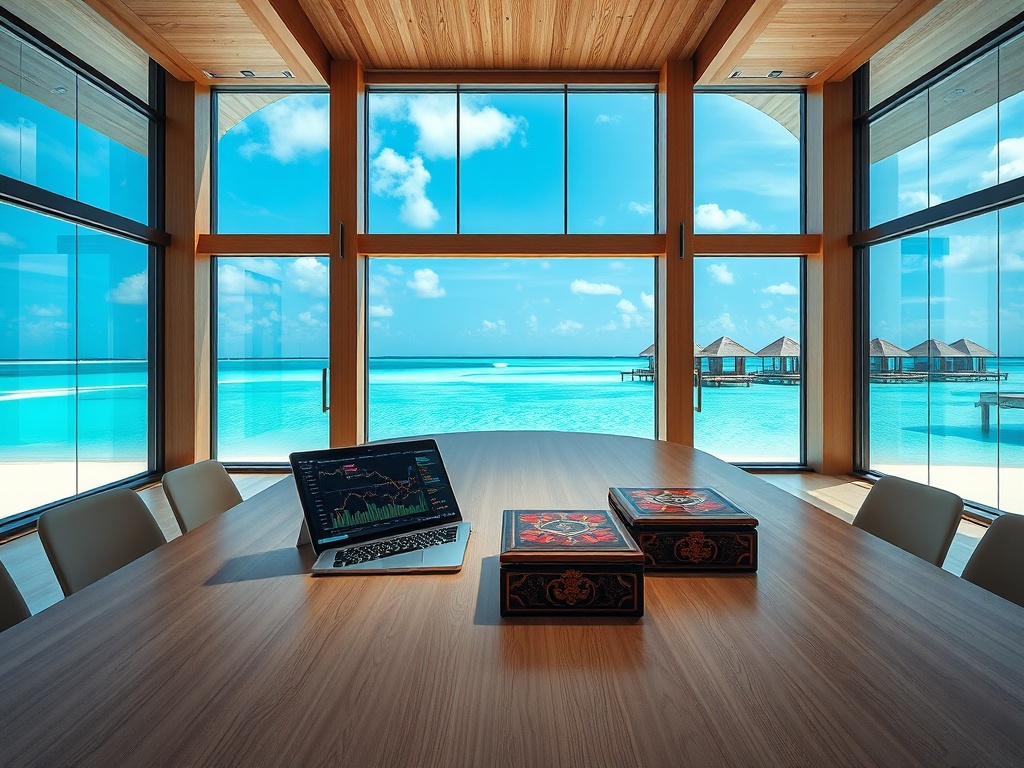
The Maldives Aims to Become a Corporate Retreat Hub and Industrial Powerhouse
A strategic economic vision is reshaping the Maldives, aiming to transform the archipelago into a premier destination for multinational corporate retreats and a hub for foreign-owned strategic industries. The goal is to establish the nation as a regional economic powerhouse, leveraging its stable and streamlined business environment compared to larger regional neighbors.
The resilience of companies like Dhiraagu, which benefited from strategic share sales reducing state control, demonstrates a path forward. Attracting multinational investment into ports, factories, and special economic zones is viewed not as a loss of sovereignty but as a calculated move toward economic resilience and growth.
Diversification hinges on developing local industrial capacity, moving beyond assembly to genuine production. State-Owned Enterprises could lead ventures such as assembling motorcycles using imported components under a local brand, creating tangible, value-added manufacturing. The success of community-led tourism models, as seen in Maafushi, provides a blueprint for sustainable economic projects that benefit Maldivians directly.
Parallel social policies aim to unlock human capital. Proposals like a Universal Basic Income, initially for women, seek to provide economic security and frame workforce participation as a matter of autonomy. This aligns with broader cultural values and integrates with global trends like wellness and sober travel, enhancing the tourism offering without social friction.
The overarching theme is judicious policy application geared toward long-term success. It is a call to build an economy that is robust, diversified, and capable of providing opportunities for all Maldivians, harnessing geographic and diplomatic advantages to attract the capital and expertise needed for a resilient, modern economy.
— Source fragments: Advocacy for multinational corporate retreats; Comparison of business environment to India; Reference to Dhiraagu's resilience post-privatization; Call for more foreign-owned ports/factories; Idea for local SOE-led assembly/production; Success of local tourism model in Maafushi; Proposal for Universal Basic Income for women; Alignment with wellness/sober travel trends.