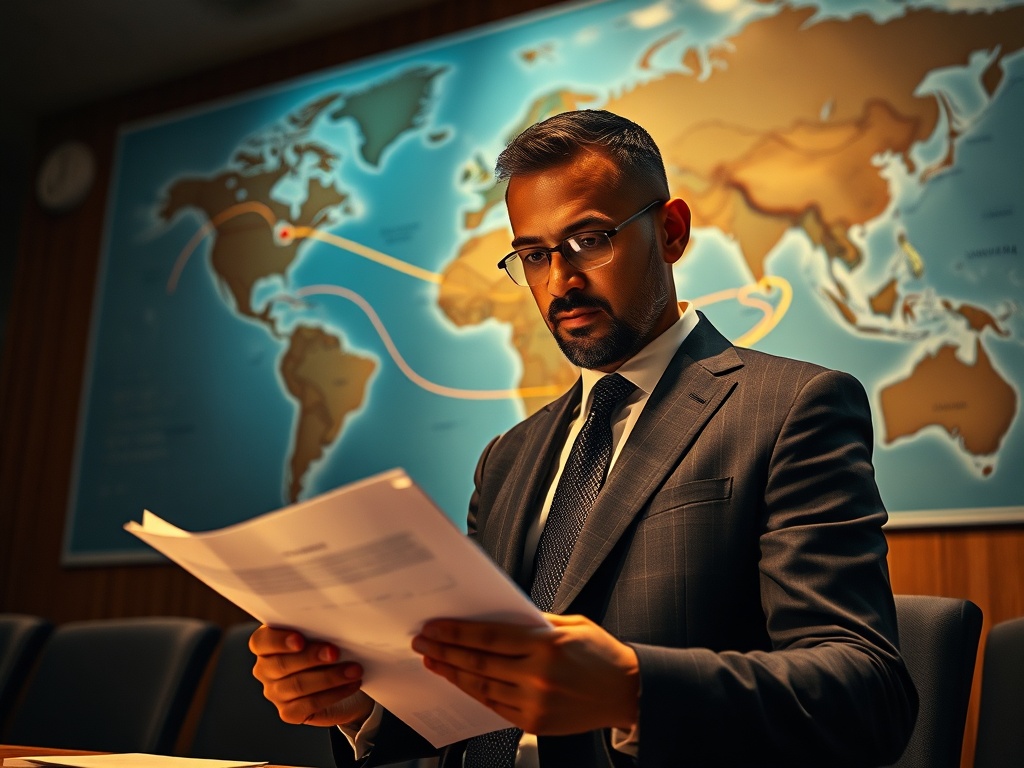
The Maldives at the UN, Redrawing Its Place on the World's Map
In the intricate chessboard of international relations, small nations like the Maldives face a perpetual balancing act. Recent public conversations reflect a sophisticated understanding of global power dynamics, where military strategy, economic leverage, and diplomatic finesse intersect in complex ways.
The strategic positioning of nations like Singapore demonstrates how geography dictates defense priorities. Control over vital trade routes transforms small states into strategic assets for larger powers, creating relationships of mutual dependence rather than simple subservience. This reality resonates in the Maldives' own strategic location along key Indian Ocean shipping lanes, where foreign policy decisions carry weight beyond the nation's physical size.
Diplomacy emerges as the primary tool for nations without military might, though its application has evolved. The distinction between theoretical and applied diplomacy mirrors the practical challenges facing small states—where principles must often bend to pragmatic realities. This is particularly relevant as the Maldives navigates relationships with regional powers while maintaining its sovereignty.
The ongoing Universal Periodic Review process places the Maldives under international scrutiny at a time when global human rights mechanisms face their own challenges. The inclusion of both small island states and superpowers in the same review cycle highlights the universal application of standards, even as power disparities remain stark.
Technology and economic competition define the new frontiers of global influence. The race for AI supremacy and advanced manufacturing represents a shift from traditional power metrics, suggesting that future dominance may be determined by innovation rather than sheer military might. For developing nations, this creates both opportunities and new dependencies.
Immigration debates reveal fundamental differences in national identity formation. Where some nations built their identity through immigration and legal contracts of citizenship, the Maldives' experience reflects a different trajectory—one of organic cultural development in relative isolation. This distinction informs contemporary debates about foreign workers and cultural preservation.
Ultimately, the discourse suggests a world where small states must be nimble, leveraging their strategic value while maintaining principled positions. The challenge lies in navigating great power competition without becoming mere pawns in larger games—a balancing act that requires both diplomatic skill and clear-eyed assessment of national interests in an increasingly multipolar world.
— Source fragments: Singapore spends a lot on their military because it's a Western client state that's strategically located in a strait; Yes diplomacy. Maybe that time we used pure diplomacy. This time we may have to use applied diplomacy; Fair, but Nigeria and Venezuela are countries far bigger than Maldives; Starting at today: Human Rights Council's Universal Periodic Review... the Maldives; All China has to do to finish the US as a global power... AI and weapons; America was built on immigration... The Maldives is a small island community that built its own statehood