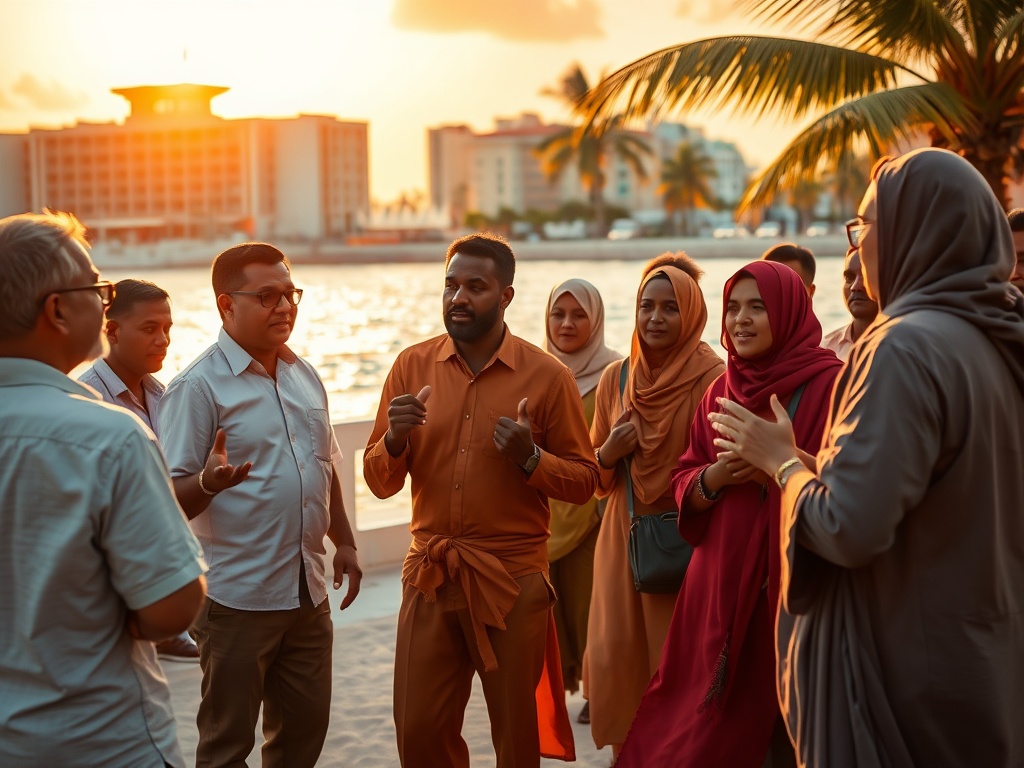
The Maldives Debates Its Friends in Republic Square
In the turquoise waters of the Indian Ocean, the Maldives finds itself navigating increasingly turbulent geopolitical currents. Recent public conversations reveal a nation grappling with its international relationships and domestic leadership amid growing regional tensions.
The debate over foreign policy has become particularly charged, with some citizens expressing strong opposition to the current administration's international alignments. The discussion extends beyond diplomatic niceties to fundamental questions about national sovereignty and moral leadership. When voices question the legitimacy of praising certain foreign leaders while criticizing others, they tap into deeper concerns about whose interests Maldivian foreign policy truly serves.
This foreign policy discourse intersects with ongoing security conversations. The presence of foreign military personnel remains a sensitive topic, with some citizens maintaining that previous arrangements continue to influence national security dynamics. The transparency of such agreements—or lack thereof—fuels public skepticism and reinforces calls for clearer communication from leadership.
The conversation reflects broader regional patterns where smaller nations must balance relationships with competing powers. As one observer noted regarding propaganda tactics, there's recognition that international narratives often target Muslim populations, requiring careful navigation of global media landscapes. This awareness informs how Maldivians interpret both domestic and international political developments.
At the heart of these discussions lies a fundamental question about governance principles. Some voices emphasize that true leadership legitimacy derives from adherence to Islamic principles rather than mere political power. This perspective challenges conventional political frameworks and suggests alternative foundations for political authority.
The intensity of these debates reflects the high stakes for a nation whose economy depends heavily on international tourism and foreign investment. Each diplomatic move carries implications for everything from currency reserves to development projects. The public's engagement with these issues demonstrates a population increasingly aware of how global dynamics affect local realities.
As the conversation continues, it reveals a society in transition—one that is re-evaluating its place in the world while confronting internal divisions. The outcome of these debates will likely shape not only foreign policy but the very nature of political discourse in the Maldives for years to come.
— Source fragments: UAE relations criticism, foreign military presence concerns, leadership legitimacy questions, regional propaganda awareness