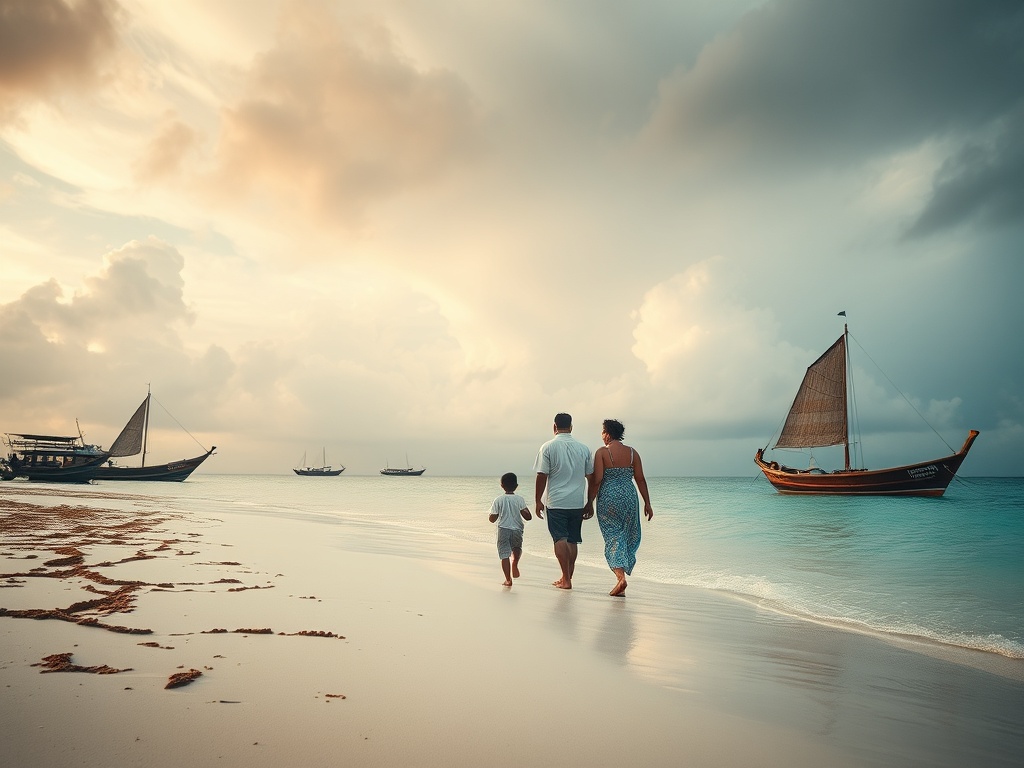
The Maldives' Fragile Paradise
The Maldives, a nation of 1,192 islands scattered across the Indian Ocean, exists as both paradise and paradox. These coral atolls, rarely rising more than two meters above sea level, represent one of the world's most vulnerable countries to climate change. For the Maldivian people, the threat isn't abstract—it's the gradual erosion of their beaches, the saltwater intrusion into their freshwater lenses, and the increasing frequency of storm surges that remind them daily of their precarious existence.
Walking through the narrow streets of Malé, you feel the tension between tradition and adaptation. Fishermen who once navigated by the stars now consult weather apps on smartphones. Children learn about climate change alongside their Dhivehi lessons. The government has built sea walls and elevated critical infrastructure, but these feel like temporary solutions against an unstoppable force. There's a quiet resilience here, born from generations of living with the ocean, but also an underlying anxiety about what the future holds.
What makes this situation particularly poignant is the Maldivian connection to their land. Each island isn't just territory—it's home to specific families, traditions, and histories that date back centuries. The coral reefs that surround them aren't just tourist attractions but living ecosystems that have sustained Maldivian life for generations. When a Maldivian elder points to where their grandfather's house stood, now partially submerged, they're not just describing coastal erosion—they're witnessing the gradual disappearance of their heritage.
The international community often discusses the Maldives in terms of meters of sea-level rise, but for Maldivians, it's about preserving a way of life. It's about maintaining the delicate balance between welcoming tourists who fund adaptation efforts while protecting their culture from being commodified. It's about teaching the next generation traditional fishing methods while preparing them for careers that might need to be pursued abroad. This duality defines the modern Maldivian experience—holding onto what makes them unique while facing the reality that their homeland may not survive the century.
Yet amid these challenges, there's remarkable determination. Maldivians are becoming global ambassadors for climate action, innovating in renewable energy, and finding ways to make their islands more resilient. They're proving that even the most vulnerable communities can lead in finding solutions. The story of the Maldives isn't just one of impending loss—it's about the human capacity to adapt, fight for what matters, and find meaning in the face of overwhelming odds.