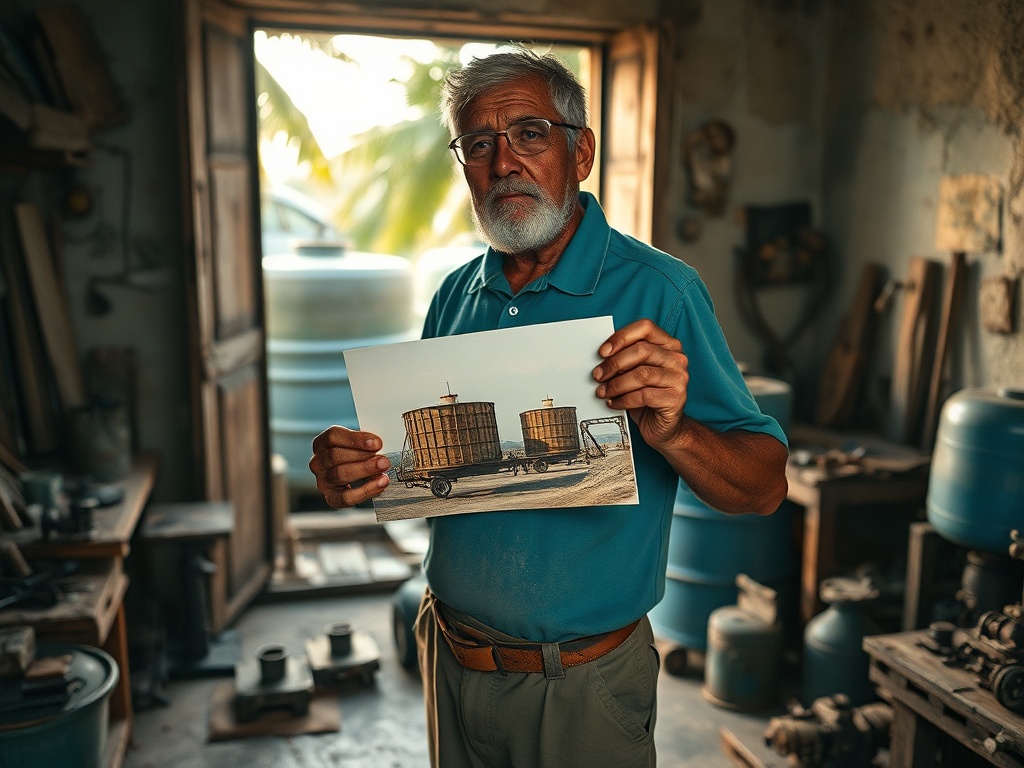
The Maldives Once Sold Water Tech to Singapore. Now We Buy It All.
Twenty years ago, Maldivian engineering firms achieved what seems unimaginable today: they designed, assembled, and exported reverse osmosis plants to technologically advanced nations like Singapore. Today, that legacy lies in ruins, replaced by complete dependence on imported water purification systems despite having the same bright minds and technical knowledge.
The regression from exporter to importer represents more than just a shift in trade patterns—it reveals fundamental structural weaknesses in how the Maldives nurtures its human capital and technological capabilities. The nation possesses the expertise but lacks the financial scaffolding to transform knowledge into sustainable industry. When local innovators cannot access capital while witnessing corruption scandals drain public resources, the message becomes clear: systemic barriers outweigh individual talent.
This technological backslide occurs against a backdrop of broader economic challenges. Heavy import reliance across multiple sectors creates chronic foreign currency shortages, while the tourism revenue that should fuel diversification often leaves the country through offshore accounts. The result is an innovation ecosystem starved of both funding and policy support.
What makes this particularly painful is the timing. As climate change intensifies water security concerns across island nations, the Maldives possesses precisely the technical knowledge most needed—the ability to create sustainable freshwater solutions for small island communities. The expertise that once built systems for Singapore could now be adapted to serve not just Maldivian atolls but similar island nations facing water scarcity.
The solution requires more than just government grants. It demands a fundamental rethinking of how innovation is valued and supported—creating pathways for technical talent to access venture capital, establishing technology parks with shared manufacturing facilities, and developing export financing mechanisms specifically for Maldivian engineering firms. Most importantly, it requires treating technological self-reliance as national priority rather than peripheral concern.
Until the Maldives bridges the gap between its technical capabilities and financial systems, the nation will continue importing what it once proudly exported, watching other countries profit from innovations that Maldivian minds are fully capable of producing.
— Source fragments: Why Fenaka? We should have our own RO plant assembling companies now. 20 years ago we used to export RO plants. Even exported to Singapore. But today we have to import everything. We have bright people, but no finance.