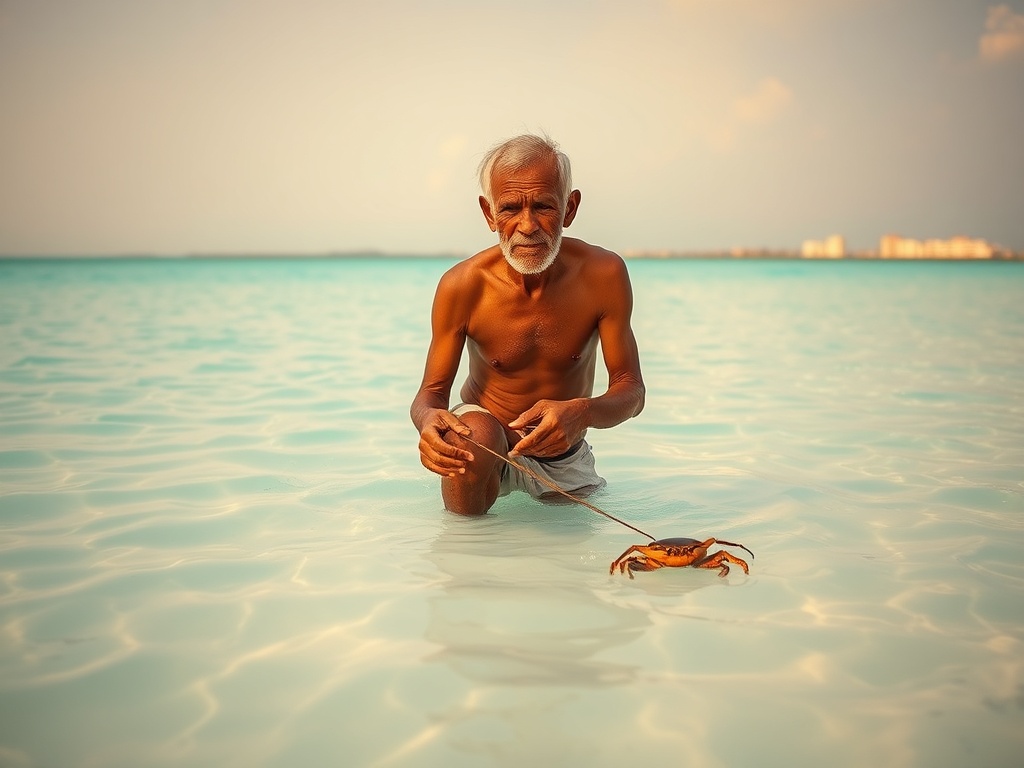
The Mud Crab Catchers Watching Malé's Skyline Grow
In the quiet waters around Moolekede fishimathi, near Koahera, generations of Maldivian men have waded through shallow lagoons in search of the massive mud crabs that inhabit these coastal ecosystems. The memory of fathers and uncles returning with their catch speaks to a time when sustenance and skill were measured by one's connection to the sea. This traditional knowledge, passed down through families, represents a tangible link to a way of life that increasingly exists in tension with modern pressures.
Similarly, the preparation of rindhali pasta—a traditional Maldivian dish requiring considerable effort and patience—highlights how culinary traditions demand dedication that contrasts sharply with contemporary expectations of convenience. The labor involved in creating this dish mirrors the broader cultural negotiation between preserving heritage and adapting to rapid modernization.
These traditional practices exist alongside complex social dynamics that shape how Maldivians navigate ambition and relationships today. The assumption that someone might be "chasing a job" reflects the economic pressures facing many, particularly youth grappling with limited opportunities in a tourism-dependent economy. Yet the defensive reaction to such assumptions reveals deeper tensions about how ambition is perceived and judged within communities.
The question about "vibrator leads"—while seemingly out of context—points to the curious intersections of technology, intimacy, and social norms in a rapidly changing society. As global influences permeate Maldivian life through digital connectivity, traditional boundaries are being tested and renegotiated in private spheres, even as public life remains shaped by conservative social structures.
What emerges is a portrait of a society in transition, where the rhythms of traditional life—whether catching crabs or preparing family recipes—coexist with the anxieties and ambiguities of modernity. The defensive posture around career ambitions suggests a generation navigating between economic necessity and personal dignity, while technological intrusions into private life reveal the quiet ways Maldivians are redefining boundaries and relationships.
This complex interplay between tradition and change, between public expectations and private realities, defines the contemporary Maldivian experience—a delicate balancing act played out in kitchens, fishing grounds, and digital spaces across the archipelago.
— Source fragments: rindhali pasta preparation being labor-intensive; mud crab catching traditions in Moolekede/Koahera area; assumptions about job chasing; questions about technology and relationships