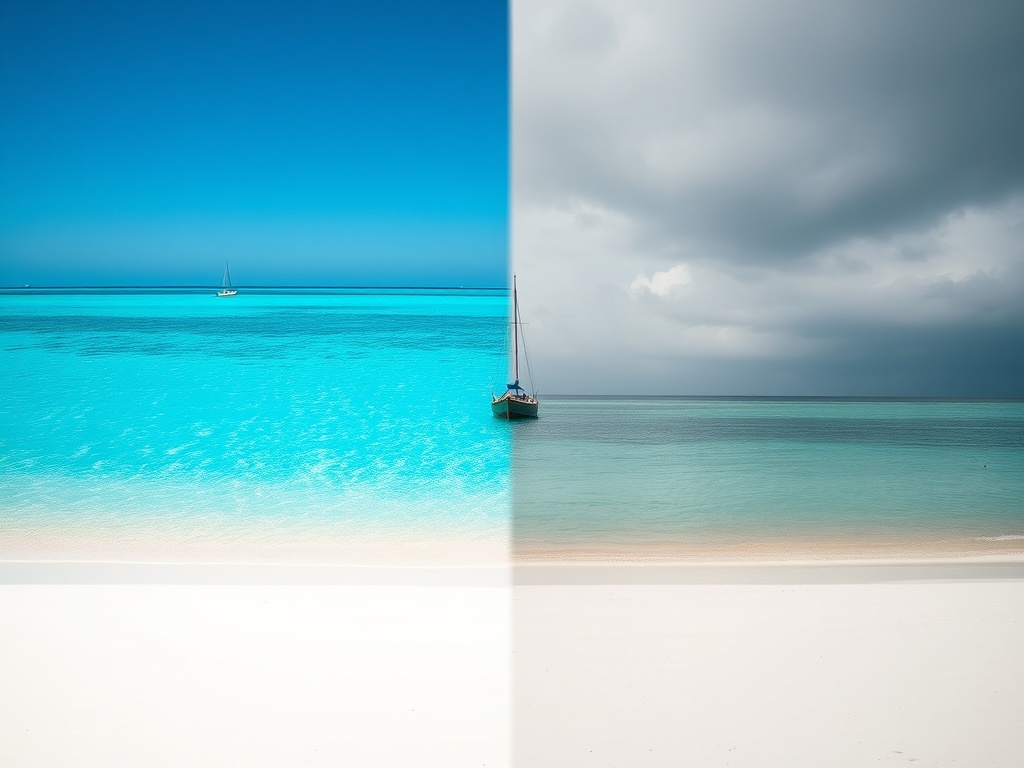
The Ocean When the Sun Hides Behind the Clouds
There's a moment when the sun hides behind the clouds and the Maldivian ocean transforms. That brilliant turquoise blue that graces countless brochures and travel websites fades into something duller, something more muted. "Oh yea when the sun hides the ocean turns into that dull color," one observer noted with a tinge of melancholy. Another joked, "If you squint really hard maybe it looks like the turquoise blue that it's intending to be."
This shift in perception mirrors a broader reality in island life—the gap between the paradise we project and the lived experience we navigate daily. The vibrant blues represent our economic lifeline, the tourism industry that sustains us. Yet the duller tones reflect the ordinary challenges that persist beneath the surface: the high cost of living that strains household budgets, the housing shortages in congested urban centers, and the limited opportunities that push ambitious youth toward uncertain futures.
Tourism remains our main source of foreign currency, yet the benefits often flow offshore as resort owners park earnings abroad. Meanwhile, the national debt grows, and the currency shortages persist. We market turquoise dreams while grappling with economic realities that feel more like overcast skies.
The ocean's changing colors serve as a metaphor for our national conversation about identity and sustainability. Are we merely squinting to see the beauty we're supposed to see, or are we acknowledging the full spectrum of our experience? The tension between these perspectives defines contemporary Maldivian discourse—the struggle to balance economic necessity with social preservation, global engagement with local needs.
Perhaps the most telling insight comes from the simple observation that anything can become what we need it to be if we approach it with enough speed or determination. "Anything is a train track if you go fast enough," as one voice put it. This resilience—this ability to adapt and redefine our path—may be our greatest strength as we navigate the changing tides of both our oceans and our economy.
In the end, the ocean remains the same body of water whether it appears turquoise or gray. The difference lies in the light we cast upon it, the perspective we choose to adopt. Our challenge is not just to see the vibrant blues but to understand what creates them, and to ensure that the economic and social foundations beneath our waters remain as sustainable as the ecosystems they support.
— Source fragments: Oh yea when the sun hides the ocean turns into that dull color; If you squint really hard maybe it looks like the turquoise blue that it's intending to be; Anything is a train track if you go fast enough