The Price of a Paycheck
The late afternoon call to prayer drifts across the harbor, mingling with the scent of salt and diesel. Men in shirts damp with sweat make their way home from government offices, their footsteps echoing on the concrete pathways. In these small islands where everyone knows everyone, the silence speaks volumes.
Jobs are more than just income here—they are dignity, stability, the ability to provide for a family in a place where opportunities shrink with each rising tide. When the government becomes the primary employer, it holds more than paychecks; it holds futures. The fisherman who once spoke freely at the coffee shop now measures his words carefully. The teacher who once organized community meetings now focuses only on her classroom. The threat is never spoken aloud, but it hangs in the humid air like the monsoon clouds gathering on the horizon.
In a nation of scattered islands, where news travels through whispers and knowing glances, the fear of retaliation becomes a powerful current pulling people away from political shores. People who once debated passionately on the jetty now change the subject when government policies arise. They speak of children's education, of rising fish prices, of anything but the decisions that shape their lives.
Yet even in this quiet landscape, there are those who refuse to be silenced. The young activist who continues organizing despite losing his government contract. The journalist who writes under a pseudonym. The grandmother who still speaks her mind at family gatherings, her voice steady as the ancient coral foundations of these islands. They are the handful who understand that true dignity comes not just from putting food on the table, but from being able to speak truth to power without watching that table disappear.
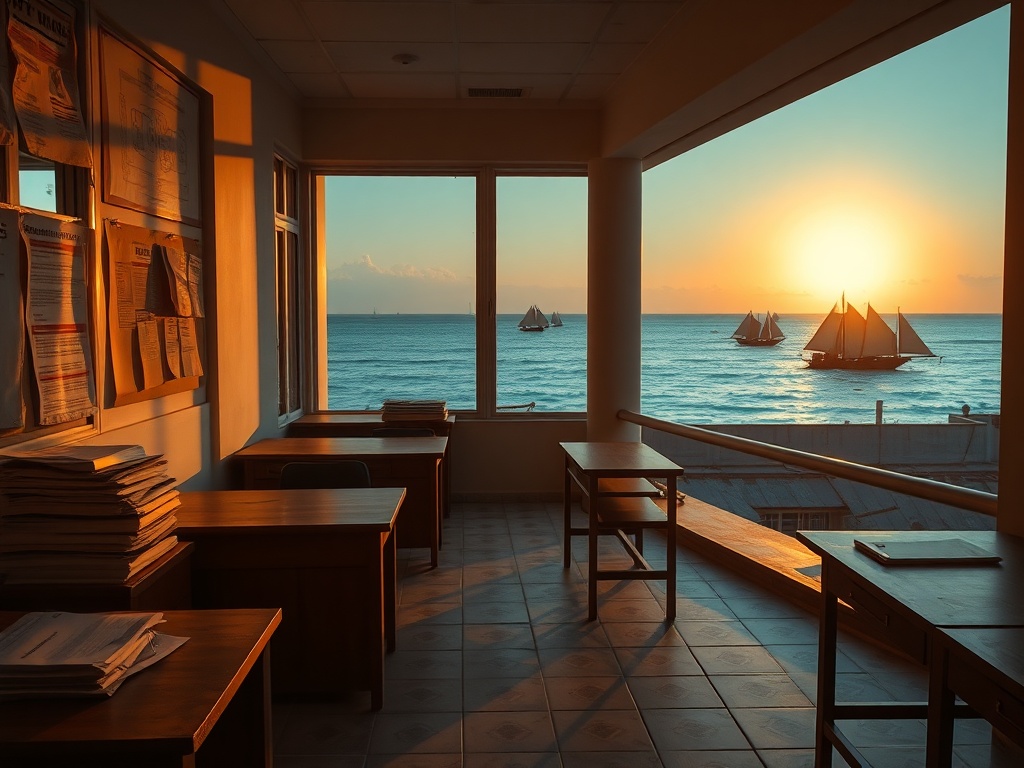
The dependency creates its own weather system—a climate of caution where political participation becomes a calculated risk. As the sun sets over the Indian Ocean, casting long shadows across the atolls, the question remains: what happens to a society when economic survival requires political silence? The answer echoes in the spaces between words, in the conversations that don't happen, in the voices that choose safety over truth.
— Source fragments: "Jobs are a basic necessity, in order to live a dignified life. As long the government has the ability to control this essential need, then it would pose a huge threat. People would be reluctant to partake in political activities fearing retaliation by the 'employer'."