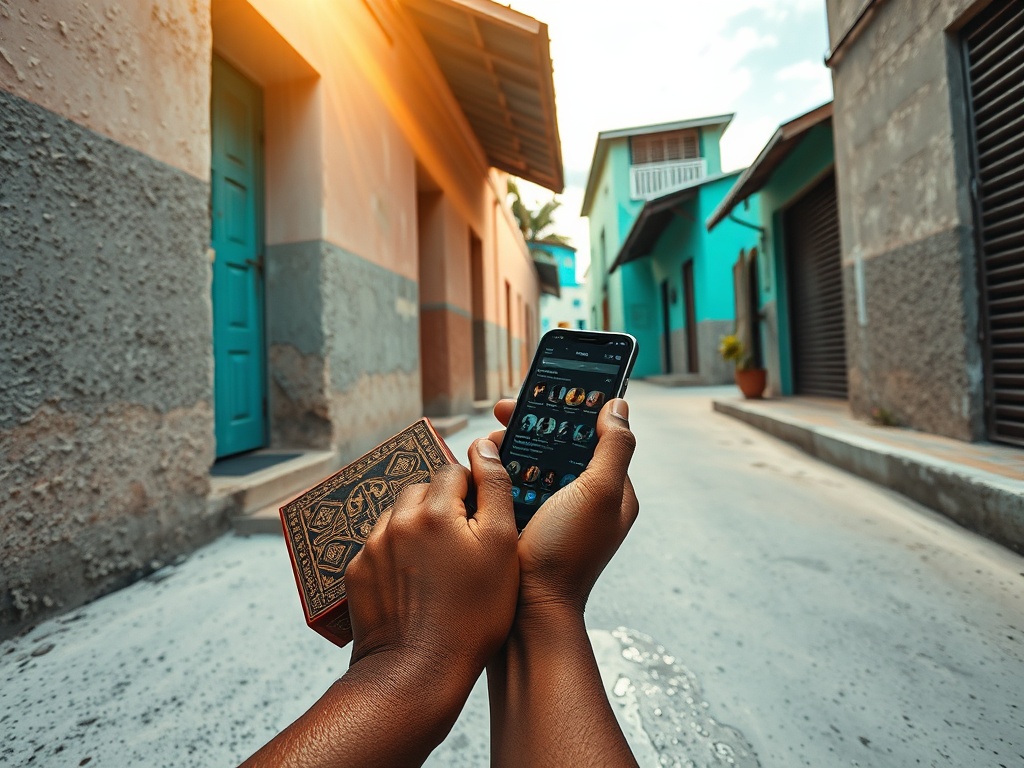
The Pronunciation of Malé
In the crowded lanes of Malé, where the scent of the sea mixes with diesel fumes, a conversation unfolds about a word and its pronunciation. A young man from a southern atoll says "Malé" with an inflection unfamiliar to a native of the capital. This subtle linguistic divergence reveals the vast, often unspoken, topography of Maldivian identity.
This is a nation constitutionally defined as 100% Muslim, a fact repeated with definitive pride. This religious homogeneity is presented as the bedrock of national character, a line drawn sharply in the sand. Historical figures like Ibn Battuta are invoked as witnesses to a piety so integral that social seating arrangements were dictated by prayer. The assertion "Kurusee. This is a muslim society. Get that in to your head. We are not white. We are not europeans" is a declaration of civilizational distinction, a rejection of external cultural imposition.
Yet, within this monolith, other identities pulse insistently. The debate over 'Addu Bas'—is it a dialect of Dhivehi or a separate language?—is a claim to a unique heritage, a local sovereignty of expression that challenges a centralized narrative. Similarly, the discussion of terms like 'Santhi Mariyabu,' potentially tracing back to the Portuguese 'Santa Maria,' reveals how history layers itself upon a culture. Colonial encounters leave linguistic fossils that evolve into local forms, creating a palimpsest where the original text is almost erased.
This internal diversity manifests in daily life. The hierarchical puzzle of 'dhontha, thitha, thontha' and the whimsical musing over 'lagoon girl' instead of 'valley girl' are evidence of a culture generating its own unique logic and humor, distinct from the globalized digital sphere where Maldivian names whimsically blend local and global icons.
The most profound tension lies in the definition of belonging itself. The claim "we are natives, this is our country" draws a firm boundary against the expatriate workforce, a group seen as transient economic participants rather than integral to the social fabric. Yet, this native claim is tested from within. Does a lifetime spent in Malé make one a 'Malé person'? Can identity be so geographically portable? This question cuts to the heart of a society where internal migration from island to capital is a common trajectory, yet cultural roots remain fiercely local.
These conversations—about faith, language, history, and belonging—are the real national discourse. They reveal a society conscientiously guarding its foundational pillar of Islamic faith while simultaneously navigating the complex, often contradictory, strands of its own making. The unity is statutory, but the experience is kaleidoscopic. To be Maldivian is to exist within this tension, to hold the constitutional certainty of a 100% Muslim nation in one hand and the vibrant, disputatious reality of its diverse cultural soul in the other.
— Source fragments: Key fragments synthesized: The 100% Muslim constitutional identity vs. internal cultural debates; linguistic variations (Addu Bas, pronunciation of Malé); historical linguistic traces (Santhi Mariyabu/Portuguese); assertions of native vs. expatriate status; questions of internal belonging (what makes a 'Malé person'); the use of local humor and hierarchy (dhontha/thitha, lagoon girl); the invocation of historical piety (Ibn Battuta); and the digital blending of identities (Facebook names).