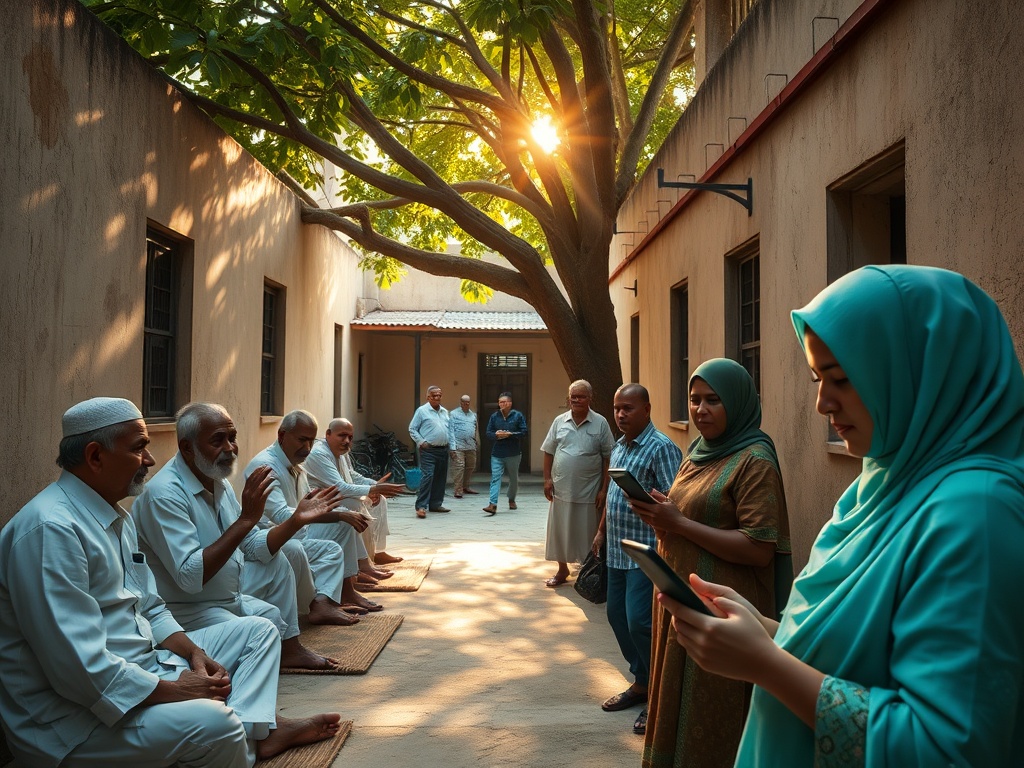
The Question 'What's Your Alternative?' Echoes Across Maldivian Screens
The digital town square echoes with frustration. A simple question—"What's your alternative?"—hangs in the air, unanswered but deeply felt. Across social media platforms and private conversations, Maldivians are confronting a political reality where the center appears to be vanishing, replaced by entrenched positions and competing visions for the nation's future.
The mathematics of representation fuels this tension. With 76 lawmakers representing island communities versus 17 representing Malé, the question of whose interests prevail in policy-making becomes increasingly urgent. The call to "text your MP" reflects a grassroots attempt to bridge the gap between citizen and representative, yet many wonder if their voices can truly penetrate the political machinery.
Economic proposals have become ideological battlegrounds. Conversations about universal basic income, land distribution, and employment guarantees circulate online, challenging traditional political categories. One observer notes wryly, "I don't call myself a socialist but I have been tweeting about giving away land, giving UBI, giving job as a right." This ideological fluidity suggests that conventional left-right distinctions may no longer capture the complexities of Maldivian political thought.
The recognition that "the country will always be divided on this" represents both resignation and realism. After cycles of political transition and policy reversal, many citizens have grown skeptical of absolute solutions. The awareness that online activism doesn't always translate to offline political power has tempered expectations, creating a more nuanced understanding of how change occurs.
This polarization manifests in how different camps approach accountability. While some proudly declare they "condemn anything bad done by any party by the name of the party," others perceive selective outrage and partisan blindness. The very definition of what constitutes crossing "the line between policy and persons" remains contested territory.
Yet beneath these divisions lies a shared recognition that current approaches are insufficient. The search for "other solutions" acknowledges that the existing political framework may be inadequate to address systemic challenges—from economic inequality to regional representation. This represents not defeatism but rather a pragmatic understanding that lasting solutions require moving beyond partisan talking points.
As the political class focuses on electoral calculations, ordinary citizens are left navigating a landscape where certainty is scarce and common ground increasingly elusive. The question remains whether Maldives' political institutions can evolve to accommodate these competing visions, or whether the center will continue to fray under the pressure of irreconcilable differences.
— Source fragments: Questions about political alternatives, representation balance between islands and Malé, economic policy proposals including UBI and land distribution, recognition of permanent political divisions, distinction between online and offline political engagement