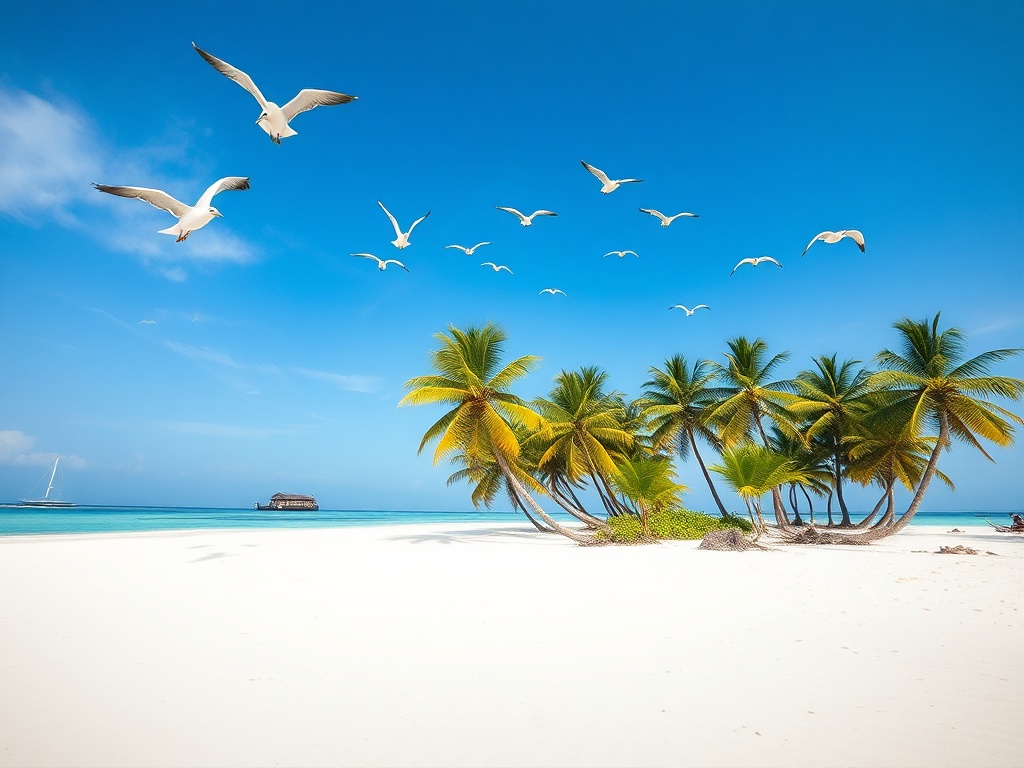
The real beauty of Maldives is on uninhabited islands
We step ashore onto the soft, white sand, and the world falls away. There are no jetties, no guesthouses, no sounds except the gentle rustle of coconut palm fronds and the distant cry of gulls. This is the Maldives as it has always been—the real beauty that exists beyond the resorts and bustling local islands. The sand is so fine it squeaks underfoot, and the water shifts through impossible shades of blue and turquoise. Here, the coconut trees lean naturally, not trimmed for aesthetics, and the birds are not shy; they own this space completely.
This uninhabited island experience feels like coming home to a memory we all share, a collective inheritance of pristine nature that defines who we are as Maldivians. It’s a reminder that our nation’s soul isn’t found in the developed atolls alone but in these quiet, untouched places where the rhythm of the sea and wind sets the pace. For generations, our ancestors knew these islands as waypoints, as sources of sustenance, as silent witnesses to our history. Today, they offer a different kind of nourishment—for the spirit.
In a country where daily life can feel crowded and complex, with housing shortages in Malé and economic pressures mounting, these islands provide a sanctuary. They are not just beautiful; they are essential. They remind us of the simplicity and purity that still exist within our archipelago, a counterbalance to the rapid changes reshaping our society. The love we feel here is immediate and deep, rooted in something older than tourism, older than politics—the enduring bond between our people and this sea-scattered land.
Walking along the shoreline, with no one else in sight, we understand that this is the Maldives at its most authentic. It’s a beauty that doesn’t need to be curated or explained. It simply is. And in that simplicity, we find a profound sense of peace and belonging, a connection to our identity that feels both personal and shared across all our islands.