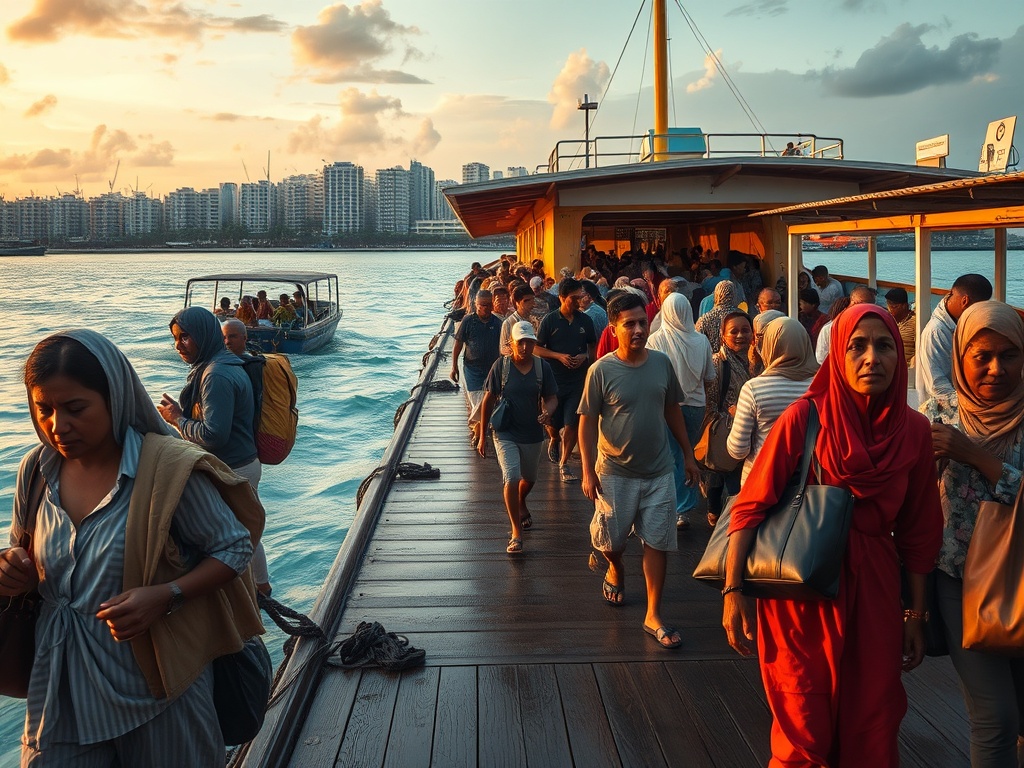
The Regular Pilgrimage to Malé Leaves Islands Quieter Each Season
The pattern has become so familiar it's almost a national ritual: families scattered across the archipelago, with breadwinners making the regular pilgrimage to Malé for work, education, or healthcare, leaving behind quiet islands where community life grows thinner with each passing season.
This migration isn't driven by wanderlust but by necessity. The concentration of resources, opportunities, and services in the capital has created a gravitational pull that's difficult to resist. While outer islands maintain their natural beauty and cultural traditions, they often lack the economic vitality and infrastructure that sustain modern livelihoods. The result is what one observer aptly described as "all island population leaving their family and coming back to Malé for resources"—a cycle that's both practical and profoundly disruptive.
The consequences ripple through society. Extended families become geographically fractured, with children growing up seeing parents only on weekends or holidays. Elderly relatives remain on home islands with diminished support networks. Local economies stagnate as working-age residents take their skills and spending power elsewhere. Meanwhile, Malé groans under the pressure of overcrowding, with housing costs soaring and public services stretched thin.
This urban concentration reflects deeper structural issues in national development planning. Decades of centralized governance have created a system where opportunity clusters in the capital while outer islands struggle with basic services. The promise of regional development often falls short of reality, leaving residents with little choice but to participate in this weekly or monthly migration.
Yet there's resilience in this pattern too. The determination to maintain family connections across distances, the commitment to preserving island identities even while working in the city, and the hope that someday the balance might shift—these speak to a people navigating the tensions between tradition and modernity, between the pull of home and the push of necessity.
The challenge for policymakers isn't just about building infrastructure on outer islands, but about creating sustainable economic ecosystems that allow communities to thrive without this constant migration. Until then, the weekly flights and ferry routes will continue to carry both the burden of separation and the hope of reunion.
— Source fragments: Excuse me . Literally all island population have been leaving their family and comin back to male for resources. So funny