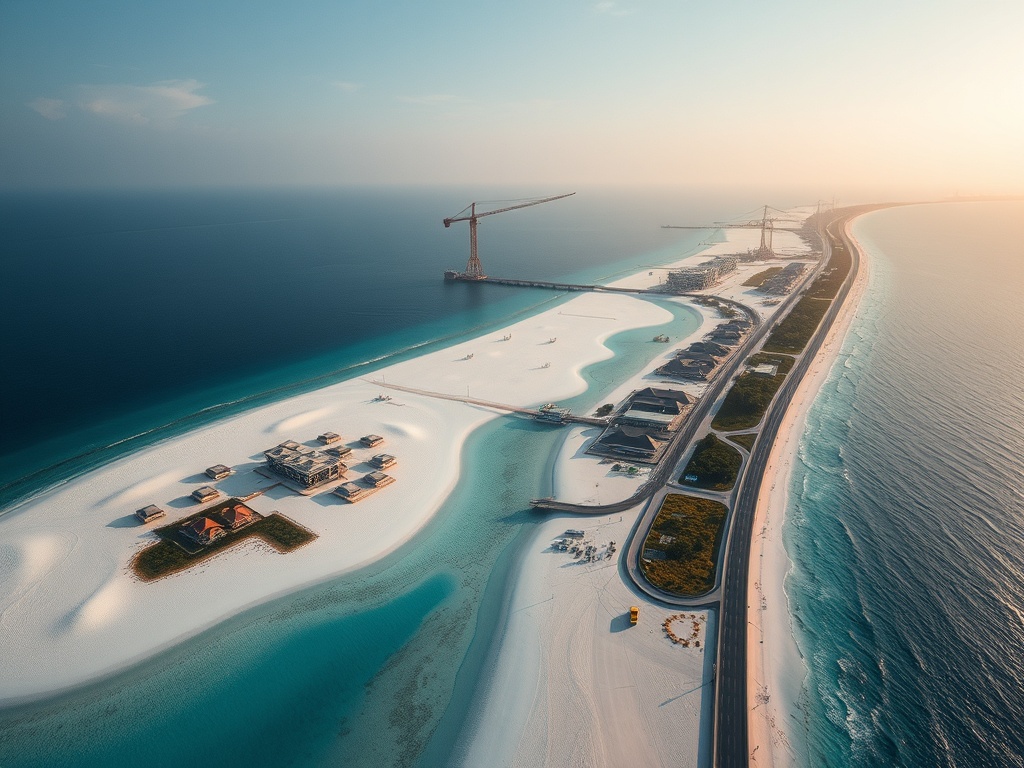
The Road Closed Sign That's Becoming a Permanent Fixture
The notification about road closures near Boduthakurufaanu Magu for redevelopment work is becoming a familiar sight across the Maldives. From the MMA building to Addu City's massive land reclamation project, the archipelago is in a state of transformation. But beneath the surface of these developments lies a complex web of responsibility and implementation that often leaves citizens questioning the logic behind the machinery of progress.
At the heart of this tension is the question of who owns the passenger experience—literally and figuratively. When travelers arrive at Velana International Airport, the debate over terminal notifications reveals a fundamental disconnect in service delivery. Airlines point to airport operators, while operators defer to airlines, creating a gap that passengers inevitably fall through. This mirrors broader governance challenges where jurisdictional boundaries become excuses for service failures rather than frameworks for seamless operation.
The scale of current projects is staggering. Addu City's 190-hectare reclamation, funded by a $200 million line of credit and supplemented by billions in local currency, represents one of the most ambitious infrastructure undertakings in Maldivian history. Similarly, the development of education centers and waste management facilities in Gnaviyani Atoll signals a nationwide push toward modernization. Yet these projects often feel disconnected from the daily realities of citizens navigating congested streets in Hulhumale', where over 1,200 vehicles were recently towed in just two months.
The infrastructure itself tells a story of competing priorities. The discussion around Phase 3 development before the Binveriya Scheme highlights how political initiatives can redirect crucial resources away from economic drivers like harbor spaces designed to attract foreign vessels and cruise tourism. Meanwhile, the practical question of whether high-end airlines would establish lounges in specific terminals underscores the delicate balance between ambition and practicality in a nation dependent on tourism revenue.
What emerges is a landscape where the physical infrastructure—the reclaimed land, the new buildings, the developed roads—exists alongside an administrative infrastructure struggling to keep pace. The assertion that 'we have infrastructure, we can make sure the land owner can be charged' points to a growing recognition that development isn't just about construction but about creating systems that work for the people they're meant to serve.
As police stations rise across the nation and contracts are signed, the fundamental question remains: are we building structures or are we building functionality? The answer may determine whether these developments become assets that serve the Maldivian people or merely monuments to ambition disconnected from daily life.
— Source fragments: Airport terminal responsibility debates, Addu City reclamation funding, Hulhumale vehicle towing statistics, infrastructure capability assertions, police station construction agreements