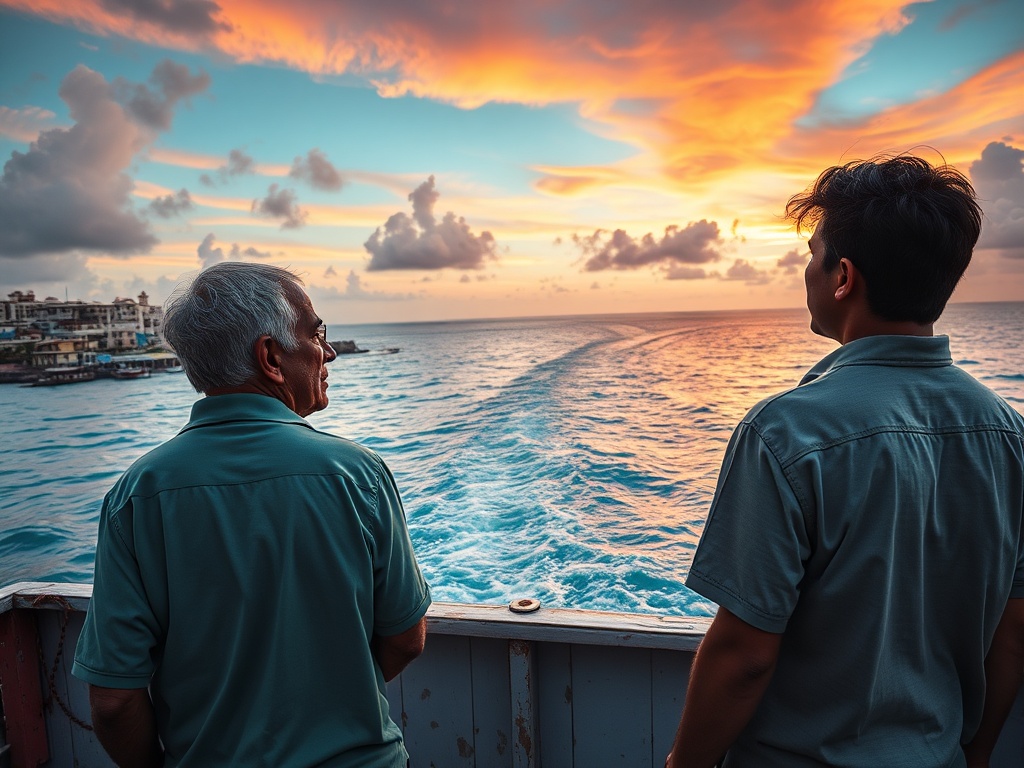
The Same Ferry Deck, Twenty Years Apart
The ferry horn echoed across the turquoise water as Ahmed watched Malé's skyline emerge from the morning haze. He remembered standing on this same deck twenty years ago, holding his father's hand, arriving from Laamu Atoll with nothing but a small suitcase and big dreams. Now he was returning, the salt spray misting his face like the ghosts of memories.
Across the city, in a cramped apartment overlooking the crowded streets, Hassan stared at the official letter in his hands. Denied. Again. Fourth application, fourth rejection. His family had lived in Malé for three generations, yet the land allocation system remained an impenetrable fortress. The irony wasn't lost on him—his great-grandfather had helped build parts of this city, yet he couldn't secure a proper home for his own children.
They had been friends once, Ahmed and Hassan. Childhood companions who chased each other through narrow alleys, shared ice apples from the corner shop, and dreamed of futures that seemed limitless. That was before the whispers started—before Ahmed heard the term 'vazanveriya' used like a weapon, before Hassan felt the weight of being called 'Malé supremacist' despite living paycheck to paycheck.
Ahmed thought of his aging parents back in Laamu, the family home slowly surrendering to the rising sea. He'd promised them he'd bring them to the capital, where medical care was better, where opportunities existed. But every application felt like throwing a message in a bottle into the vast Indian Ocean.
Hassan remembered visiting Ahmed's island once during school break. The endless stretch of white beach, the starlit nights undisturbed by city lights, the way everyone knew everyone. He'd felt something there he'd never experienced in Malé—space, both physical and psychological. Yet when he returned home, his Malé friends had teased him about going 'backward' to the atolls.
Now they were both trapped in the same system, pitted against each other by policies that saw them as categories rather than people. Ahmed with his ancestral claims to land he couldn't access, Hassan with his generational presence in a city that kept him suspended in temporary housing.
The real division wasn't between Malé and the atolls, Ahmed realized as he watched fishing dhonis glide toward the harbor. It was between those who could navigate the system and those who couldn't. Between promises made and promises broken. Between the Maldives they'd been promised as children and the complicated reality they inhabited as adults.
Hassan folded the rejection letter, the paper crisp and final in his hands. Outside his window, construction cranes dotted the skyline like metal herons, building new developments that would remain empty investments while families like his continued waiting.
Somewhere in the space between their separate frustrations, the truth lingered like the scent of rain before a storm: they were all just island people trying to find solid ground in an archipelago that was literally and metaphorically shifting beneath their feet.
— Source fragments: Filtered and synthesized from multiple user voices discussing land rights, discrimination between Malé and atoll residents, housing policies, and feelings of injustice in allocation systems