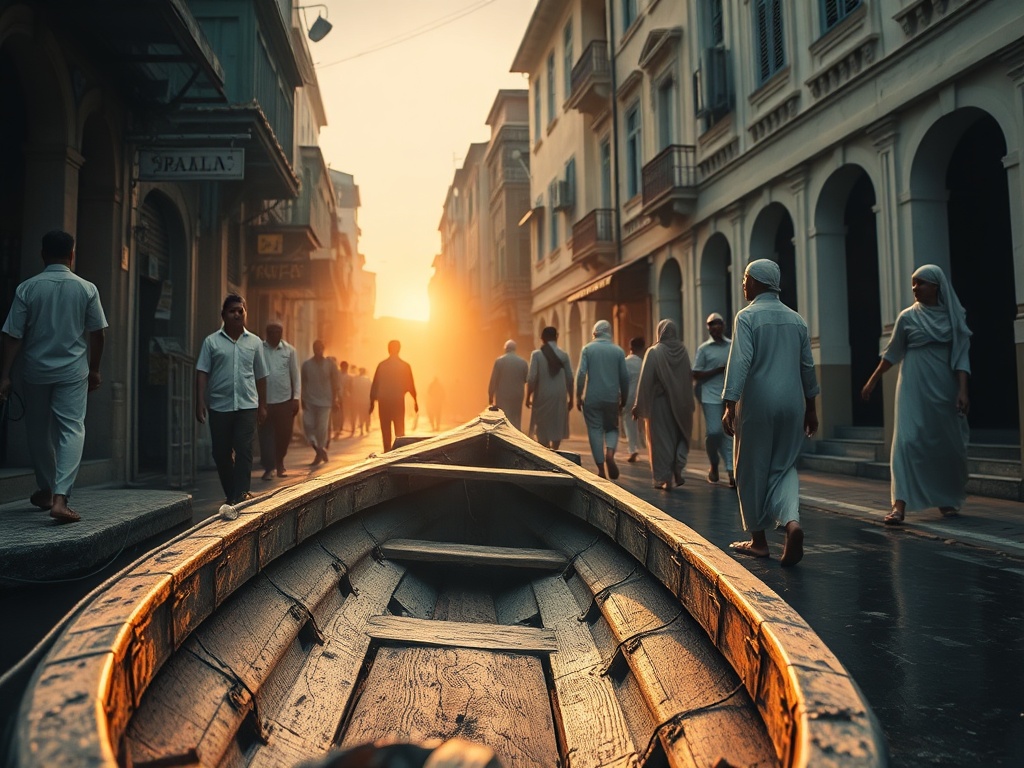
The Sea Between Us in Malé's Narrow Streets
The sea doesn't care about politics. It rises and falls with the same rhythm it has for centuries, washing against the same coral walls that protect these fragile islands. Yet in the spaces between the waves, you can feel the weight of conversations happening just beyond hearing.
In the crowded ferries crossing from Malé to Hulhumalé, bodies press together in the humid air. A young man stares at his phone, scrolling through job listings that never materialize. His shoulders carry the particular slump of deferred dreams. Beside him, an older woman clutches her medical reports, the papers slightly damp from the sea spray. She's calculating costs in her head - not just the doctor's visit, but the journey abroad that might follow.
The construction sites hum with languages from across the ocean. Men who came seeking work now compete for space in rooms too small for proper sleep. You see it in the markets where prices climb faster than wages, in the way people measure rice and lentils with careful hands. The sea that once connected us to the world now feels like a moat separating what we have from what we need.
Yet in the early mornings, before the heat settles and the traffic begins, there's a different rhythm. Fishermen still push their dhonis into the lagoon, their movements practiced and sure. Women gather at the local shops, sharing news in lowered voices that carry more meaning than the words themselves. Children run to school in uniforms washed clean, their laughter cutting through the weight of adult concerns.
These islands have survived storms before - both the kind that come from the ocean and the kind that brew in human hearts. What remains is the stubborn persistence of life, the determination to find moments of grace in crowded spaces, to share what little we have, to remember that beneath all the noise, the sea still sings the same song it always has.
— Source fragments: High cost of living, youth unemployment, inadequate healthcare, housing crisis in congested capital, expatriate competition