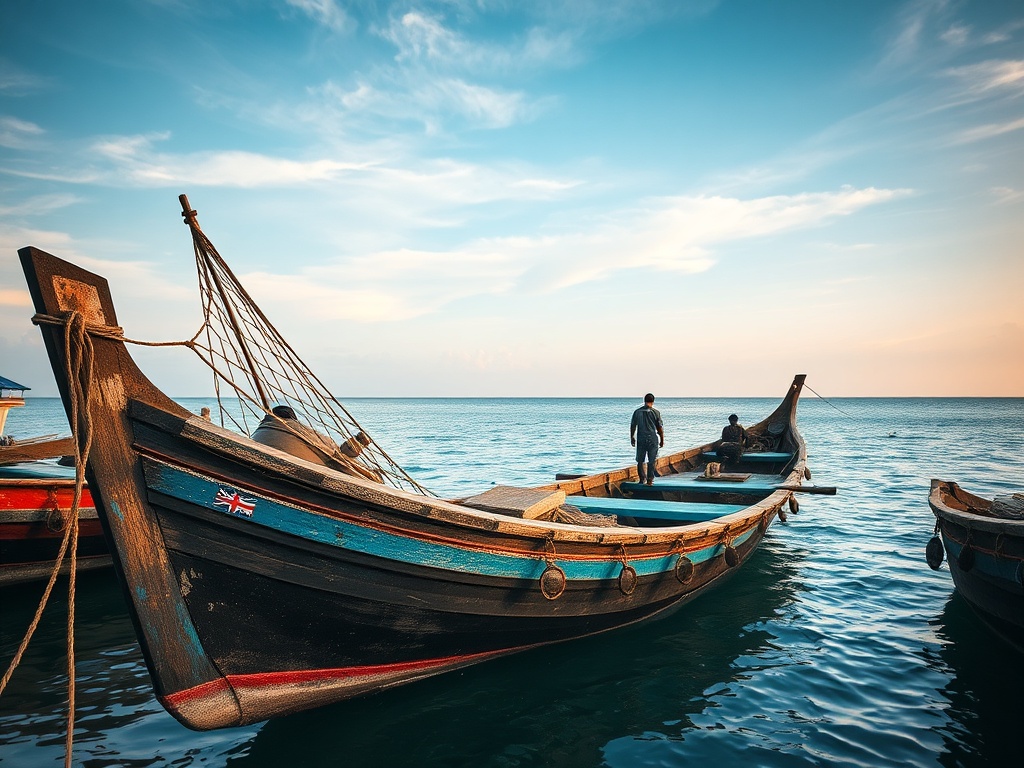
The sea doesn't care about our politics
I watch the dhoni boats cutting through the turquoise water, their engines humming the same tune they've hummed for decades. The politicians in Malé shout from their podiums, their voices carried away by the same sea breeze that cools my face. Out here on the island edge, their words feel distant, like radio static from another atoll. The real government, the one that truly rules our days, is the tide schedule, the monsoon pattern, the price of diesel.
My neighbor Ahmed nods as he mends his net, his fingers moving with a rhythm older than any political party. We don't speak of the latest parliamentary drama. Instead, we discuss whether the current will be strong for the afternoon fishing trip, if the grocery boat will bring affordable vegetables this week. These are the currents that truly shape our existence. The sea has witnessed countless regimes come and go, yet it remains constant in its demands and its gifts.
Sometimes at the café, when the tea is sweet and the evening light turns golden, someone might sigh about the 'situation.' But the conversation always circles back to whose child is getting married, whose boat engine needs repair, whose breadfruit tree is bearing well this season. Our resilience isn't loud or dramatic; it's in the quiet persistence of daily rituals, in knowing that while governments change, the ocean's rhythm remains our true compass. We navigate the waves of uncertainty the same way our ancestors did—with patience, community, and the understanding that some things are deeper than politics.