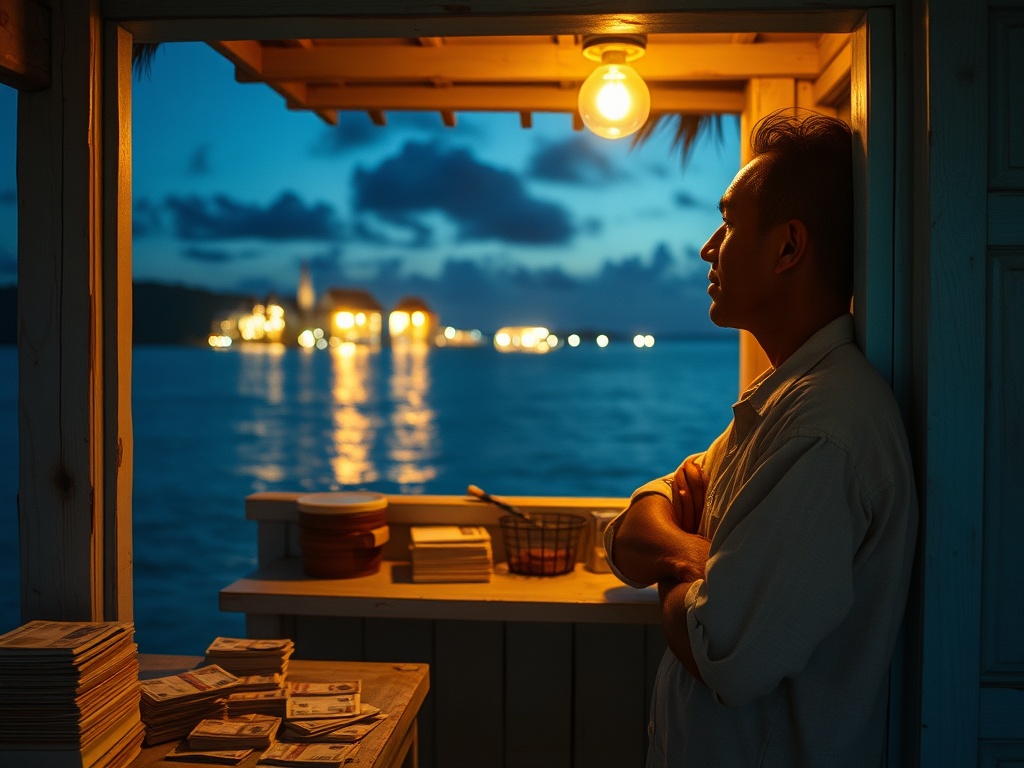
The Shopkeeper Counting Rufiyaa as Resort Lights Glow Across the Water
The question hangs in the humid air like the salt spray after a monsoon wave: what truly constitutes the 'private sector' that matters to our economy? The newspapers don't have the answer, and neither do the politicians who speak in circles while the foundations of our daily lives shift beneath us.
There's a particular exhaustion that comes from watching policies crash against the reality of our islands. The generation ban feels like trying to stop the tide with bare hands when drugs flow through our streets in broad daylight. What power does a shopkeeper have against the currents of addiction when the enforcement seems so selective, so disconnected from the actual problems washing up on our shores?
Our economy has needed diversification for fifty years, everyone agrees. Yet we remain tethered to the same cycles, the same dependencies. The frustration isn't just about policies that don't work—it's about the feeling that those making decisions have never stood behind a counter trying to make change in a currency that loses value by the hour, or watched their children grow up in a capital where housing becomes a political prize rather than a basic right.
The resort workers paid in rufiyaa while their employers deal in dollars—this is the reality of economic policies that look good on paper but break against the rocks of implementation. When government forces resorts to buy local currency at imaginary rates, the consequences ripple through our communities like waves from a distant storm. The black market thrives not because people want to break rules, but because the rules themselves don't fit the shape of our lives.
We stand at this crossroads, watching remittance caps affect our Indian neighbors, watching STO rates fluctuate like the monsoon winds, watching our youth navigate waters where opportunity seems to be receding like the tide. The private sector that matters isn't the one in policy papers—it's the shopkeeper, the fisherman, the resort worker, the family trying to build a future on these islands we call home. Until economic decisions recognize the human currents beneath the numbers, we'll remain adrift between intention and reality.
— Source fragments: What is the 'private sector' that matters to our economy?; Its not fair and it looks like they have no clue to fix this mess; generation ban is a useless woke policy; even in the forced usd policy it's the maldivian workers suffering; wrong angle. why does the resorts have mvr to pay workers in mvr in the first place?; Yes, our economy needs diversification, we've been saying that for 50 years