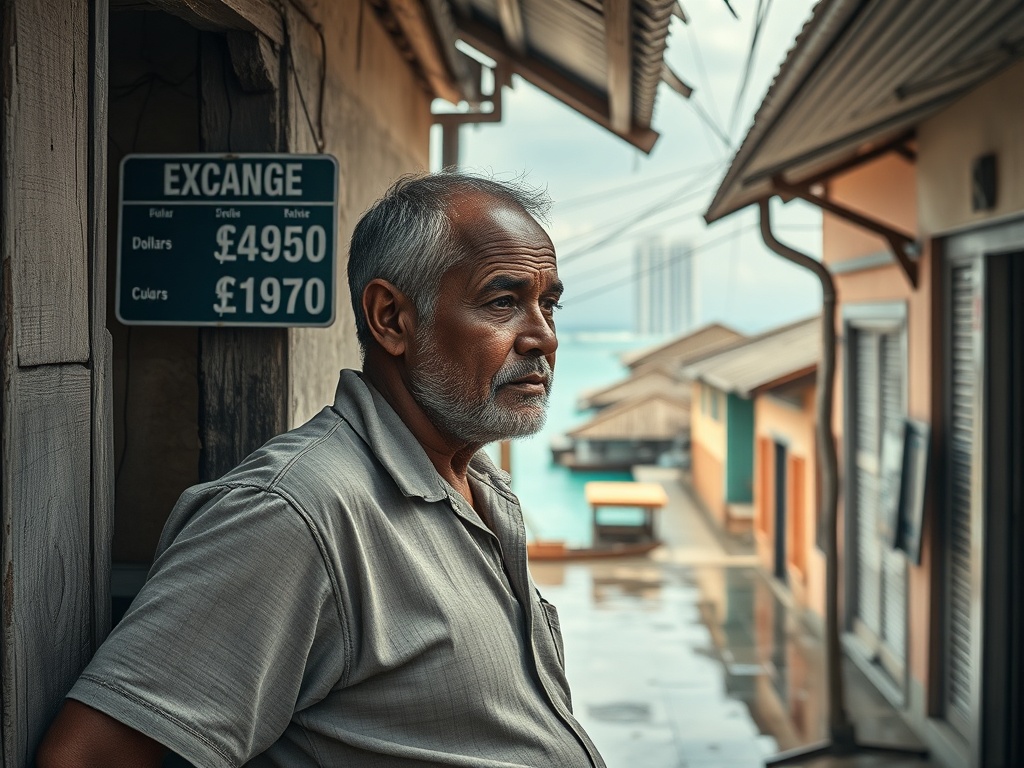
The Shopkeeper Watching Resort Lights Across the Water
The question hangs in the humid air like the salt spray over Malé's harbor: what truly constitutes the 'private sector' that drives our economy? It's a term tossed around in parliamentary debates and policy papers, yet its meaning seems to drift further from reality with each passing monsoon.
In the narrow streets where shopkeepers sweep their thresholds each morning, economic theory collides with daily survival. A government decree about currency exchange rates becomes a real dilemma when a merchant must choose between selling local currency at a loss or finding creative solutions. The resorts, those gleaming islands of foreign revenue, operate in a parallel economy where dollars flow like the tide—coming in, going out, but rarely settling in the hands of the Maldivian worker who cleans the villas or tends the gardens.
We've been speaking of economic diversification for half a century, watching generations grow up with the same promises. The fisherman's son still looks to the tourism industry, the student still dreams of government employment, the patterns repeating like the rhythm of the waves. Meanwhile, policies designed to protect often create new complications—a cap on remittances that leaves families stranded between nations, currency controls that force businesses into shadow markets, generation bans that feel disconnected from the reality of what happens in broad daylight.
The true private sector isn't the abstract concept debated in committee rooms. It's the woman selling mas huni from her small shop, the boat captain navigating both the sea and currency regulations, the young entrepreneur trying to build something that lasts beyond the next election cycle. Their struggles with fluctuating rates, their navigation of systems that seem designed for someone else's reality—this is where economic policy meets Maldivian life.
Perhaps what we need isn't more grand pronouncements but a deeper understanding of these currents that flow beneath the surface, connecting the formal economy with the informal networks that have sustained Maldivians for generations. The solutions won't be found in isolated measures but in recognizing how these systems intertwine, how a policy meant to stabilize can inadvertently create new instabilities, and how true economic resilience comes from listening to the quiet wisdom of those who navigate these waters every day.
— Source fragments: Economic policy frustration, currency exchange concerns, private sector definition questions, remittance cap impacts, generational economic patterns