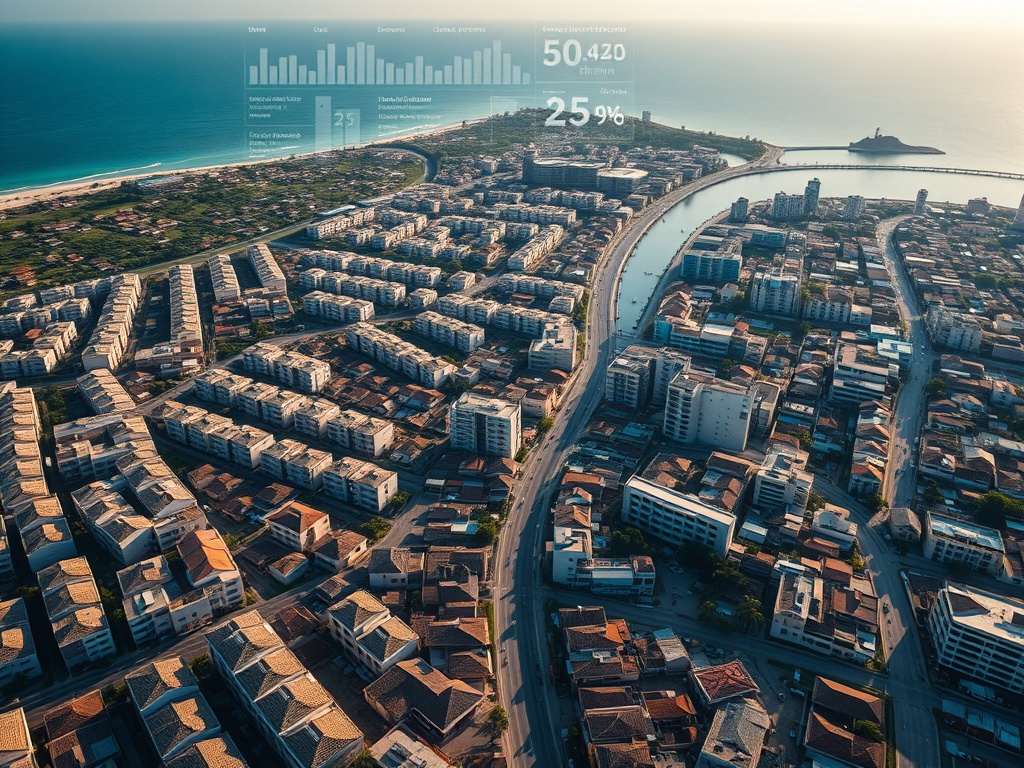
The Silence When Free Land Policy Was Debated
The conversation begins with a warning echoed for months—a policy once given cannot be undone. The speaker recalls visiting social housing flats, urging residents to take a stand when the free land policy was being debated. At the time, most remained silent, and many vocal supporters weren't actually opposed to the government's housing approach.
The core contention revolves around a simple question: Why should anyone live on rent like ordinary Maldivians when alternatives exist? This sparks a deeper examination of housing economics. Critics challenge the assumption that private development automatically leads to better outcomes, pointing to the fundamental difference in motivation between social housing and profit-driven development.
The debate crystallizes around a hypothetical scenario: a 1250 square foot land plot. If the government develops a 10-story building for social housing versus giving that same land freely to private developers who then rent out apartments, which model delivers cheaper housing? The answer seems self-evident to many—government-developed housing eliminates the profit margin that private developers must build into their pricing.
Beyond the immediate cost comparison lies a more troubling reality. The current system creates what some describe as an "infinite money glitch" for the government—citizens owing rent indefinitely, with debts potentially passing to future generations. This perpetual financial obligation raises questions about the long-term sustainability of such policies.
The discussion also touches on the phenomenon of idle flats—properties priced so high that they require astronomical rents to justify the investment. This points to a broader economic miscalculation: overbuilding for a market segment that cannot sustain the projected returns. The result is a mismatch between supply and actual demand, creating vacant properties in the midst of a housing crisis.
Taxation concerns add another layer of complexity. Participants worry that additional costs will inevitably be passed on to tenants, undermining the affordability that housing policies are meant to achieve. The conversation reveals a fundamental tension between well-intentioned social policies and the economic realities of development costs, market rates, and long-term sustainability.
What emerges is not just a debate about housing, but a broader conversation about how social welfare policies intersect with market economics. The discussion reflects a population grappling with how to provide adequate housing while maintaining economic viability—a challenge that goes to the heart of urban development in the Maldives.
— Source fragments: User voices about housing policy debates, economic comparisons between government and private development, concerns about perpetual rent obligations, idle flats phenomenon, and taxation impacts on tenants