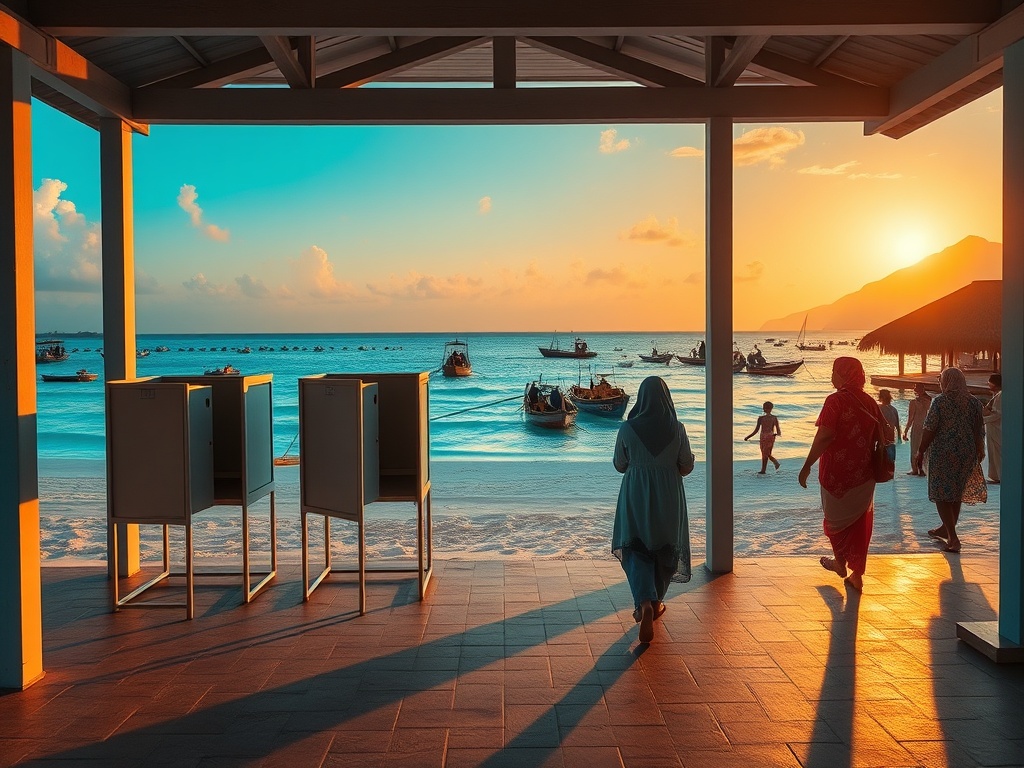
The Silent Majority Speaks: What the Hulhudhoo Referendum Reveals About Island Democracy
The referendum results came as a surprise to many. Despite minimal visible campaigning on social media and what appeared to be low political energy from major parties, a silent majority emerged to vote REMAIN. The margin was larger than anticipated, revealing a disconnect between online discourse and ground realities.
What's more telling than the result itself is the voter turnout - only 37% of eligible voters participated in deciding Hulhudhoo's future. This statistic hangs in the humid island air like unspoken questions. When nearly two-thirds of a community abstains from such a consequential decision, what does that say about their faith in the process? Their engagement with local governance? Their belief that their voice matters?
In the Maldivian context, where island communities have historically maintained strong local identities while being part of larger administrative units, such referendums touch on fundamental questions of belonging. The low participation rate suggests something deeper than mere apathy - perhaps it speaks to a weariness with political processes that feel distant from daily island life, from the fishermen's dawn departures, the women gathering at the harbor to clean the day's catch, the children playing football on makeshift pitches as the sun sets over the Indian Ocean.
Some voices celebrated the outcome as liberation from responsibility, a chance to focus on 'real things.' But the empty voting stations tell another story - one of disconnect between political processes and the people they're meant to serve. In a nation where community has always been the bedrock of society, when nearly two-thirds of neighbors choose not to participate in shaping their collective future, it raises questions that extend far beyond any single referendum.
The silent majority spoke through their votes, but the silent abstainers spoke volumes through their absence. Their non-participation may be the most significant result of all, suggesting that for many Maldivians, the real work of community building happens not in voting booths but in the daily rhythms of island life, in the shared struggles and celebrations that bind people together regardless of political outcomes.
— Source fragments: "I’ll be honest. I had a strong feeling Feydhu would vote to REMAIN, but I didn’t expect the margin to be this large. I hadn’t seen much campaigning for REMAIN on social media, and even MDP didn’t seem very active. But a silent majority quietly went out, voted REMAIN" | "Whys no one talking about the turnout percentage? 37% of Hulhudhoo made the decision.. is this really what the Hulhudhoo residents want?" | "63% didn’t vote. Does this actually reflect Hulhudhoo and its residents Ctu views? I don’t think so." | "This takes the worry of responsibility for Hulhudhoo from all of us. We have thought about their wellbeing in every decision ever made, until now. We can now focus on real things."