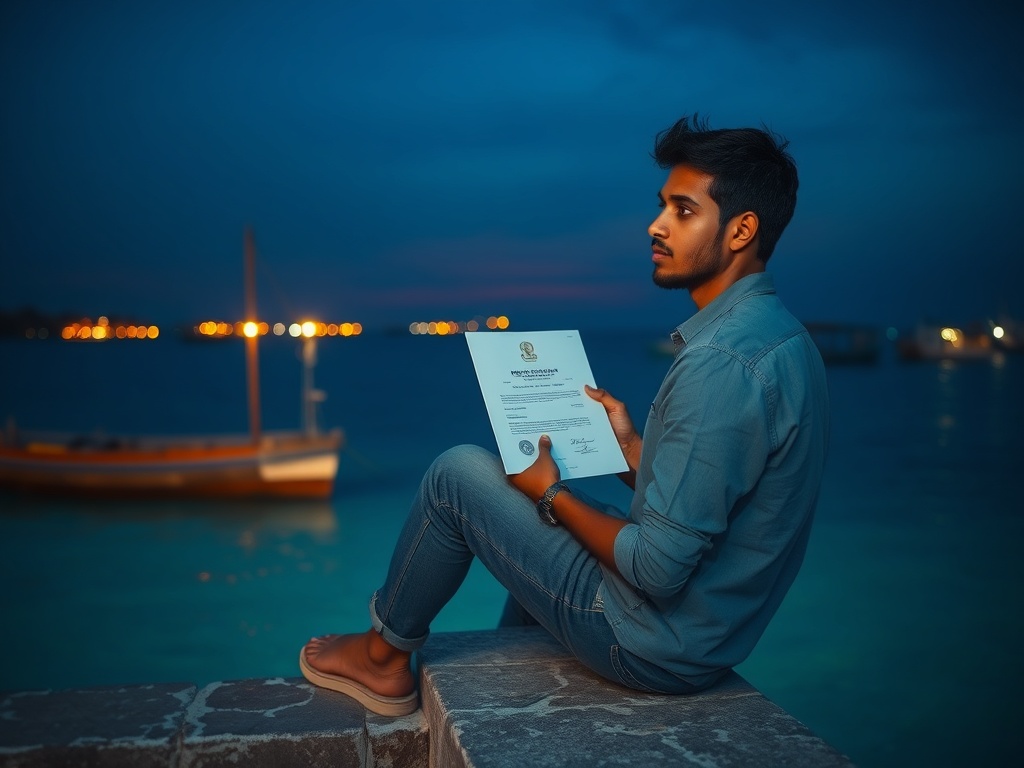
The Unseen Burden: When Dreams Dissolve in the Island Air
In the narrow alleys of Malé, where the sea breeze struggles to reach, you can feel the weight. It’s not just the humidity—it’s something heavier, something carried in the shoulders of the young man staring at his phone, scrolling through job listings that never materialize. It’s in the tired eyes of the shopkeeper counting out change for another imported tin of tuna, the price higher this week than last.
We live in a nation of beautiful contradictions—resorts that gleam like pearls on the horizon, while our youth navigate currents of uncertainty. The education they pursued with such hope now feels like a currency that doesn't spend here. You see them gathered near the harbor in the evenings, their laughter masking the quiet anxiety about what comes next. The drugs offer temporary escape, but the morning always returns with the same questions.
Meanwhile, the housing blocks rise like concrete reefs, promising shelter but delivering another kind of displacement. The flats meant for families become commodities in a shadow economy, while real people crowd into spaces too small for their dreams. We've become experts at navigating scarcity—sharing medicines when pharmacies run empty, pooling resources for someone's medical trip abroad.
Yet beneath these surface tensions runs a deeper current—the slow fraying of trust. When systems meant to support instead become instruments of exclusion, something fundamental shifts in a society. The shared values that once anchored us feel increasingly transactional.
Still, the Maldivian spirit persists with quiet resilience. In the early morning fishermen preparing their nets, in the teachers who show up despite inadequate resources, in the grandmothers who remember when community meant something more tangible. These small acts of continuity become acts of resistance against the erosion of what makes us who we are.
The challenges we face aren't just political or economic—they're deeply human. They're about preserving dignity in systems that often forget it exists. About finding ways to hope when the currents seem determined to pull us under. And perhaps most importantly, about remembering that the true wealth of these islands was never measured in currency, but in the strength we find in each other.
— Source fragments: Youth issues: Drug use, unemployment, lack of educational/job opportunities; Housing crisis in congested capital; High cost of living; Healthcare inadequate, medicine shortages; Eroding freedom and political rights; Tourism money parked abroad limiting national benefit