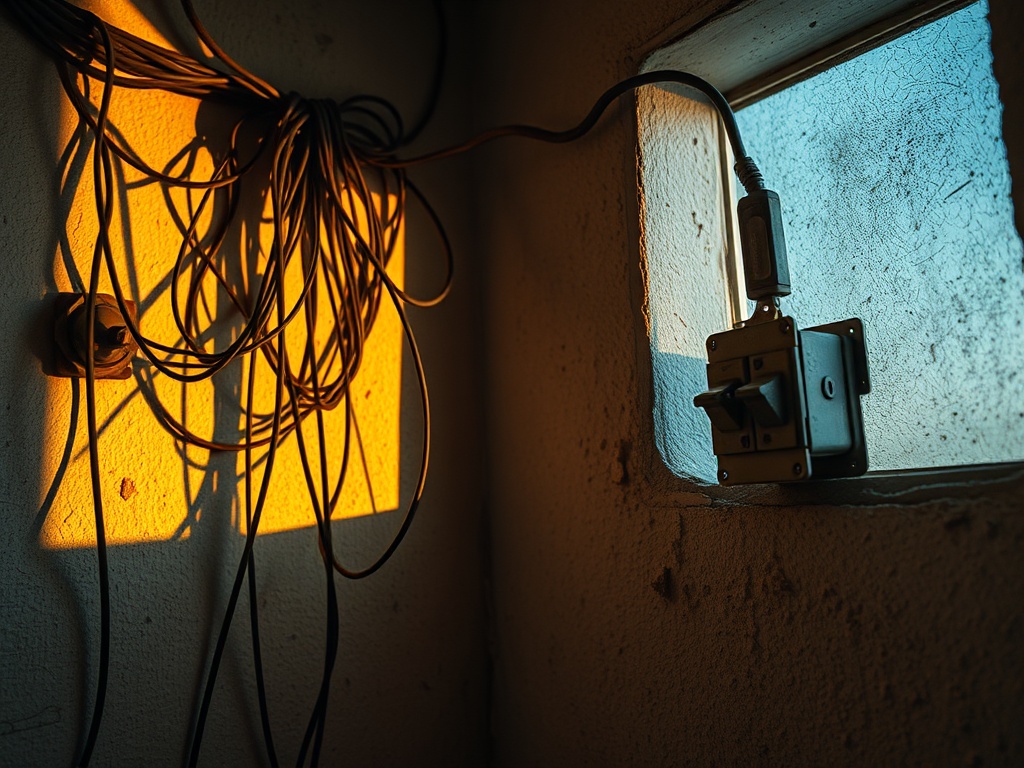
The Unseen Dangers in Our Walls
The hum of a generator has become the evening soundtrack in many Malé neighborhoods, a constant reminder of our fragile infrastructure. What most people don't see are the hidden dangers lurking behind the walls—the shortcuts taken, the safety devices removed, the wiring tampered with by hands that don't understand the consequences.
I watched my neighbor's 'Bangla bai' install their new generator last week. He worked quickly, efficiently, but when I asked about the ELCB—that crucial safety switch that could prevent electrocution—he just smiled and said 'no problem, working fine.' The built-in protection was there, but he'd bypassed it to 'make it work better.' This happens everywhere here, in this city where we've normalized risk in exchange for convenience.
There's a deeper story in these electrical wires that snake through our crowded buildings. It's about how we've accepted a system where unskilled labor handles dangerous work because it's cheaper, faster. We trust our lives to people who learned through trial and error rather than proper training. The irony is that the safety mechanisms exist—the generators come with them built right in—but they're systematically removed by those who don't understand their purpose.
Walking through the narrow streets at dusk, I see extension cords snaking from one house to another, makeshift connections wrapped in tape, the smell of overheated wires mixing with the sea air. Every monsoon season brings stories of small fires, close calls, near-misses that could have been tragedies. We need registered electricians, proper certification, real accountability—not just for the big projects, but for the small generators that power our daily lives. Because safety shouldn't be something we compromise for convenience, especially when the alternative could cost us everything.
— Source fragments: Generators even small ones have built in ELCB so unless the wiring is tampered with it shall be safe... its not uncommon for unskilled to remove protections