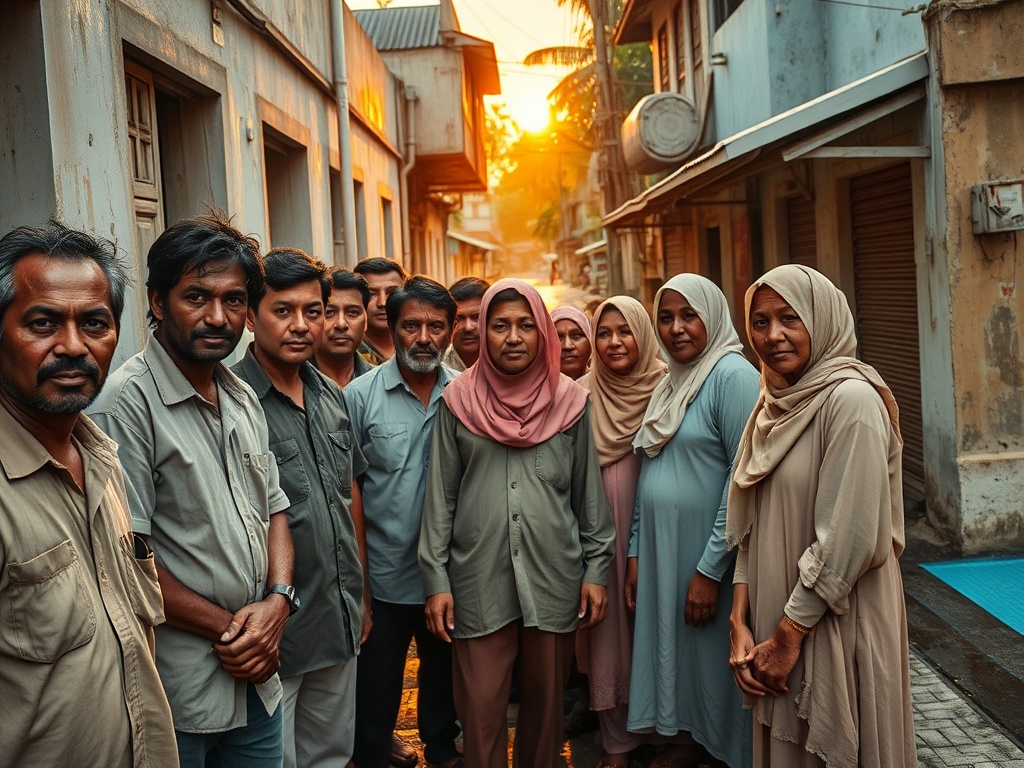
The Unspoken Hierarchy of Who Belongs in Malé's Streets
In the crowded streets of Malé, between the towering buildings and bustling markets, there exists an unspoken hierarchy of belonging. Some residents move with an air of entitlement, while others navigate the same spaces with hesitation, as if perpetually asking permission to exist. This division isn't accidental—it's cultivated through systems that teach certain groups they don't have the right to demand what others receive as standard.
The conditioning begins subtly: in how housing allocations are discussed, how job opportunities are distributed, how public services are accessed. When people are repeatedly made to feel that asking for basic amenities—reliable water, safe housing, fair employment—is somehow audacious, they internalize the message that their needs matter less. This psychological barrier becomes more effective than any physical wall.
Across Maldivian society, we see this dynamic play out in housing policies that leave many scrambling for dignity while others profit from subleased government flats. We see it in employment patterns where certain groups dominate sectors while others are told they're not qualified. We see it in how public discourse frames who 'deserves' what, creating narratives that justify inequality.
The most insidious aspect of this system is how it convinces people of their own powerlessness. When residents begin to believe they shouldn't expect the same quality of life as their neighbors, the battle is already lost. They stop showing up at community meetings, stop demanding accountability, stop envisioning a better reality.
Yet history shows us that transformation begins when people reclaim their right to ask. Not as a privilege granted by those in power, but as an inherent human dignity. The current housing crisis, the employment struggles, the healthcare limitations—these aren't individual failures but systemic designs that benefit from public resignation.
Breaking this cycle requires recognizing that the power was always there, merely obscured by narratives of inadequacy. It demands creating spaces where every resident understands their voice matters equally, where asking isn't seen as confrontational but as participatory. In a nation where so many resources are concentrated in the capital, ensuring all Malé residents can claim their rightful place isn't just about fairness—it's about building a society where no one must apologize for existing.
— Source fragments: Alas the majority don't realize they have the power! They are made to feel they have no right to ask for the same as all residents of Male' City!